
Disappearing builders, inadequate earthquake resistance or leaks… What homework should you do before buying or building a home?
Pay particular attention to these points when reading a LIM report!
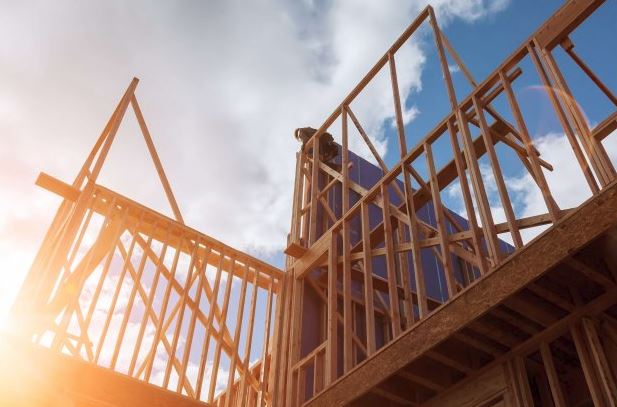
For most people, a home is the largest expense or investment of their lifetime.
If you simply buy in a poor location, the worst outcome is a financial loss. But in New Zealand, inadvertently buying a leaky home or a house that fails to meet earthquake-resistance standards can mean bankruptcy, wiping out a lifetime’s savings!
Today we share the painful experiences of 3 people, in the hope that others can learn from them.
The builder who disappeared
Young couple Liza and Shanon Casson planned to start a family, so they contacted a builder to construct their home together.
‘We signed a contract with him, agreed on the house design together, exchanged numerous emails and even visited a show home.’
The couple paid a NZ$40,000 deposit, and everything seemed normal for the next few months. But ‘just a week before our baby was due, we could no longer get hold of the builder’.
Lisa said: ‘Our baby was about to arrive, but we had nowhere to live. It was heartbreaking.’
Liza and Shanon Casson engaged a lawyer and contacted the police, but there was still no word from the builder. They have not recovered their NZ$40,000 deposit either.
A retirement without peace
Tony Simpson, aged 74, bought an apartment in Wellington. ‘This was somewhere to enjoy a peaceful retirement, and the mortgage was paid off.’
However, Wellington lies in an earthquake zone. When the authorities raised residential earthquake-resistance standards, many buildings needed strengthening to comply. Tony’s home and those of his neighbours were among them. When their bills arrived, the amounts shocked them.
‘We have to pay NZ$300,000–400,000. That leaves me with nothing.’
An earthquake-damaged road in Wellington
A leaky home and a 10-year fight for redress
Hoping for a peaceful retirement, Shelley bought a home in Tauranga where her family could gather. Two years later, it began leaking.
Shelley then embarked on a 10-year battle for redress, repeatedly dealing with Tauranga City Council, the builder and the body corporate.
{Ad}
After 10 years, the problem remains unresolved. Shelley’s health has also deteriorated considerably, leaving her unable to enjoy a peaceful retirement. Tears streamed down her face as she spoke about the experience.
Many leaky homes can only be demolished and rebuilt
What homework should you do before buying a home?
John Gray, president of homeowners’ advocacy organisation HOBANZ, said people must carry out due diligence before buying a home, including engaging a licensed inspector to prepare a building inspection report.
‘A LIM—Land Information Memorandum—report is also crucial… You also need to establish whether gas and electrical appliances are certified.’
John Gray
LIM reports are usually lengthy. What information do buyers really need to understand?
Tony Zhu of Barfoot & Thompson, Auckland’s largest real estate agency, said ordinary homebuyers should focus on at least the following points:
1. When the house was built. Many renovated homes look brand new, but if the LIM report shows that a property is old, buyers should check whether ageing wiring and other components were also replaced during the renovation.
Tony Zhu
2. Whether the house has been extended or altered and, if so, whether it has a CCC, or Code Compliance Certificate, issued by the council. Without one, there may be safety risks, and obtaining a bank loan will usually be problematic too.
3. The colour pages of the LIM report describe the geological conditions of the land, including whether it lies in a flood zone or wind zone, whether a watercourse runs through it, and whether there are other natural hazard risks.
If there is bush on the land, you should also ask whether the trees can be felled. If they cannot, extending the house or subdividing the land may prove difficult.