
← Back to articles

Why must you provide evidence of your source of funds or wealth?
Source of wealth refers to the origin of a customer's total assets: information showing the net worth they have accumulated and how they acquired it.
• The customer is a trust or another entity holding personal assets on behalf of others;
How can investors prove their funds come from legitimate sources?
Verifying a customer's source of funds or wealth is central to enhanced due diligence. So how can you, as an investor, establish the source of your funds or wealth?

Christina Wang
Christina Wang has worked in compliance in New Zealand's financial markets since 2012.
Investing in New Zealand: how do you prove your funds or wealth come from legitimate sources?
New Zealand has long been a popular destination for Chinese migrants and a sought-after property investment destination worldwide. Although the New Zealand Government has introduced a ban on
New Zealand has long been a popular destination for Chinese migrants and a sought-after property investment destination worldwide.
Although the New Zealand Government has introduced a ban on foreigners buying homes, it has left some scope for new residential development: overseas investors can invest, and even pursue investor migration, by buying government-approved properties off the plans.
A key part of investing in New Zealand is proving that your funds or wealth come from legitimate sources.
However, overseas property buyers planning to invest in New Zealand recently will have found that requirements for evidence of the source of funds or wealth are becoming increasingly stringent.
Mr Tong encountered precisely this problem.
A Chinese passport holder living in Shanghai without New Zealand residency, Mr Tong purchased an apartment under construction in New Zealand.
After signing the sale and purchase agreement and other relevant documents, he needed to transfer the purchase money to a New Zealand-based fund custodian.
The custodian would hold the money during construction, with a fund manager managing its investment. At handover, a lawyer would complete the property settlement with the fund manager's approval.
During this process, the real estate agency, the financial company providing the money transfer service, the fund custodian receiving the money, the fund management company managing it, and the lawyer handling settlement all needed documents evidencing Mr Tong's source of funds or wealth.
This troubled Mr Tong: my financial information is private, so why do I have to prove my innocence?
Why must you provide evidence of your source of funds or wealth?
Source of wealth refers to the origin of a customer's total assets: information showing the net worth they have accumulated and how they acquired it.
Source of funds is a narrower concept, referring to the money a customer uses for a transaction or that is involved in a business relationship.
New Zealand's Anti-Money Laundering and Countering Financing of Terrorism Act (the AML/CFT Act) requires enhanced customer due diligence in the following circumstances, meaning evidence of the source of funds or wealth must be requested:
• The customer is a trust or another entity holding personal assets on behalf of others;
• The customer is a non-resident from a country with insufficient anti-money laundering and countering financing of terrorism systems or measures;
• The customer is a company with nominee shareholders, who hold shares on behalf of others, or bearer shares;
• The customer is a politically exposed person;
• The customer requests a transaction that is complex, unusually large or follows an unusual pattern, with no clear or apparent economic or lawful purpose;
• The customer is involved with new or developing technologies or products that favour anonymity;
• The reporting entity considers that the risk level in a particular situation warrants enhanced customer due diligence.
According to the ratings table published on 5 September 2019 by knowyourcountry.com, an ISO 9001-certified online platform providing country money laundering risk ratings and sanctions information, China scored 58.52, placing it in the medium-high-risk category and at position 203 among 245 countries.
Mr Tong, whose property purchase funds came from China, therefore fell into the second category above and needed to provide evidence of his source of funds or wealth.
But why did Mr Tong need to provide this evidence to several institutions?
In July 2018, New Zealand's AML/CFT Act entered its second phase. Lawyers providing specified legal services, conveyancers, trust and company service providers, accountants and real estate agents were brought within the Act as reporting entities.
High-value goods dealers and the racing betting industry were also to begin implementing the legislation from August 2019.
Mr Tong made his property investment after July last year, so he had to provide evidence of his source of funds or wealth to these institutions. Otherwise, the financial company would refuse to transfer his money, the fund custodian and fund management company would be unable to accept his instructions, and the lawyer would refuse to act for him.
{Ad}
How can investors prove their funds come from legitimate sources?
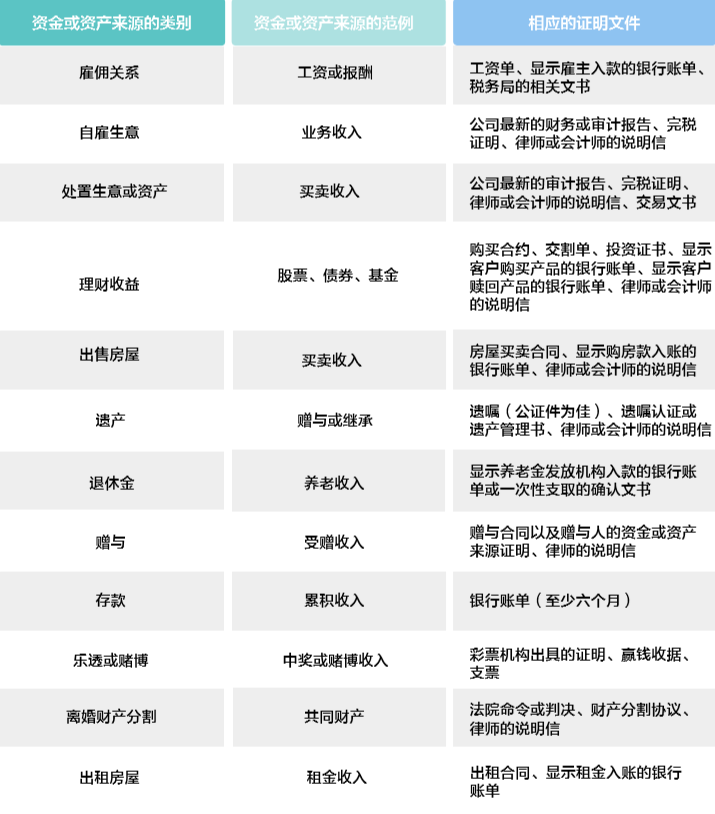
Verifying a customer's source of funds or wealth is central to enhanced due diligence. So how can you, as an investor, establish the source of your funds or wealth?
This non-exhaustive checklist should help you identify the supporting documents required in different circumstances:
Overall, proving the source of funds or wealth is not as simple as printing bank statements. Each case needs to be assessed on its own circumstances.
Before investing, overseas investors should fully understand the nature of their funds or wealth and provide appropriate, valid supporting documents.
Where direct documentary evidence is unavailable, several indirect documents that together form an effective chain of evidence may also be accepted.
Never fabricate or provide false information, as reporting entities also have a duty to report suspicious activity to the Financial Intelligence Unit.
About the author:
Christina Wang
LLM, CAMS-Audit, CCRP
Chief Compliance Officer, Collinson & Co
Christina Wang has worked in compliance in New Zealand's financial markets since 2012.
She is a Certified Anti-Money Laundering Specialist (CAMS), a Certified Anti-Money Laundering Audit Specialist (CAMS-Audit), and a GRC Institute-certified Compliance and Risk Professional (CCRP). Her white paper on how New Zealand small and medium-sized businesses can balance anti-money laundering compliance with commercial objectives was published by the Association of Certified Anti-Money Laundering Specialists (ACAMS).
She holds a Master of Laws from the University of Auckland and is qualified to practise law in both New Zealand and China.