
CFD risk management and tax treatment
This article introduces the most important aspect of contracts for difference trading—risk management—along with trading fundamentals. Later, I will also share some considerations about CFD trading as a business and its relationship with New Zealand tax returns.
A contract for difference (CFD) is a financial derivative that allows you to trade movements in the price of an underlying financial asset, such as foreign exchange, share indices or shares.
It is an agreement between a trader and a provider to exchange the difference in an asset's value between the opening and closing of the contract.
When trading CFDs, you do not actually own the asset or financial instrument you choose to trade. You can profit if the market moves as you expect, but will incur losses if it moves against your expectations.
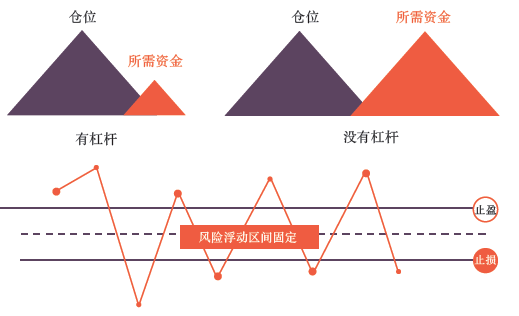
CFDs are leveraged products, meaning you need to commit only a small proportion of the full trade value to establish a position. This is known as 'margin trading'. Although margin trading can magnify your returns, it also magnifies losses, as both are calculated on the full value of the position. Your losses may therefore exceed all the capital you have invested.
{ad}
This article introduces the most important aspect of contracts for difference trading—risk management—along with trading fundamentals. Later, I will also share some considerations about CFD trading as a business and its relationship with New Zealand tax returns.
CFD trading typically uses leverage.
Leverage allows you to take a relatively large investment position in financial markets with relatively little capital. In other words, it magnifies both gains and losses.
Leverage makes CFD trading high risk, but that risk can be effectively controlled. To assess whether a trader has sufficient experience and the ability to trade and invest, look beyond the size of their positions to their ability to protect their account.
Strong investment and trading capabilities depend on strict risk control.
Risk control has two components: account risk management and trade exposure control. Account risk management is static, while trade exposure control is a dynamic process.
Account risk management is relatively simple, while trade exposure control is more complex.
Both are extremely important. For beginners, account risk management is the first risk-control lesson to learn before trading.
However, traders who want to become progressively more consistent must gain experience in trade exposure control and master its essentials.
1. The risk on each trade, which can also be regarded as your trading cost, is the potential loss calculated after setting your stop-loss level.
For example, if your current account balance is US$10,000 and you limit your risk per trade to 1%, then 10,000 × 1% = US$100. When setting your stop-loss level, you must therefore keep the potential loss within US$100.
Most platform providers automatically calculate the amount at risk on your trade after you set a stop loss.
2. Account risk
management refers to setting daily, weekly and monthly account stop-loss percentages. Its purpose is to prevent an unfavourable day, week or month of trading from causing a substantial account drawdown or even a total loss.
This often happens to traders who are new to the market. It can cause severe account losses and wipe out their starting investment capital, as well as destroy their confidence and lead to misconceptions about markets and trading.
For example, if trader A reaches their weekly stop-loss limit on Wednesday, say 6%, they should make no further investments for the rest of that week and wait until the following week to begin a new trading plan.
On the positive side of returns, traders can also set daily, weekly and monthly take-profit targets.
If a profit target is reached quickly during a day, week or month, traders can stop trading for the remainder of that period to preserve their gains.
Generally, a CFD trade needs a reward-to-risk ratio greater than 1.5:1 to be considered relatively successful.
As a trading example, trader B has US$5000 in their account and draws up the following plan: short the EURUSD currency pair at 1.1200, exit at a stop loss if it rises to 1.1220, and take profit if it falls to 1.1150.
The trader is willing to risk 1% on this trade. What position size should they take when entering the market?
First, trader B has clearly specified both the stop-loss and take-profit prices in the trading plan, as well as the risk of 1%. These are very good trading habits.
Let us calculate the position size: the maximum stop-loss amount is US$5000 × 1% = US$50;
the stop-loss distance is 1.1220 − 1.1200 = 20 pips. The pip value of EURUSD is US$10 per standard lot, meaning a pip movement up or down is worth US$10;
the entry position size is calculated as $50 / 20 × 0.1 = 0.25 standard lots. To execute the trading plan in full, the trader should therefore take a position of 0.25 standard lots, or 2.5 mini lots.
3. Black swan events
Risk control in such extreme circumstances concerns many experienced traders. The best approach is to avoid trading major news events, such as staying out of the market during the US presidential election or the Brexit referendum.
CFD trading and New Zealand's tax system
As is widely known, New Zealand's tax system treats transactions involving an intention of resale as income rather than capital.
Given that CFDs are inherently a form of arbitrage, any income and losses from CFD trading are included in income tax returns.
Investor or trader? New Zealand tax law has no capital gains tax (CGT), while the current bright-line rules for residential property sales are interpreted as a conditional form of capital gains tax. For example, profits from residential property bought and sold within 5 years must be subject to income tax and included in an income tax return.
For other capital investments, such as shares, bonds and other financial products, even those recognised by Inland Revenue as investors are not subject to capital gains tax. Instead, only dividends and interest are taxed. The difference between the purchase and sale prices of shares or bonds is generally considered capital in nature, so it is usually excluded from income tax returns.
For CFD trading, there is a clear intention of resale: the purpose of buying is to sell again. Inland Revenue therefore usually regards people conducting this business as traders, and subjects all profits from their transactions to income tax.
Tax treatment of trading losses
Since profits from CFD trading must be included in income tax returns, trading losses must also be included.
Like losses from any business, CFD losses can be offset against the taxpayer's other taxable income.
CFDs and GST
(Goods & S er vices Tax)
CFD trading falls within financial services, which Inland Revenue classifies as exempt supplies, so it does not need to be included in GST returns.

About the author
Vince Zhou
Senior venture capital investment adviser and financial planner
New Zealand and Australian Chartered
Accountant
Chair of the New Zealand CFD Investment Education Club
Financial risk investment manager and senior financial planner
Property tax analyst
Experienced Inland Revenue (IRD) tax agent in New Zealand
Vince Zhou previously worked at HSBC's Auckland branch, then held roles in financial management, business processes, consulting and tax planning across New Zealand's manufacturing, retail, property and service industries.
Vince Zhou specialises in risk investment management and professional financial planning. He has worked with GPP Markets, one of New Zealand's major listed CFD brokers, to hold numerous seminars and other events on investment strategy analysis and risk management.
Through efficient, meticulous planning and a business philosophy of professionalism, accountability, integrity and reliability, his professional team provides clients with specialist services in auditing, capital verification, taxation, financial consulting, business management consulting, risk investment management, asset custody and managed financial planning.
Its clients span businesses of various sizes across international trade, global logistics, manufacturing, professional services, finance, property development and many other industries.