
Building a healthier, safer industry together
Across the world and throughout history, construction has always been a high-risk industry.
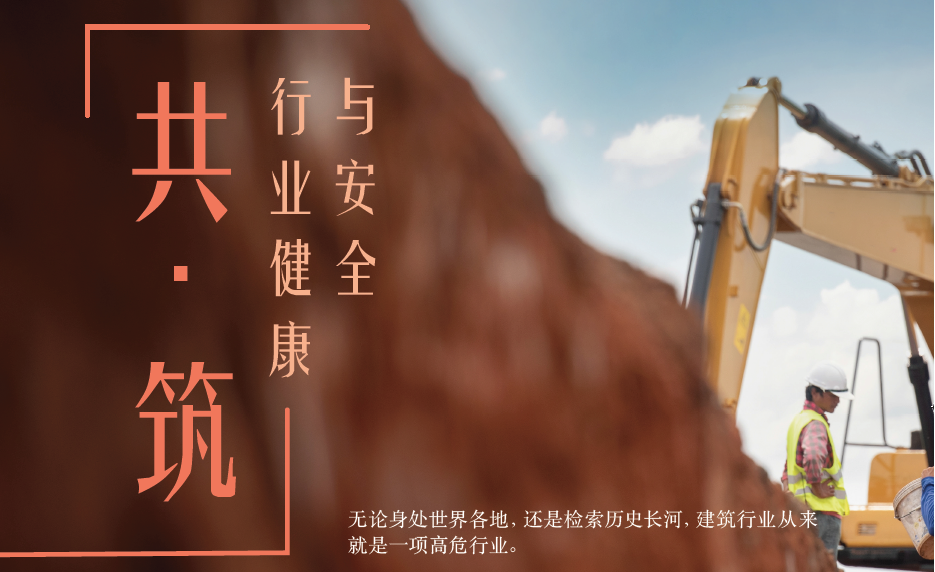
In recent years, soaring demand for public, commercial and residential buildings in New Zealand has kept the construction industry operating at full capacity.
One consequence has been an influx of new businesses and workers with limited experience or insufficient knowledge of New Zealand’s construction safety laws and regulations. Although this has eased supply and demand pressures to some extent, it has also been accompanied by a sharp rise in construction accidents.
No construction safety issue is trivial. Frequent accidents cause substantial losses for workers and their employers, and often have serious repercussions for the wider community.
{ad}
How can we meet the needs of a growing market while helping more businesses manage their work processes better and reduce hazards?
How can we help workers improve their health and safety awareness?
To explain relevant policies and improve professional knowledge among businesses, workers and the public, QuickEarth Moving Ltd initiated and sponsored the Asia Health & Work Safety Summit, jointly held by the New Zealand Chinese Building Industry Association (NZCBIA), the Employers and Manufacturers Association (EMA), WorkSafe and The 3W Project in November 2019.
This publication presents selected key remarks from the summit for a wider readership.
It is never too late to put things right

Frank Xu (Xu Li)
President, New Zealand Chinese Building Industry Association
The importance of construction safety is beyond question. Safety should be a mindset and a habit. I hope everyone will uphold that mindset, develop that habit and give this issue consistent attention.
Strictly follow hot work permit procedures
The recent fire at the SkyCity convention centre could be described as the largest fire in New Zealand’s construction industry history.
I particularly want to emphasise something I believe many Chinese builders already recognise: hot work permit procedures must be strictly followed during construction.
A hot work permit involves a complete procedure. Workers must first make a series of preparations, then apply to the safety manager for permission to carry out hot work;
the safety manager must then carry out a thorough check: Have flammable materials been removed? Has the entire work area been isolated? Is firefighting equipment, such as fire extinguishers, available on site? Only when everything is ready can workers be authorised to begin.
After finishing the work, workers must take the hot work permit back to the safety manager and answer a series of questions. In particular, a fire watch must be maintained, potentially for 20 minutes to an hour, to ensure all open flames have been extinguished.
I believe strict compliance with these requirements could prevent such catastrophic accidents.
Translate safety terminology accurately
Construction safety practices in New Zealand involve many English terms.
I place great emphasis on translating these English safety terms and requirements accurately into Chinese.
For example, the English word ‘hazard’ should be translated into Chinese as ‘a potential safety danger’. Yet it is still translated in many different ways on our construction sites, which is deeply regrettable.
I hope everyone will take this issue seriously. Accurate translation and a thorough understanding of this material will help make our Chinese construction industry and our sites safer.
Plan ahead and support St Johns
The shortage of firefighters and equipment during the convention centre construction site fire was plain to see.
I particularly want to highlight another emergency service, St Johns, which provides emergency medical care. It has consistently planned ahead and worked tirelessly to raise awareness in the Chinese community.
To help this charity, which relies on donations from the wider community, operate more effectively, and to ensure none of us suffers the consequences of equipment or staffing shortages when we need emergency assistance, we will make a donation to St Johns at today’s forum. I also urge everyone here to respond positively and donate after the event.
Prevent incidents and respond appropriately

Bruce Law
WorkSafe health and safety inspector
Lucy He
WorkSafe energy safety specialist
Statistics on serious injuries at construction sites in 2015 show that falls, slips and similar incidents accounted for 22% of serious injuries, defined as permanent disability caused by an accident. This is why construction sites generally place particular emphasis on managing work at height.
Each year, New Zealand records 800 deaths from occupational disease, of which 60% are attributable to air pollution, averaging 15–16 deaths a week.
By comparison, workplace accidents cause an average of one death a week, so the death rate from occupational disease is much higher than that from workplace accidents.
WorkSafe therefore focuses on two main areas: site safety and work-related health issues.
For example, alongside the usual safety management of work at height, considerable emphasis is placed on whether dust is being properly controlled on site.
Key areas of focus
Work at height and short-duration work
Use safety nets and safety airbags correctly when working at height. Have qualified professionals erect, alter and inspect mobile or fixed scaffolding. For short-duration work, equipment such as compliant work platforms, hooked ladders and safety harnesses may be used.
Before any safety equipment is used, ensure workers have received sufficient training and know how to use it correctly.
Asbestos management
Around 170 people die from asbestos-related occupational disease in New Zealand each year.
In 2016, the Government amended the law to require all property owners to submit an asbestos report before renovation or demolition work involving asbestos removal;
they must then ensure appropriately licensed professionals or organisations carry out the removal, with the work supervised by a licensed professional. Once complete, the work must also be inspected by an independent professional assessor.
Generally, houses completed before 2000 must undergo these asbestos inspection and management procedures when work is carried out.
Electrical and gas safety
New Zealand’s electrical and gas safety legislation includes the Electricity Act, the Electricity Safety Regulations, the Gas Act and the Gas Measurement Safety Regulations. Construction site safety requirements cover risk management, construction wiring, the use of electrical appliances, overhead power lines and underground cables, among other areas.
The main electrical risk on construction sites is electric shock. So how can electrical safety be ensured on site?
1. Contractors and property owners must manage work effectively, improve safety systems, and prevent and manage risks.
For example, all workers must receive accurate information, training, instruction and supervision. Preliminary checks must be made before work begins, including whether safety signs are in place;
cables must be kept tidy. Multi-outlet power boards must never be used on site unless they are purpose-built equipment fitted with a residual current device (RCD), and so on.
2. Wiring and connection work must be carried out by a qualified electrician.
The law requires compliance with the relevant New Zealand/Australian standards. Work must not be carried out on live circuits, and residual current devices must be used.
Temporary wiring on site must also meet the relevant rules and requirements.
Before work begins, obtain the relevant safety certificates and legal documentation from the electrician. Guidance on electrical work is available to download free from the WorkSafe website.
3. All workers, equipment and buildings on a construction site must remain at least 4 metres from nearby overhead power lines and underground cables. This clearance must not be breached.
4. Property owners are responsible for the safety of all electrical appliances used on site. New Zealand’s electricity supply is 230V/400V. Electrical construction tools must meet the voltage requirements and have New Zealand plugs. Ensure batteries in charging equipment are compatible and undamaged.
Electrical tools may also voluntarily undergo testing and tagging under Australian/New Zealand standards.
However, routine checks are still required even after testing, and circuits must still be protected by residual current devices;
if a third party is engaged to carry out testing, the property owner remains responsible for its reliability.
5. Guidelines for using electrical tools:
1)Visually inspect them before every use;
2)never use damaged tools;
3)never use tools that have already shown even minor electrical leakage.
Prevention advice and short-duration work
Once you understand the risks that may arise at work, recognise their possible consequences and severity, then establish an effective workplace health and safety management system. This can substantially reduce the likelihood of industrial accidents and occupational disease.
The system comprises the following 4 elements:
1) Plan — properly plan site work and activities, and identify potential risks;
2) Do — find ways to control and manage risks, and put measures in place;
3) Check — assess whether existing methods are effective.
4) Act — learn from accidents and effective measures, and make improvements.
Response measures: If an accident occurs, first stop all work on site; give first aid to the injured and call the emergency services; preserve the scene and do not move objects or injured people;
call 0800 030 040 to notify WorkSafe; provide the emergency services and WorkSafe with as much information as possible about the accident and those injured.
Clarify employers’ responsibilities and manage risks and hazards

Ann Chia
SiteSafe health and safety adviser

Chris Jobson
Auckland regional manager
In 1999, New Zealand’s 4 largest construction companies jointly established the non-profit organisation SiteSafe.
As a non-governmental organisation focused on worker health and construction safety in New Zealand’s building industry, SiteSafe now has more than 6000 members. Its main aims are to promote health and safety, reduce accidents, injuries and deaths on construction sites, in factories and during road work, make safety a habit and an ethical principle, and create a safer, healthier construction environment.
To achieve this, SiteSafe offers a range of services: training; health and safety handbook sales; site audits, reports and recommendations for improvement; help understanding safety policies; pre-tender assessments of contractors’ written qualifications; on-site coaching and guidance at clients’ construction sites or offices; and technical support such as telephone advice.
As is widely known, the Health and Safety at Work Act 2015 (Health and Safety at Work Act 2015, HSWA) was passed in 2015 and came into force in 2016. Its central principle is that workers and others should receive the highest level of protection against work-related risks to their health, safety and welfare.
WorkSafe has now strengthened enforcement and increased penalties, ranging from substantial fines of up to $3,000,000 to imprisonment for up to 5 years. These penalties directly target those in charge of companies.
It is therefore necessary to clarify employers’ responsibilities.
1) Due diligence: WorkSafe requires employers to have a thorough understanding of their industry, recognise potential hazards and comply with the relevant laws and regulations.
2) Worker health: employers must make a clear commitment to ensuring site safety and worker health.
3) Stay informed about workplace health and safety issues.
4) Clearly establish how each task is organised and carried out.
5) Put safety management into practice.
6) Encourage and promote worker participation.
Regarding worker participation, many workers may lack motivation and health and safety awareness, making it all the more necessary for employers to lead by example and strengthen management.
Identify, report and address accidents, hazards and risks promptly, putting health and safety first.
If a site has more than 20 workers, a safety representative must be appointed or elected to serve as a communication channel between workers and the employer. Workers have the right to form a health and safety committee, which can be established when there are more than 5 representatives.
An employer’s risk management process should include:
• identifying hazards;
• assessing risks and their possible consequences;
• eliminating potential hazards;
• minimising risks;
• learning from experience and maintaining strict oversight;
• implementing and following the relevant safe work procedures to control the emergence of hazards.
So how should risks and hazards be controlled once identified?
The following approaches offer some guidance.
First, can the risk be eliminated entirely?
Second, if some risks cannot be eliminated entirely, can an alternative approach be used?
Third, try to isolate workers from the risk, reducing their direct exposure.
Fourth, engineering controls: could advanced machinery or equipment be used to complete the work safely?
Fifth, administrative controls, such as safety warning signs and images, or a shift system.
Sixth, provide protective equipment, such as hard hats and work gloves.
(The effectiveness of these risk controls decreases from top to bottom.)
Finally, employers also need a considered process when engaging contractors. This should include analysing the work, pre-qualifying contractors, clarifying responsibilities and obligations, maintaining supervision and oversight, and conducting a post-contract review.
Working together and sharing responsibility

Joe Boyle
EMA health and safety training programme manager
Health and safety management is a vital part of running businesses and organisations. Business leaders and managers must take fundamental responsibility and provide leadership in health and safety.
Proactively improving a business’s health and safety measures does not actually require many fundamental changes, yet it can safeguard operations and protect workers’ welfare more effectively.
Businesses therefore need effective, active communication with workers to build strong health and safety awareness and a positive organisational culture, making this a management priority.
Failing to manage health and safety adequately can cause serious losses and consequences for a business, including injuries and deaths, along with financial losses and property damage.
First, we need to clarify the main health and safety concepts associated with due diligence and what they mean.
What is due diligence?
Due diligence is a duty to prevent risk and forms part of the leadership responsibilities that senior business leaders must assume. Failure to meet the law’s requirements fully constitutes an offence and brings corresponding legal liability. Penalties target the individuals who hold leadership responsibilities.
What is a PCBU?
If you are an employer or an independent business owner, you may be a PCBU duty holder.
The new health and safety law broadens the range of people responsible for health and safety. Previously, only companies and their directors were held responsible when safety accidents occurred. The law introduces the concept of a PCBU to define who must take active protective measures and bear responsibility for health and safety.
PCBU stands for ‘person conducting a business or undertaking’, meaning anyone conducting a business or undertaking is included.
Whether you work in retail, transport or construction, and whether your business is a sole proprietorship, chain, partnership or self-employed operation, you may be a PCBU duty holder.
Those operating within a supply chain or subcontracting arrangement, such as construction contractors, must also share the relevant responsibilities and obligations. Joint operations may involve several businesses across multiple industries.
What is a worker?
The new legislation substantially changes how roles are defined in employment relationships.
Previously, there were simply employers and employees. Now, a range of roles associated with a PCBU are recognised as workers, including employees, contractors, subcontractors, contract workers, temporary workers, apprentices and even volunteers.
As individuals, they also have a responsibility to take reasonable steps to maintain site health and safety together and fulfil PCBU responsibilities and obligations.
This requires good communication between the different trades and roles on a construction site.
For example, when several trades are working at the same time, each must fully understand what work by the others could affect their own health and safety.
Who are officers?
These are people with leadership and management responsibilities in a company or business, including directors, managers, partners, board members, decision-makers and anyone else who can materially influence management decisions.
Many may lack direct knowledge of health and safety issues at the workplace, making it even more important that they give these issues due weight in decisions based on day-to-day operations and other practical circumstances.
In many cases, senior decision-makers’ understanding of on-site work may be largely theoretical and may not fully apply in practice, while workers must perform the tasks on site. This can create a degree of conflict.
It is therefore essential to establish effective communication mechanisms between these groups and among the relevant PCBU duty holders, such as committees and regular meeting arrangements.
In health and safety, the relationship between everyone involved is more like a partnership than a simple relationship between leaders and those they lead.
Everyone’s responsibilities are interconnected, interdependent and overlapping.
For example, the contracting and subcontracting arrangements common in construction involve many situations in which responsibilities and risks are shared.
Next, let us consider officers’ duties, which are crucial to implementing a business’s health and safety measures.
1) Knowledge Develop a thorough understanding of workplace health and safety issues, and keep that knowledge up to date.
2) Understand Thoroughly understand the business’s operations and the risks and hazards they may create.
3) Resource Ensure the PCBU allocates adequate resources to eliminate or minimise risks and hazards.
4) Monitor Ensure the PCBU has appropriate communication channels to receive information, including reports of accidents, risks and hazards.
5) Comply Ensure work processes established to meet the relevant duties are followed and implemented.
6) Verify Check and ensure that resources and measures are in place and being put into practice.
How should officers assess their own performance in exercising due diligence? Consider the following questions:
1) Have I obtained enough health and safety information?
2) Do I fully understand the potential hazards and risks?
3) What measures should we take to manage risks?
4) How can we establish an effective reporting system?
5) How should we respond to accidents, hazards and risks?
6) Am I confident in my professional competence in operational safety?
7) What means do I have to participate directly in the business’s operations?
8) What methods should we use to ensure compliance?
9) What independent oversight measures do we have?
Asbestos removal must follow the rules

Dan Cambridge Protec
Group director, Environmental Group
Asbestos-containing materials in buildings are known to pose risks during everyday property use and to cause health problems for workers undertaking renovation or demolition. Property and homeowners must therefore establish whether asbestos-containing materials are present before renovating or demolishing a building.
The Health and Safety at Work Act 2015 makes explicit provision for this:
Section 10 establishes a duty to ensure asbestos-containing materials are identified in the workplace.
This can be determined through physical sampling of materials; if no samples are taken, asbestos must be presumed present.
Sections 25/26 establish a duty to identify and remove asbestos before refurbishing buildings, factories or homes.
A) Identify all asbestos that may be affected by the refurbishment.
B) Remove asbestos before refurbishment, so far as is reasonably practicable.
Section 27 requires those carrying out asbestos removal to hold the appropriate licence.
Section 28 requires a professional supervisor to be present or available whenever removal work is undertaken.
Sections 17/29 require property owners to ensure asbestos removal workers have received the necessary training.
In addition, section 9 sets out duties relating to workplace asbestos exposure: property owners and employers must use reasonable and effective methods to prevent or minimise workers’ exposure to asbestos.
Before renovation or demolition begins, property owners must therefore commission an asbestos survey to locate all asbestos-containing materials in the building, take sufficient samples and estimate the quantity of asbestos, among other tasks.
They must also submit an asbestos removal control plan (ARCP) to WorkSafe.
The key points are:
1) provide site documentation detailing the removal process;
2) the contractor must apply to WorkSafe for removal approval 5 days in advance;
3) the supervisor must be familiar with and understand the removal process, and communicate with the workers.
Managing risks and covering businesses’ costs

Buddy Zhang
Head of AON Insurance’s Asian commercial team. In construction health and safety, insurers play a role in managing risks and covering businesses’ costs.
What types of insurance might the construction industry need?
How should businesses purchase cover and make claims?
• Public liability insurance (general liability) — covers liability to third parties arising from work, including damage to their property and injury or death.
• Statutory liability insurance — covers legal costs arising from statutory liability associated with public liability insurance.
• Employers’ liability insurance — when workers suffer injury, death or an accident at work and bring legal proceedings and compensation claims against their employer, the insurer provides support for the resulting legal costs and compensation.
How to ensure a policy is valid before an accident
• When purchasing insurance, provide the insurer with a detailed business description and a clearly defined scope of activities;
• after purchasing insurance, promptly notify and consult the insurer if new activities outside the policy’s scope may be undertaken;
• ensure equipment and materials imported from China meet the relevant New Zealand requirements, regardless of the supplier. What to do when an accident occurs;
• contact the emergency services first, then promptly notify the insurer;
• maintain clear communication with the insurer’s representative;
• involving the insurer’s lawyer can significantly improve the chances of a successful legal outcome.
When can a claim be made?
• Carelessness versus disregard. If sound safety controls have consistently been in place and an accident results from a momentary lapse, insurers will generally pay the claim.
However, if safety is routinely neglected and procedures are usually ignored, an accident will be treated as the result of knowingly breaching the rules, and the insurer will not pay.
• Insurance claims usually involve three types of costs: legal fees, WorkSafe investigation costs and compensation. The insurer will provide support according to the policy’s cover limit.
The compensation amount is determined by considering the injured or deceased person’s expected future prospects, including their age and likely career and income progression.
Insurers do not cover fines imposed for criminal offences.