
Focus: safety in this industry will affect all New Zealanders
At yesterday afternoon's press conference, Prime Minister Jacinda said New Zealand would move down to Alert Level 3 at 0h on 28 April, after the Anzac Day holiday. This means some businesses that do not require face-to-face contact with customers can resume production. New Zealand's construction industry promptly released its COVID-19 construction site health and safety protocols.
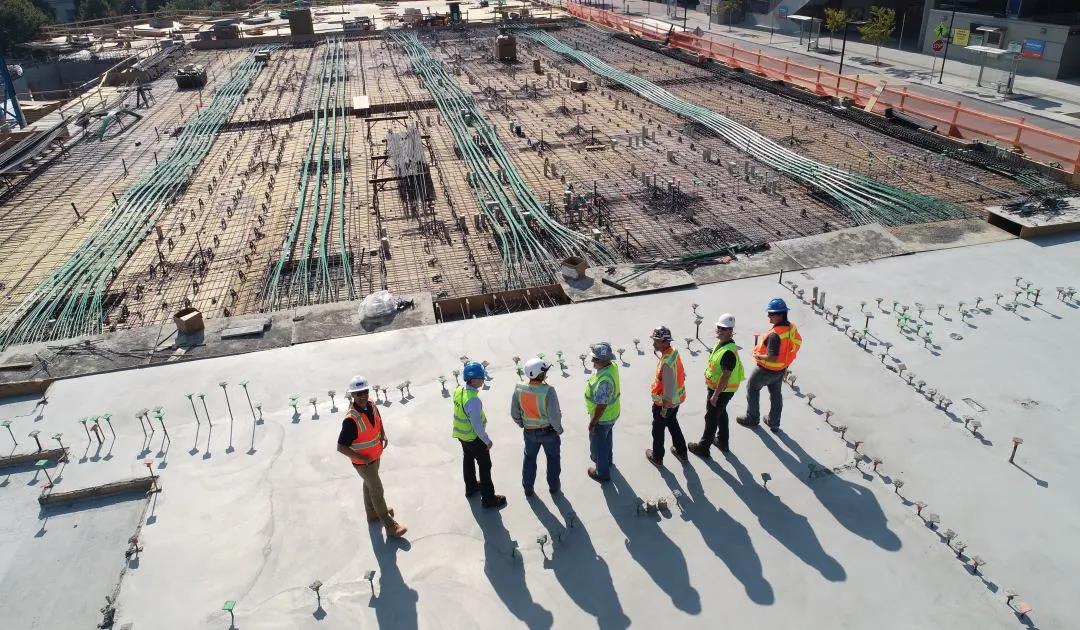
A balance is needed for the contentious decision to lower the alert level
Last week's report from the Minister of Finance forecast the severe economic consequences of a nationwide lockdown lasting more than 4 weeks. A succession of major New Zealand businesses have announced bankruptcy or large-scale redundancies, validating the report through their actions. Deputy Prime Minister Winston Peters subsequently said unequivocally in an interview: “We must rescue the economy as quickly as possible to avoid further losses.” National Party leader Simon Bridges went further yesterday, directly criticising the Government's decision to extend the Level 4 lockdown.
{ad}
At the same time, however, University of Otago scientists have said the Government's virus surveillance and testing measures are still insufficient, so caution is needed in lowering the alert level. University of Auckland modelling expert Shaun Hendy believes the lockdown should be extended by at least another two weeks to eliminate the virus completely within New Zealand. Even some economists support extending the lockdown. Westpac chief economist Dominick Stephens said: “Extending the lockdown will undoubtedly be very costly for the economy, but a ‘failed lockdown’ would cost even more. It would undermine businesses' newly restored confidence, create continuing uncertainty and prolong economic stagnation.”
What appears to be merely a two-working-day extension of lockdown is, in fact, the Government's attempt to balance health and safety with rescuing the economy after reconciling different views. Consequently, the construction industry, worth around NZ$40,000,000,000 annually, is leading the businesses allowed to resume work at Level 3. Its return marks New Zealand's first step towards rescuing the economy, while the safety of its operations may also, to some extent, influence the Government's next steps in responding to the pandemic. As Master Builders chief executive David Kelly put it: “We need to demonstrate that, as an industry, we can work safely, because nobody wants to see us return to Level 4. That means the whole industry needs to work together.”
Procedures everyone in the industry must follow
During lockdown, New Zealand's construction health and safety body and the wider industry planned ahead, developing industry protocols for safely restarting construction and managing Covid-19 risks. These drew on input from more than 50 industry businesses and organisations, including some of New Zealand's largest builders, Civil Contractors New Zealand, the Vertical Leaders Group, residential construction leaders, small and medium-sized businesses, and unions.
While New Zealand remains at pandemic Alert Level 2 or higher, all operating civil, commercial and residential construction businesses and contractors must follow these health and safety protocols. Site Safe chief executive Brett Murray said: “These protocols provide strong assurance to our workers, the Government and the public that we can do this safely.”
So what do the protocols cover, and what details do they address?
- Before work officially resumes
Employers need to develop a safe work plan in line with the newly issued health and safety protocols, and discuss it with everyone who will be involved, including workers, contractors and suppliers, before work officially resumes. The plan must also be reviewed and updated regularly throughout construction.
- Before entering the site
- Construction sites left idle for more than a month may have safety hazards. Employers therefore need to inspect sites and ensure all potential or existing hazards have been addressed.
- Employers need to confirm all employees' health status and understand how they travel to and from work and how they work.
- Everyone entering the workplace must sign in.
- During construction
- Clean all tools and equipment with disinfectant before work, paying particular attention to handles and similar areas.
- Divide the construction site into separate zones so that workers in different trades remain physically separated at all times.
- Workers should stay 2 metres apart when eating and avoid all contact.
- If workers cannot maintain their distance from colleagues while performing a non-essential task, the task should not proceed.
- If these tasks are genuinely necessary, additional controls must be adopted, such as disposable overalls, PPE including masks, and powered air-purifying equipment.
- Where possible, workers should be divided into two alternating teams, so that if one faces an infection risk, the other can continue working.
- Where possible, visitors, such as essential delivery personnel, should be limited to a single person, sign in and out, and enter only the limited areas necessary to complete their work or delivery.
- Bathrooms and portable toilets must have a fixed cleaning schedule that is strictly followed.
- After work
- All workplaces, including shared areas, must be cleaned and disinfected at the end of each shift and at the end of the working day.
- All shared work vehicles must have their interior surfaces, exterior handles and touchpoints thoroughly cleaned after use.
- All tools and equipment must be cleaned with disinfectant, focusing on touchpoints such as handles.
- Employers should ensure that all waste generated during work and disposable PPE are disposed of safely and effectively.
- Workers can leave non-essential items at the workplace and disinfect anything they intend to take home, such as mobile phones.
Workers must sign out when leaving the site.
- Workers should shower after returning home, ensuring they clean their hands, wrists, arms, neck, fingernails and any areas that may have been exposed.
- Work shoes should be left outside the door, and work clothes and bags placed in a designated container before being washed in a hot washing-machine cycle.
- If someone contracts the virus
First, all employees with flu-like symptoms or who feel unwell are advised not to go to the construction site. If a worker does unfortunately contract Covid-19, then:
- The employer must close the workplace and contact the Ministry of Health.
- The employer must compile a list of everyone who worked there or had contact with the confirmed case over the past month. This should identify those who worked in the same area or shared machinery, tools, materials or equipment with the person, and be provided to the relevant authorities.
- The employer must inform all workers and clean and disinfect all site surfaces and equipment.
The Chinese building industry association contributes
The New Zealand Chinese Building Industry Association has closely followed the question of when construction can resume. It actively helped develop the COVID-19 construction site health and safety protocols and, immediately after their official release, began two initiatives for Chinese businesses.
- Preparing a COVID safety briefing to provide practical guidance on how Chinese businesses can implement the new health and safety protocols on construction sites.
- Creating a PPE procurement checklist, with separate recommendations on the protective equipment businesses and individuals entering sites need. It is also seeking sources and providing supplier information to help businesses prepare to resume work.
In an interview, association president Frank Xu, also known as Xu Li, stressed: “As the whole industry works together to resume operations safely, our aim is to use our professional expertise and understanding of Chinese businesses to turn industry safety protocols into concrete actions, enabling all types of construction sites to manage safety risks through the practical steps we recommend.”
The two documents will reportedly be made available to all businesses and individuals who need them before work resumes.