
House prices hit new highs across several regions: have predictions of falling prices been disproved?
Since the COVID-19 outbreak, debate over whether property prices will fall has remained intense, with economists putting forward competing views and evidence. Yet the latest May reports from property companies still show no signs of a potential slowdown in the property sales market. Strong demand, insufficient supply and high prices remain the defining features of the May housing market.
Market demand remains strong
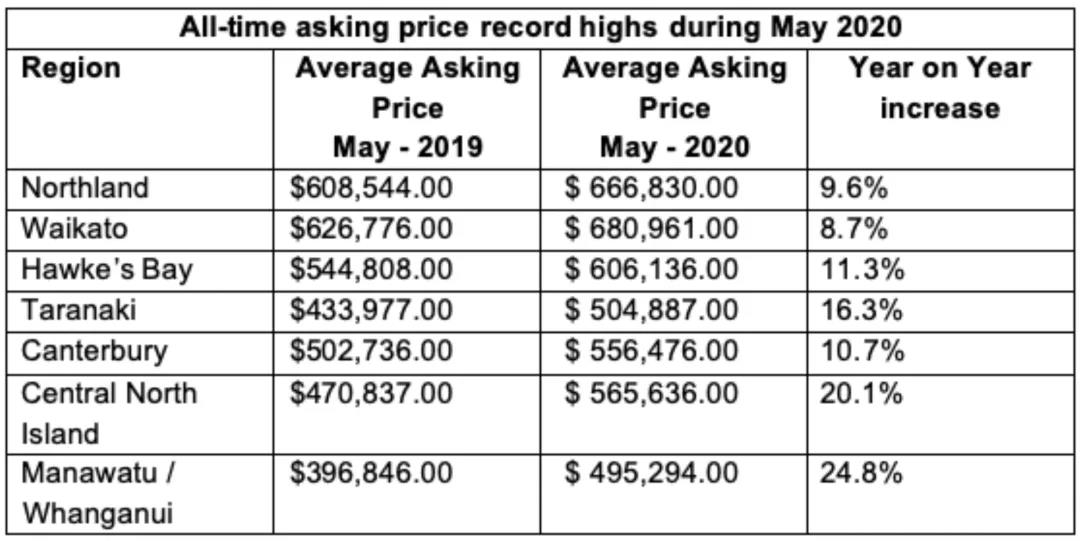
COVID-19 appears to have had little negative effect on average property prices. Real-time data from realestate.co.nz shows that average asking prices in seven New Zealand regions have reached record highs. Vanessa Taylor, spokesperson for realestate.co.nz, said: “Despite considerable speculation about property prices after lockdown, record average asking prices in seven regions indicate that most sellers still have high expectations for the prices their properties will fetch.”
Vanessa also said there was no sign of weakening demand from prospective buyers. Visits to realestate.co.nz in May were comparable to those in February, before the outbreak. The summer month of February is usually a peak period for website traffic.
{ad}
“In May 2020, 1,200,000 users visited our website and carried out more than 9,100,000 property searches, exceeding the 1,100,000 users recorded in February 2020. In addition, the average time users spent on the website last month rose by 30% to 8 minutes and 29 seconds, 2 minutes longer than in February.”
Nationally, although new listings and total inventory both declined in May, they were broadly comparable to winter figures in 2019 and 2018. Vanessa therefore believes the supply of properties may recover faster than expected.
Infometrics economist Brad Olsen believes the following factors may explain why the property market remained active in May, even as economic fundamentals were changing:
- The earlier strict lockdown forced many transactions to be suspended, so May sales and prices may reflect a continuation of activity from before lockdown;
- Restrictions on going out and spending during lockdown meant many people saved more than they spent, increasing their available cash;
- KiwiSaver began to recover;
- Mortgage interest rates continued to fall;
- The Government’s relief measures achieved their intended effect of cushioning the pandemic’s severe impact, helping to avert upheaval in the property market.
Average asking prices reach record highs in seven regions
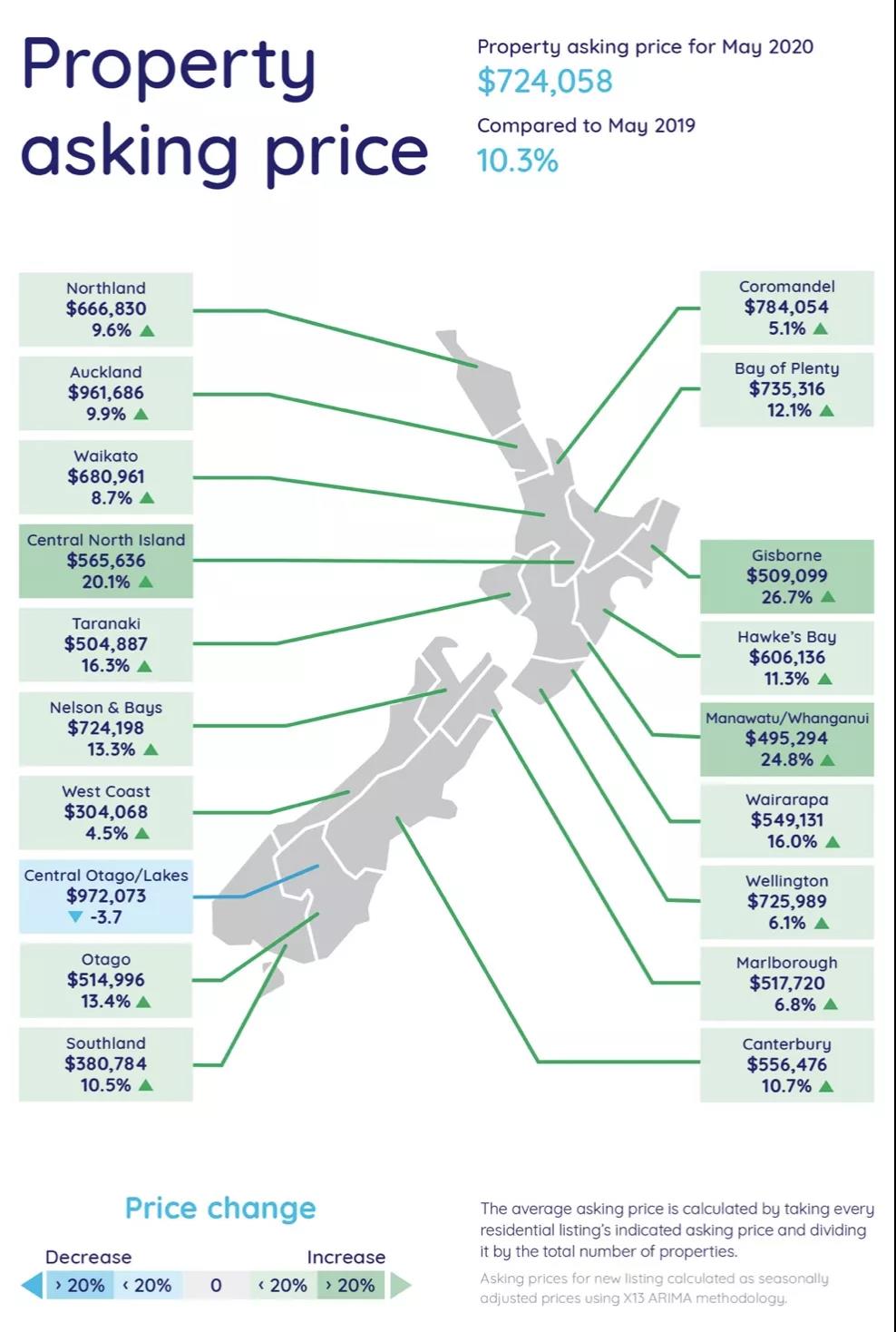
In May, the national average asking price rose 10.3% year on year to NZ$724,058, with average asking prices reaching record highs in seven regions. The three regions with the most notable increases were:
- Manawatū/Whanganui (Manawatu/Whanganui ):The average price reached a record NZ$495,294, up 8% on last year;
- Central North Island (Central North Island):Prices rose 1% to NZ$565,636. The Central North Island figure was nearly NZ$29,000 above the region’s previous record, set in January this year.
- Taranaki (Taranaki):Since co.nz began keeping records in 2007, the average asking price exceeded NZ$500,000 for the first time, rising 16.3% from the same period last year.
Although average asking prices primarily reflect sellers’ expectations rather than actual sale prices, they are generally a barometer of market sale prices. Joint research by realestate.co.nz and REINZ shows a close relationship between asking and sale prices. A five-year analysis found that, nationally, the gap between asking and sale prices is generally around 2–3%.
Vanessa said: “I believe record asking prices across the country are particularly significant at such a difficult time globally.”
Fewer listings, but in line with normal winter conditions
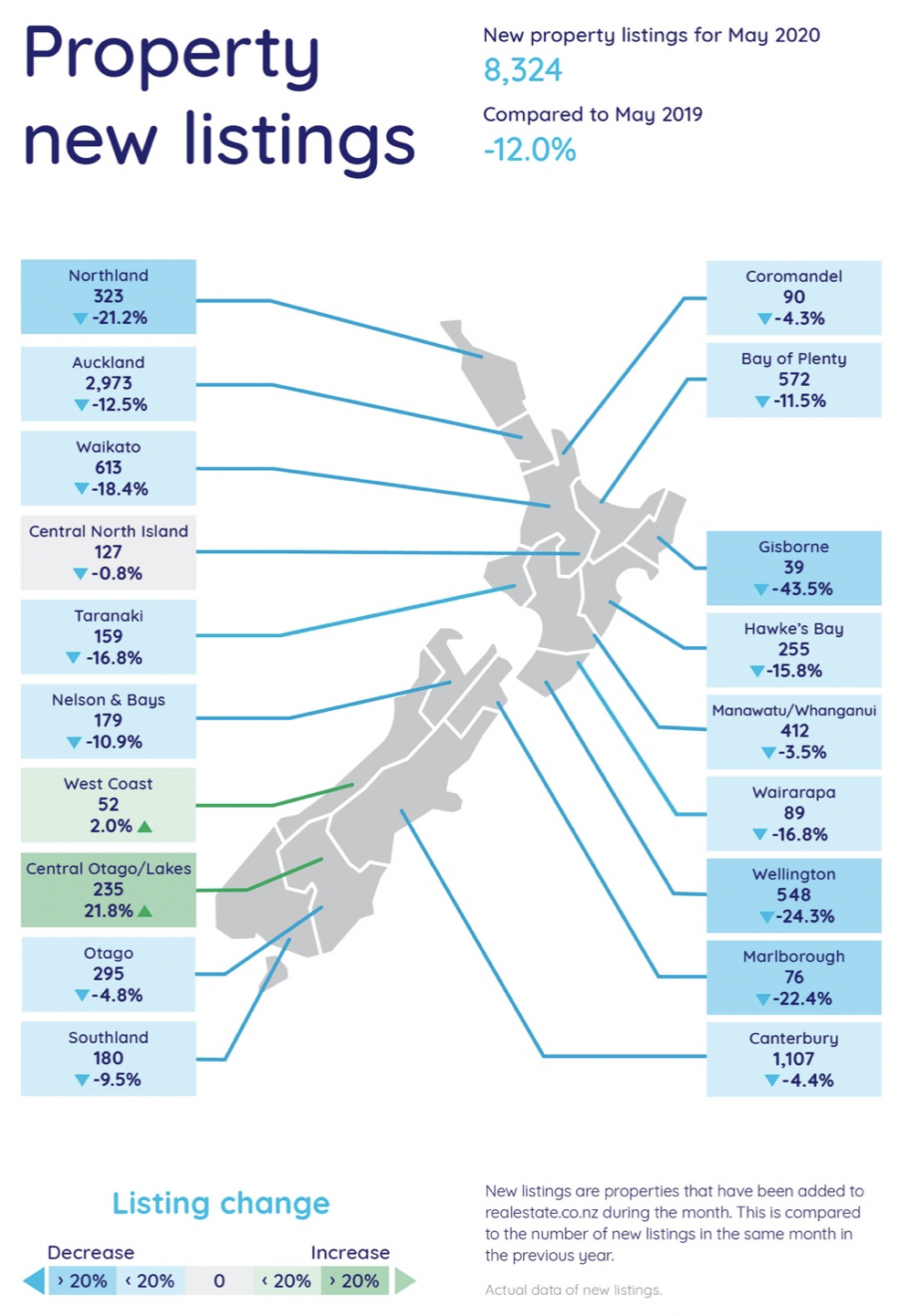
In May, 8,324 new properties were listed nationwide, down 12.0% from the same period last year. However, since realestate.co.nz began keeping records, new listings have followed a downward trend, and this year’s decline is not particularly pronounced. With 7,545 and 7,295 new listings in July and August 2019 respectively, Vanessa believes “sellers were more willing to sell during the nationwide lockdown than in a typical winter”. The West Coast and Central Otago/Lakes were the only two regions to record increases in new listings. Compared with last year, the three largest declines were:
- Gisborne recorded the largest decline in new listings, down 5%, with just 39 properties newly listed in the region last month;
- Wellington’s new listings fell 3% to 548;
- Marlborough’s new listings fell 4% to 76.
Auckland market remains steady
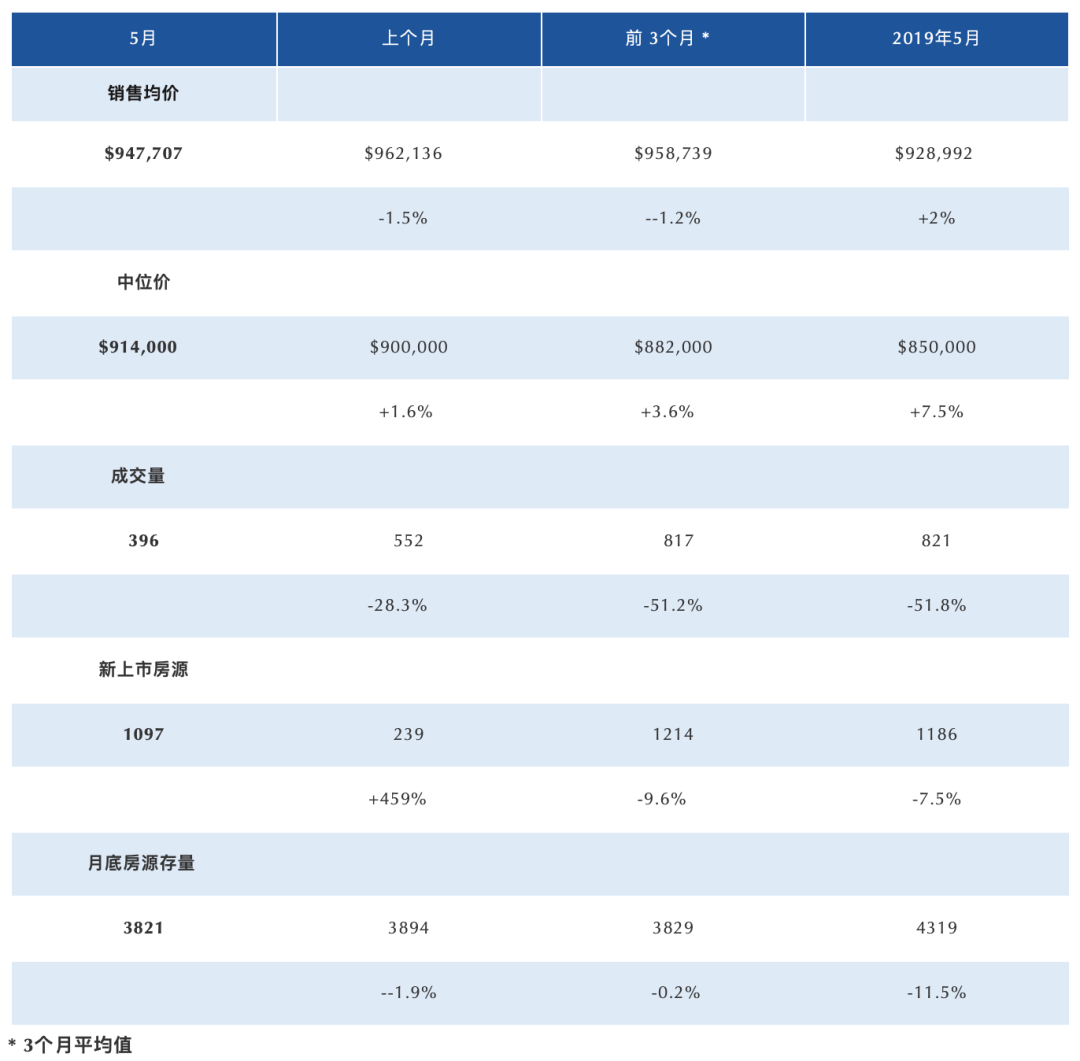
Barfoot & Thompson’s latest research report shows that, in the first full month of trading after alert levels were eased, Auckland’s property market saw little change in either prices or listings compared with before the pandemic.
Auckland house price movements in May remained within a reasonable range. The average price was NZ$947,700, down 1.6% from April and up 2% from May last year. The median price was NZ$914,000, up 1.6% from April and 7.5% from May last year. Homes selling for more than NZ$750,000 accounted for two-thirds of total sales in May, while those selling for more than NZ$1,000,000 accounted for nearly a third of total sales in May.
There were 1097 new listings in May, down 7.5% from May last year. These figures disprove the view that large numbers of investors would abandon the property market after the pandemic. Month-end inventory stood at 3821 properties, consistent with the previous 3 months.
The only significant change was in sales volumes. Across Auckland, 396 properties sold in May, less than half the number a year earlier and just three-quarters of the 552 sales in April. However, as Barfoot & Thompson managing director Peter Thompson said: “These figures do not capture the full picture of property transactions in May, because they include only unconditional sales for which commission has been paid. Conditional sales and transactions with unpaid commission rose substantially in May, and these will appear in the June report.”
Central Otago/Lakes shows the pandemic’s impact
While Auckland’s market has been largely unaffected by the pandemic, Central Otago/Lakes has experienced clear fluctuations in both listings and prices.
Real-time data from realestate.co.nz shows that property supply in the region has risen markedly against the wider trend. In May, 732 homes were for sale, up 13.0% from the same period last year. New listings also increased, with 235 properties coming onto the market, up 21.8% from May 2019.
With a large proportion of the region’s population employed in tourism and related occupations, the pandemic’s impact on local tourism may be a direct cause of the increase in property inventory. Earlier, Ministry of Social Development data showed that the number of people receiving unemployment benefits in Queenstown/Lakes rose from 38 in February 2020 to 472 in April. Compared with April 2019, the number receiving unemployment benefits in the region increased by 1,242%.
Vanessa said: “Fundamentally, changes in personal circumstances have always been the main reason people decide to buy or sell a home. With fewer overseas visitors and the tourism industry on thin ice, Central Otago/Lakes may be going through a difficult period.”
The region’s average asking price in May also fell 15.8% compared with the same period in 2019. However, at NZ$972,073, it was only slightly below NZ$1,000,000 and broadly comparable to the region’s NZ$975,288 average asking price in February 2020.
Historical data shows that property prices in the region typically fluctuate between NZ$900,000 and more than NZ$1,000,000, while the mix of properties for sale can also affect market prices. Vanessa therefore believes: “When comparing prices with the same period last year, it is essential to consider the full picture, given the long-term price fluctuations we have seen in the market. I therefore believe it is too early to conclude that COVID-19 has caused the decline in the region’s average asking price.”