Industry professionals talk property
Whether it is a complex issue only specialists can understand or a housing question that affects everyone, if you care enough to ask, YIJU New Zealand will find the right professionals to give you clear, thorough answers.

When you hear the words 'pandemic' and 'property', what concerns you most?
Will house prices fall? If so, when will they hit their lowest point? Are banks offering any favourable lending policies? Is it safe to view properties? In this issue, YIJU New Zealand has selected 6 of the most representative questions from the 39 received and invited five professionals from different fields to answer them in detail:

YIJU reader Tina:
When is the lowest point at which to buy a home? How can you identify it and seize the opportunity?
Xiao Qiao:
I think this question needs to be considered case by case. Are you buying your first home or an investment property? Is it your first investment property or your fourth or fifth? My advice on buying will differ according to your circumstances.
For first-home buyers, my consistent view is that you should not try to time the market. Buying your first home involves many constraints, such as the needs of a growing family—the timing of those needs matters far more than the state of the housing market. Bank lending policies, deposits and other factors also affect first-home purchases. Overall, I believe that once you are in a position to buy your first home, you should do so without delay, because no one has ever secured a market bargain on their first home.
For relatively inexperienced investors—for example, those considering buying a second home as an investment property after the pandemic—if you have borrowing capacity and bank pre-approval, do not hesitate. Move quickly and do not miss the opportunity. Banks will certainly tighten lending after the pandemic, and your own job security may also change.
If you are a more experienced investor—for example, you already own three or four investment properties but still have some capacity to buy another—that capacity may be cash or borrowing power. If you are relying on a loan to buy again, I believe you should buy as soon as possible. For investors holding cash, the options need to be broken down further:
One option is to take a conservative approach, choosing a property with investment value and waiting many years for market appreciation. Another is to buy land to subdivide or build on, turning a passive investment into an active one. Of course, if you are unfamiliar with the details of subdivision, construction projects, project establishment and pre-sales, a passive buy-and-hold approach may be more advisable.
It is also a misconception that buying at the right time guarantees a profit. Choosing the right investment property is crucial too.
City-centre apartments have been the most visibly affected by the pandemic, while properties with land in good areas and established school zones have been affected least. The investment choice is clear. Alongside direct property investment, allocating investment funds appropriately is also important. Golden Squirrel currently offers two investment products: a fund for those investing more than NZ$1,000,000, and a P2P product with a starting investment of NZ$500. Please contact me for more details.

YIJU reader Eric: If I do not want to attend a viewing in person, what should I look out for when viewing a property by video?
During the pandemic, health and safety concerns have led many people to prefer video viewings over visiting properties in person.
Video viewings are quick and convenient, but they often make a property look better than it really is. Two points require particular attention. First, consider natural light and warmth: when buying a property, the hours of direct sunshine and the amount of natural light it receives are very important.
Reports suggest that natural light can even make a 5% difference to the sale price.
Property videos are often filmed with plenty of lighting, which can easily mislead buyers into overlooking the property's actual natural light.
How well a house retains warmth is directly related to its orientation and hours of sunshine. Only by going inside can buyers see the actual natural light and experience how warm it really feels—both of which are closely connected to what living there will be like.
Second, consider the whole property and its surroundings. Property videos present carefully edited highlights, showing the most attractive parts of a home. Background music and appealing commentary make buyers more likely to like the property and want to buy it.
Before buying, however, buyers need a thorough understanding of the property as a whole. Are there potentially hazardous facilities nearby, such as substations or electricity pylons? Are you comfortable with the neighbours? Are window views obstructed or claustrophobic? How easy is access along the driveway? How level is the site? Are the internal and external structures satisfactory? What is the property's actual condition? How large are the rooms and how are they spaced? Is there enough separation between houses for reasonable privacy?
Before deciding to buy, I recommend visiting the property inside and out, walking around the surrounding streets, and returning several times at different times of day.
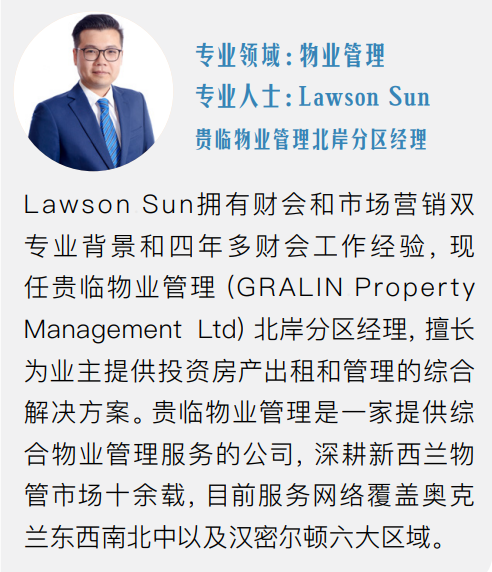
YIJU reader Lexi:
If the rental market remains weak, what practical advice can you offer landlords losing income because their properties are vacant?
The COVID-19 pandemic has affected every industry, and the residential rental market is no exception. Many landlords have suffered financial losses from vacant properties during this extraordinary period. However, it is worth pointing out that, with house prices surging in recent years, underlying demand for housing has remained strong in New Zealand. The key is to attract good tenants and let vacant properties quickly. Here are four practical, effective suggestions for property owners:
First, upgrade your property early to meet compliance requirements and improve its competitiveness. As the number of vacant rental properties rises, tenants have more choice and greater bargaining power.
With winter here, a comfortable home is crucial to attracting good tenants. The Government's Healthy Homes Standards also require that, from 1 July 2021, landlords ensure rental properties fully comply within 90 days of any new, renewed or varied tenancy. Acting early and making targeted improvements to property quality and comfort is the most practical way to quickly attract satisfied tenants, and provides the strongest basis for increasing the rent.
Beyond meeting the Government's Healthy Homes Standards, renovating while a property is vacant is another good option. It can keep the property competitive in the market for years to come and increase rental income accordingly.
Second, adjust the rent to reflect market trends. With underlying demand for rental housing, rent becomes a crucial negotiating factor between landlords and tenants.
Market rents are always changing. Historical rental data can provide a reference, but it is not the only indicator.
Rents, which have climbed steadily in recent years, are gradually stabilising under the pandemic's influence. Over the long term, a stable investment depends on good tenants. Setting a reasonable rent in line with market trends is an important way to attract them.
Third, ease restrictions and add tenancy agreement clauses. To let a vacant property faster, particularly when it is at a competitive disadvantage, landlords need to reconsider some previous restrictions on tenant selection. These might include tenancy length, accepting only families rather than flatmates, or limits on the number of occupants. Doing so broadens the tenant pool and gives landlords more choice.
Easing restrictions does not mean accepting lower-quality tenants or necessarily increasing risk. Landlords have the right to add clauses protecting the property when signing a tenancy agreement. A detailed, comprehensive agreement can substantially reduce subsequent management risks.
Fourth, use professional services to enjoy excellent returns. Contrary to a common perception, property managers do more than handle a property's day-to-day affairs. They can provide owners with specific, professional guidance and advice on rental appraisals, letting properties, tenancy management and other matters, doing everything possible to improve investment returns.
YIJU reader Elle Wu:
In the current economic environment, is it better to rent out a vacant property or sell it?
I believe this era of low interest rates may be the best time to use rental income to cover mortgage payments.
The dilemma of renting out or selling generally concerns investment properties. Most investment property owners did not buy entirely with cash. The economic crisis caused by the pandemic inevitably puts pressure on owners servicing mortgages, and some who cannot afford repayments are even considering selling their properties.
However, unless an owner urgently needs to release cash, selling at a low price now would seem somewhat unwise.
If the aim is simply to meet short-term mortgage repayments, is there an approach that better serves the investment without selling the property? The answer is yes.
Underlying demand in New Zealand's rental market makes rents relatively resistant to falls, creating favourable conditions for owners to cover mortgage payments with rental income.
Statistics show that residential rents in most of the upper North Island continued to rise in the second quarter of this year, while those in most of the South Island and lower North Island fell.
Calculated from bonds received by Tenancy Services, the national average weekly rent rose by NZ$3 (+0.7%), from NZ$461 in the first quarter to NZ$464 in the second.
In Auckland, the average weekly rent rose by NZ$5 in the second quarter of this year to NZ$549, an increase of 0.9%. Rents rose across all areas except the North Shore, where the weekly figure fell by NZ$10 to NZ$592.
This shows that the combination of low interest rates and steady rents makes covering mortgage payments with rental income practical and increasingly common. In fact, I believe this remains the best time to invest in and hold rental property.

YIJU reader Amanda:
The news says banks are competing to lower mortgage rates. How do I choose the best option for me?
I think this question should be answered from three angles:
First, keep watching interest rate movements: market conditions are driving fixed mortgage rates in New Zealand steadily lower.
If New Zealand continues to follow Australia, where the lowest fixed rate is 1.99%*, fixed mortgage rates will continue to fall over the next twelve months.
There are many banks in the market. Beyond the familiar four major banks and Kiwibank, there are numerous others.
Some banks do little advertising but actually offer better rates. Rate cuts also tend to begin with one bank, with others gradually following. As rates have been changing frequently recently, there may be a lag before other banks follow suit.
Customers seeking low rates therefore need to keep monitoring rate movements or seek help from an experienced lending manager.
Second, consider the loan structure: interest rates are the most obvious factor in reducing borrowing costs, but many people do not realise how important loan structure is.
Different loan structures can produce very different results depending on a borrower's income structure and the purpose of the borrowing. For example, if an investment property mortgage is with the same bank as the owner-occupied home mortgage, splitting the loans and maximising the proportion allocated to the investment property can save tax. Choosing interest-only repayments can also ease repayment pressure.
There are also many techniques for customers with different income structures:For example, customers with substantial cash flowing in and out, or with savings, can use revolving credit or an offset account to achieve 0 interest costs on part of their borrowing.
The real challenge is often choosing the best combination for each person's particular income and borrowing purposes. This is especially important for customers with multiple properties and complex borrowing needs.
Banks offer a wide variety of mortgage products with many differences. Finding the right combination often requires professional help.
Third, consider the cost of your time: Time is money, and that does not conflict with shopping around. The two can work particularly well together when arranging a loan. The key is to have a professional mortgage broker team handle your lending.
YIJU WeChat reader Jason:
Banks have tightened lending approvals. What can I do to improve my chances of getting a loan?
As mortgage rates at major banks continue to fall, banks need stricter risk controls. In practice, this means tighter lending approvals, mainly in two areas:
First, the loan-to-value ratio (LVR): for owner-occupied home loan applications with an LVR above 80%, major banks have introduced various restrictions. Examples include: 1) higher requirements for uncommitted monthly income in lending calculations, reducing the amount that can be borrowed on the same income; 2) lending only to existing bank customers; and 3) for new customers, approving only applications backed by a sale and purchase agreement—a live deal.
Meanwhile, since the Reserve Bank of New Zealand removed the 70% LVR restriction on investment property lending, some commercial banks have begun accepting investment property loan applications at 80% LVR, depending on their own circumstances. Each bank, however, has its own lending policies and requirements.
Second, the applicant's income: alongside LVR, another important lending criterion is income. Banks need to ensure applicants can both meet repayments on the new loan and withstand interest rate fluctuations without lowering their standard of living.
This is why actual repayments on approved loans are usually relatively low compared with the applicant's income.
All banks now require strict verification of income stability, even for straightforward PAYE earnings.
Application requirements are stricter still for other income categories, such as commissions, bonuses, overseas income and business income.
Income that has previously fluctuated downwards, in particular, often requires a very sound explanation and sufficient supporting evidence of its stability before lending can be approved.
The applicant's background, the purpose of the loan and account conduct also have a crucial bearing on whether borrowing is approved.
In fact, loan applications have always required comprehensive verification of an applicant's circumstances, and each bank's policies contain very specific requirements. Overall, a successful application needs to present the applicant's circumstances to the bank truthfully, effectively and comprehensively, in accordance with its requirements.