From an empty site to a move-in-ready home in 18 hours: could New Zealand housing be this simple in future?
Early in 2020, the extraordinary speed of construction at Leishenshan and Huoshenshan hospitals on the outskirts of Wuhan allowed the world to witness the enormous potential of prefabricated buildings online. Half a year later, prefabricated homes caused another sensation with an astonishing live demonstration.
Move in within 18 hours: building a home could be this simple in future!
18 hours and 15 minutes
One master of residential layout design
8 construction companies
65 construction workers
More than 50 assembly processes
More than 100 work stages
Over a thousand components
Tens of thousands of individual operations
From erecting the first steel beam-and-column frame to placing the final furnishing
From an empty site to a move-in-ready home
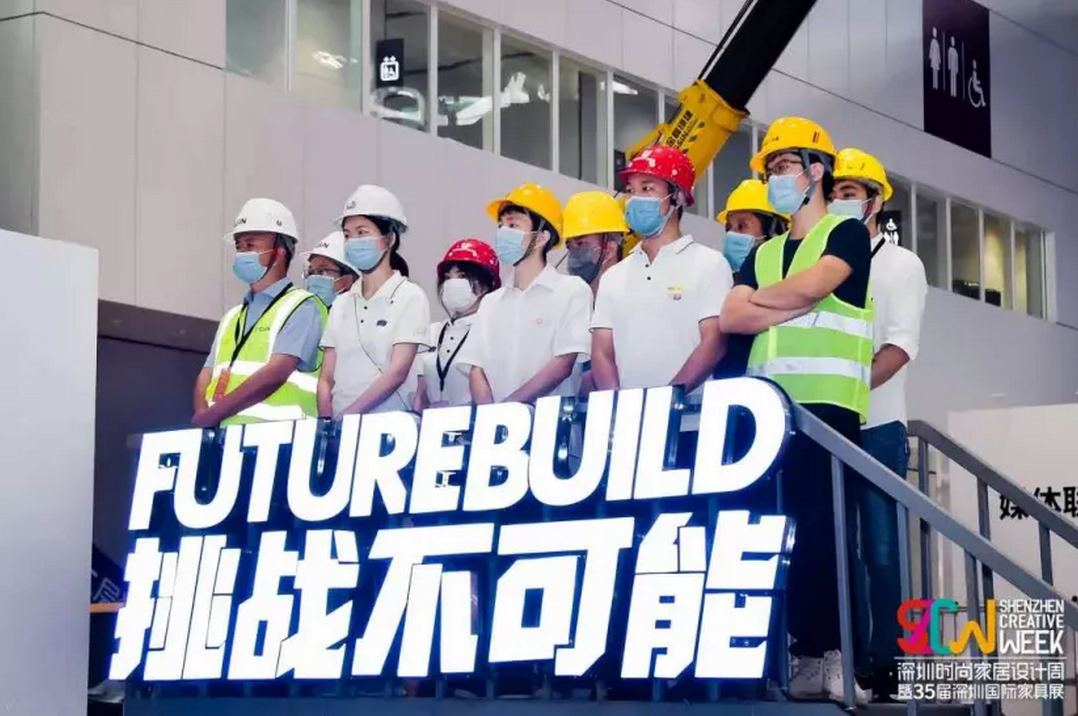
On 20 August–21, a technical demonstration at the Shenzhen International Finished Housing Exhibition saw an entirely prefabricated green steel-frame building constructed in less than a day. The “Mission Impossible” challenge, originally scheduled to take 24 hours, was successfully completed 5 hours and 45 minutes ahead of schedule.
Driven by an obsession with going faster
The “Mission Impossible” project grew out of an obsession held by Guan Yongkang, curator of the Shenzhen International Finished Housing Exhibition and head of the Shenzhen Furniture Association’s Finished Housing Institute: “After our challenge in 2018 to build a two-storey, 700-square-metre home using precast concrete components in 7 days, we kept asking ourselves, ‘Could we go even faster?’”
Although the idea had been conceived long before, the project proved more difficult than expected when implementation began. The first trial assembly took well over 24 hours. But without difficulty, how could it demonstrate the value of setting a new benchmark for prefabricated housing in China? Wasn’t the whole point to challenge the “impossible”? Repeated trial assemblies before the exhibition involved analysing and improving every detail, continually adjusting products, technology, interfaces and timing, ultimately producing the best possible live demonstration.
Combining expertise to make it possible
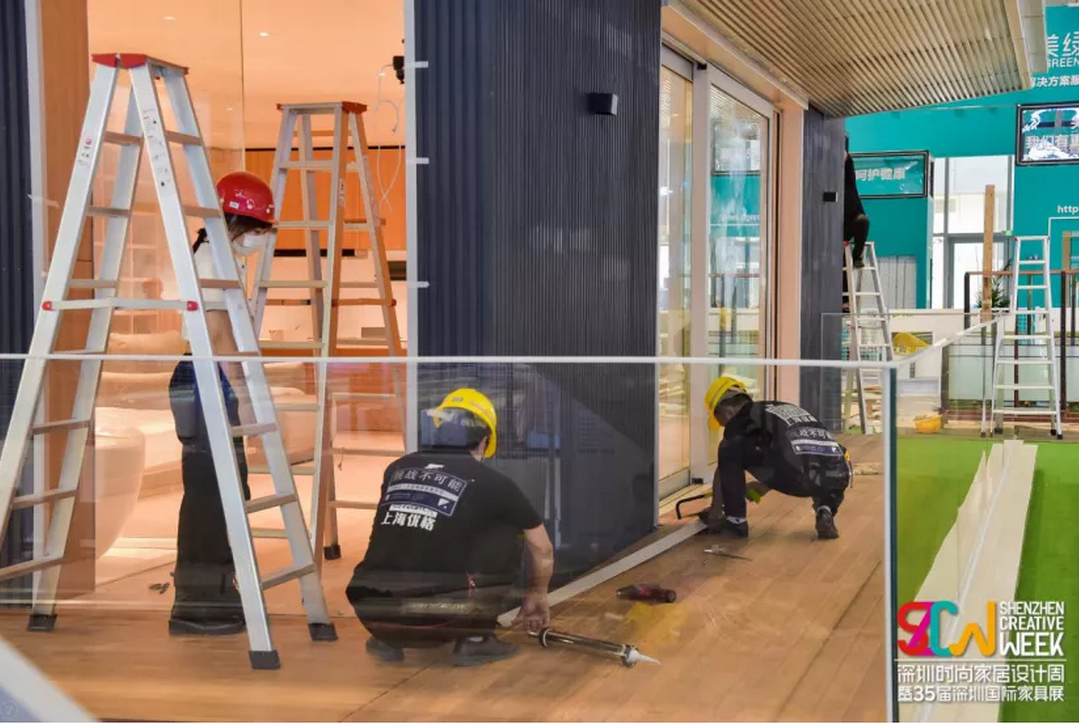
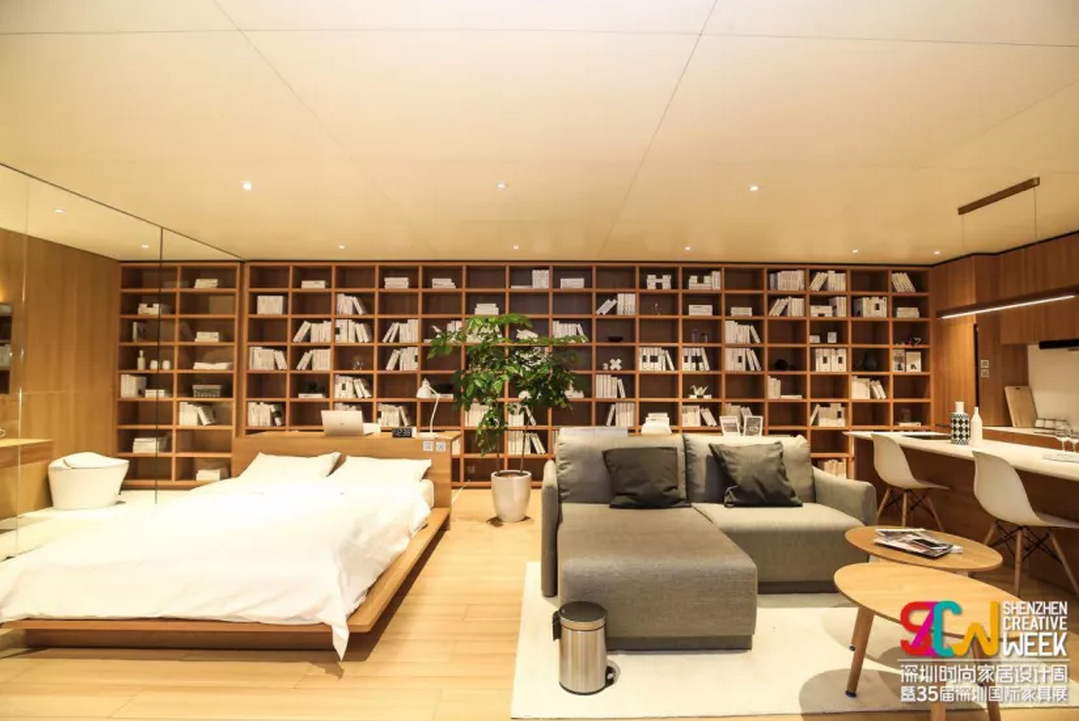
From 11h on the morning of 20 August, the 459-square-metre space in exhibition area F2 became the busiest part of the entire exhibition. The structure and interior fit-out of a two-storey prefabricated steel-frame home, combining design flair with practicality and fully equipped with a lounge, bedrooms, bathroom and storage components, were to be completed within 24 hours. This included prefabricated installation of integrated ceilings, timber flooring, internal partitions, a complete bathroom, balcony doors and windows, storage components, electrical wiring and appliances, as well as arranging all freestanding furniture and soft furnishings. In the end, the work was completed almost 1/4 ahead of schedule.
This seemingly impossible challenge brought together leading design talent and technical teams from the prefabricated building industry in China and overseas. The Shenzhen Furniture Association’s Finished Housing Institute oversaw the project. Its adviser, Japanese housing expert Sadao Tsuchiya, led the architectural and interior concept design. Shenzhen Jinxin Green Building handled detailed design and construction of the main steel structure, while the Shenzhen General Institute of Architectural Design and Research undertook detailed structural design for the steel building. The Finished Housing Institute designed the interiors, and Shenzhen Youshe Housing Technology installed the prefabricated fixed storage components. Germany’s Bravat, Shanghai Youge, Yasui Integrated Home and Italy’s Savio were respectively responsible for implementing technical systems including prefabricated kitchens and bathrooms, internal partition structures and ceilings, and doors and windows. Integrated design working backwards from the finished result, prefabrication technology and overlapping on-site operations by the companies together made the “impossible” possible.
{ad}
What industry insiders see
“Outsiders watch the spectacle; insiders see the expertise.” The 18 hours of intensive assembly dazzled onlookers, but this was much more than a technical show at an exhibition.
In an interview, Sadao Tsuchiya said the project demonstrated the potential of steel-frame housing. “Compared with reinforced concrete structures, steel structures are better suited to large spaces and offer greater efficiency. They also allow more freedom in residential layouts. Whether people want a large open-plan space or partitions, they have a wider range of choices.”
Many industry professionals believe the project followed a fully prefabricated design approach based on working backwards from the finished result, modularisation and standardisation throughout: from architectural, interior, fit-out, component and furnishing design to building construction, interior installation, component integration and furnishing. Beyond addressing issues such as standardisation, shorter construction times and environmental performance in green prefabricated steel-frame buildings, this construction method—and multi-unit housing built using it—could offer a particularly important breakthrough for major cities facing housing shortages.
How to watch remotely from New Zealand
However many photographs and words there are, they can only scratch the surface. At the forthcoming New Zealand satellite event for the Shenzhen International Finished Housing Exhibition, professionals from New Zealand’s construction, design and related sectors will have the opportunity to gather and watch recorded footage from the site, gaining a comprehensive view of the entire construction process. They will also share ideas and experience, exploring how the world’s latest home design trends and technologies could be applied to New Zealand housing.
The New Zealand satellite event for the Shenzhen International Finished Housing Exhibition is organised by the New Zealand Chinese Building Industry Association, with supporting organisers Argus Engineering, Bravat Germany’s exclusive New Zealand distributor, YIJU New Zealand and 3A Events. Bravat Germany and Midea Group are title sponsors, with support from the Employers and Manufacturers Association (EMA), the New Zealand China Trade Association (NZCTA), the New Zealand Guangdong Chamber of Commerce and the Chinese Culture and Education Foundation. Auckland’s Level 3 pandemic restrictions have forced the event to be postponed, with a new date to be announced. However, the pandemic cannot stand in the way of committed cooperation between China and New Zealand in construction and design.