
Is this really a bad time to buy a home? Why do the latest market figures differ from public survey results?
The final month of 2020 has begun, and the latest reports from major property websites show that housing markets around the country continued their strong advance in November.

The final month of 2020 has begun, and the latest reports from major property websites show that housing markets around the country continued their strong advance in November. Although an earlier ASB housing confidence survey found that a net 12% of respondents thought it was a good time to buy a home, sales and prices in November suggest that perceptions of poor timing have not deterred buyers. Auckland in particular has seen brisk activity on both sides of the market.
{ad}
Auckland sets records for both prices and sales
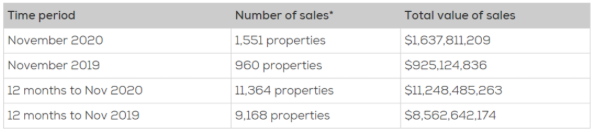
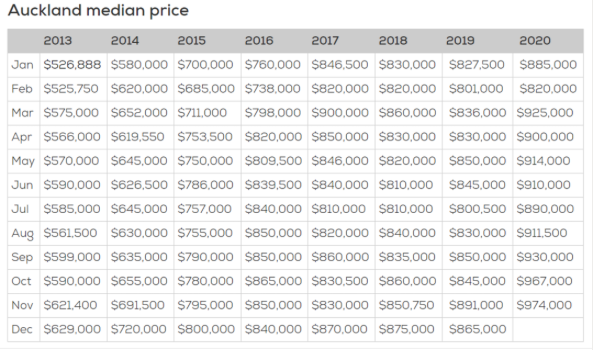
Auckland has recorded five consecutive months of growth in both sale prices and sales volumes. In November, the housing market’s average and median prices reached new records, while monthly sales reached their highest level in more than five years.
The latest realestate.co.nz figures show that Auckland had one of the country’s highest average asking prices last month. Despite a 45.9% year-on-year increase in new listings, its average asking price exceeded NZ$1,000,000 for the third consecutive month.
Barfoot & Thompson managing director Peter Thompson said: “Buyers have shown no hesitation over either today’s high house prices or the prospects for residential property retaining its value.” He believes buyers are demonstrating through their actions that now is a good time to buy, and will act without hesitation if they can secure bank lending.
- Sales volumes
“The current red-hot property market is much the same as it was during the peak period from 2013 to 2016,” Thompson said.
Throughout November, Barfoot & Thompson sold 1,551 homes at an average price of NZ$1,055,971 and a median price of NZ$974,000. “Previously, the only month in which sales exceeded 1500 homes was March 2015,” Thompson said.
- Prices
The company’s current average sale price is 10.8% higher than in June, when this market upswing began, while the median price has risen 7%.
“At the beginning of this year, homes worth more than NZ$1,000,000 accounted for about a third of total sales, but over the past two months their share has approached half,” Thompson said. “For two consecutive months, sales of homes priced above NZ$2,000,000 have also exceeded 100.”
- Listings
Rising prices have also encouraged more sellers into the market. In November, Barfoot & Thompson added 2,335 properties to its listings, setting a record for new listings in a single month. At the end of November, the company had 4,043 properties for sale, its highest month-end total in 17 months. Thompson believes the influx of listings has broadened buyers’ choices, but added: “Auction sales have further created an environment of competitive bidding. Increased sales volumes have led to a shortage of listings, which in turn has driven prices higher.” Thompson expects this strong sales momentum to continue through to the Christmas and New Year holidays.
New listings fail to resolve the national supply and demand imbalance
Markets elsewhere in the country are equally buoyant. Real-time data from realestate.co.nz shows that a shortage of available listings continues to drive national house prices higher.
The national average asking price in November was NZ$797,156, up 17.1% on the same period last year. Seven regions recorded all-time highs in November.
Although the number of homes available for sale increased in many regions last month, which is undoubtedly encouraging news for buyers, total national stock remains very low.
Realestate.co.nz spokesperson Vanessa Taylor Vanessa said: “Although new listings rose 14.5% year on year, the total number of homes available nationally in November was down 16.9% compared with November 2019. Nine regions recorded their lowest stock levels in 13 years.”
Vanessa said demand remained strong. In November 2020, realestate.co.nz recorded visits from more than 1,330,000 users, well above the 1,080,000 users in the same period of 2019. “We know New Zealanders are still searching for homes, and as long as demand continues to exceed supply, further house price rises will be inevitable.”
- Average asking prices reach new highs in seven regions
The latest realestate.co.nz figures show that, alongside Auckland, six other regions—Waikato, Hawke’s Bay, Southland, Coromandel, Wairarapa and Manawatū/Whanganui—recorded all-time high average asking prices in November.
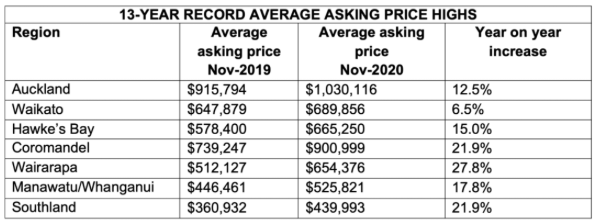
Nationally, the average property asking price was NZ$797,156, up 3.2% on the previous month and a substantial 17.1% above November 2019.
“Average asking prices reflect sellers’ expectations,” Vanessa said. “Although they are not the same as actual sale prices, they generally remain a useful barometer of market prices and provide a good indication of changes in the property market.”
In Waikato, the average asking price reached a record NZ$689,856. Lifestyle properties were the main property type driving the local market, with a record average asking price of NZ$1,324,962, up 27.8% from November 2019.
“Last month, realestate.co.nz data showed that nearly 25,000 users from Auckland searched online for Waikato properties,” Vanessa said. “As transport links between the two areas continue to improve, this trend is expected to continue.”
The average asking price for lifestyle properties in Manawatū/Whanganui also reached its highest level in 13 years, at NZ$814,344.
- Housing stock at historic lows in nine regions
Although 12,622 new properties were listed nationwide last month, up 14.5% year on year, the persistent shortage of stock continues to trouble buyers.
Only 18,319 homes are currently available for sale across New Zealand. “Demand continues to exceed supply,” Vanessa said. “The total number of homes available in November was down 16.9% on the same period in 2019.”
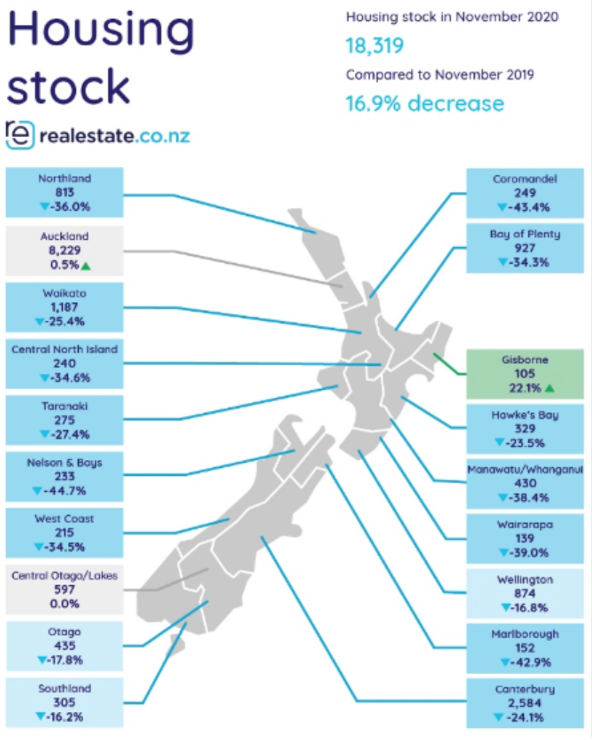
In November, stock levels in nine regions—Northland, Waikato, Bay of Plenty, Hawke’s Bay, Nelson, West Coast, Coromandel, Marlborough and Manawatū/Whanganui—fell to their lowest levels in 13 years.
Compared with 2019, Nelson, Coromandel and Marlborough recorded the largest changes in housing stock, with declines of 44.7%, 43.4% and 42.9% respectively. Stock levels in Auckland and Central Otago/Lakes (Lake Otago/Lakes) were broadly unchanged from 2019. Gisborne was the only region to buck the trend, with available homes increasing by 22.1%.
Vanessa expects stock levels to remain low in December, as new listings typically decline as the busy holiday period approaches. “It will be interesting to see where the market heads in the new year. Buyers will certainly be hoping that new listings continue to increase.”