Interview with Garry Ko: what enabled RCR to thrive against the odds during the pandemic?
“Without RCR. Infrastructure, New Zealand’s nationwide lockdown, which lasted more than 1 month, would not have run so smoothly. If support services had failed, supply shortages would inevit
“Without RCR. Infrastructure, New Zealand’s nationwide lockdown, which lasted more than 1 month, would not have run so smoothly. If support services had failed, supply shortages would inevitably have caused chaos, the lockdown would have failed, and the coronavirus would have swept across New Zealand like a hurricane.” This was how New Zealand’s mainstream media described RCR Infrastructure’s contribution to the country during the COVID-19 pandemic, and the praise was well deserved.
Many people may be unfamiliar with the name RCR. Infrastructure. Yet RCR, established in 2019,. Infrastructure is a company with a genuine century-long heritage:
{ad}
In 1898, in Perth, Australia, Ernest. Tomlinson and Edward. Tomlinson, two brothers, founded the engineering company Tomlinson. Bros. More than half a century later, in 1979, also in Western Australia, Ron. Stevens、Clive. Butcher and Robert. Wovodich jointly founded the engineering company RCR. In 1996, following a series of consolidations, RCR. Tomlinson was established. In 2019, Chinese New Zealand entrepreneurs, the Chow brothers (John and Michael. Chow), acquired RCR. Tomlinson and renamed it RCR Infrastructure, breathing new life into this century-old business.
Today, RCR. Infrastructure provides major New Zealand businesses, community organisations and institutions, including supermarkets, hospitals and schools, with electrical maintenance and the installation and maintenance of air conditioning, ventilation, refrigeration, renewable energy and building management systems. The nature of this work made RCR. Infrastructure a natural choice to provide essential support behind the scenes during New Zealand’s pandemic response.
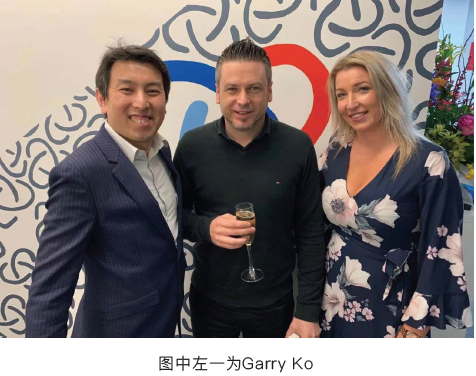
YIJU New Zealand interviewed RCR. Infrastructure Executive Director Garry Ko, asking him to share with our readers how RCR Infrastructure supported the major supermarkets and other essential services we rely on during the nationwide lockdown, while protecting the health and safety of nearly 100 employees, and how it then bucked the downturn following the outbreak and accelerated its growth.
During the COVID-19 pandemic, which essential industries did RCR. Infrastructure provide operational support services for?
During the nationwide lockdown, only a limited number of supermarkets, including Countdown, remained open in New Zealand, supplying people with all their daily necessities. We at RCR Infrastructure provided the support services for these major supermarkets.
Throughout the pandemic, our frontline RCR teams provided timely services on site. Many small tasks that went unnoticed had to be completed to keep supermarkets operating normally.
For example, Countdown’s conveyor belts broke many times. Our frontline teams stayed on site to ensure that any breaks were repaired promptly.
Alongside some supermarkets, we also provide maintenance for Fonterra and ANZ. Bank. These businesses are not only important RCR clients; they also operate in industries that were essential during the pandemic.
Because RCR staff needed to remain on duty, we were among the few companies still operating during lockdown. This gave us the opportunity to help establish COVID-19 testing centres, contributing to and supporting the community. Within a short time, RCR helped establish 12 testing centres, an achievement our people are proud of.
How did RCR Infrastructure support these essential industries simultaneously during the pandemic?
RCR has branches in 6 New Zealand cities, with a frontline technical workforce of up to 150, including subcontractors. Even if we do not have a branch in your area, you can access services through an RCR subcontractor.
Overall, different branches meet different levels of service demand, with RCR staff supporting infrastructure throughout the country.
To serve essential industries during the pandemic, we relied primarily on the established teams at our branches. As they serve different industries, each team has a different focus, with its own strengths in strategy, skills and capabilities, and provides support tailored to industry needs.
For example, our Wellington team mainly services high-rise buildings, while our Hamilton team provides maintenance for Fonterra, focusing more on milk powder factories and other primary industry plants.
The Hamilton team works very differently from the Wellington team, as its services focus mainly on food-sorting equipment, including tasks such as removing dust from food-sorting machines.
Auckland has as many high-rise buildings as Wellington but fewer factories than Hamilton, so our Auckland team focuses more on schools, hospitals and similar facilities, requiring a more diverse range of services.
In the South Island, there are fewer factories and large industrial operations, so RCR mainly services and supports local infrastructure such as supermarkets, banks, hospitals and small tourism businesses.
During the pandemic, what challenges did RCR. Infrastructure face in carrying out its work?
I remember that many people were still returning to New Zealand from overseas in February this year, bringing the COVID-19 virus into the country.
At the time, many countries and regions were already in lockdown, and some of our staff were in isolation in China. We then received a letter from Civil Defence requiring RCR to keep operating during lockdown. Three days later, New Zealand’s first lockdown was officially announced.
This was RCR’s greatest challenge during the pandemic: when that letter arrived, our staff had very little time to prepare to provide the support Countdown and Fonterra needed.
Fortunately, through orderly organisation and planning, RCR successfully overcame the crisis and efficiently met all our essential industry clients’ requirements.
RCR’s performance during the nationwide lockdown of more than a month was exemplary. What was the secret to its success?
There is a Chinese saying that means “come prepared”. I believe planning ahead was one of the keys to RCR’s success. In March, when COVID-19 began spreading as a global pandemic, I had just been appointed RCR’s Executive Director, and RCR already had a Business Contingency Plan (BCP) ready.
This was because we provide maintenance for many essential industries. As it happened, given the nature of RCR’s work, we were importing parts for repairs at the time. When we anticipated that an outbreak might be imminent, this put us in a strong position to prepare our BCP promptly.
Alongside thorough preparation and planning, new technology was another key to our success: we are the only large company in New Zealand to operate entirely using cloud technology. All our tasks, work allocations, schedules and contingency measures are managed through software. RCR’s system changed the rules of the game, helping factories maintain production efficiency and keeping supermarkets, factories, food production and transport running seamlessly.
The COVID-19 pandemic had a severe, even devastating, impact on many New Zealand businesses. How was RCR affected?
In fact, COVID-19 had a considerable impact on RCR. During that period, we faced three main challenges:
The first was a shortage of personal protective equipment (PPE). We explored every avenue to source masks for our staff. Although we were fortunate enough to have built up more stock than before, it was still insufficient.
Secondly, because essential services (essential. services) accounted for only 25% of RCR’s total business, 75% of our staff were still without work. Our company culture always puts employees’ mental health and safety at work first. To do this effectively, we needed to ensure everyone had tasks and stayed busy, looking forward to doing something each day rather than sitting at home worrying. We arranged for all technicians to take turns working. Older employees remained on call when needed, while younger and project technicians worked on a roster, ensuring that everyone had an income during the pandemic.
Another major issue RCR faced was the pandemic’s financial impact. Enquiries fell substantially during this period, greatly affecting our customer service and sales teams.
What are RCR’s development plans for 2021 and the next five years?
Construction and property are currently booming, creating more opportunities for RCR. In response to current trends, RCR has repositioned the company to provide more support for subdivision developments and undertake less infrastructure work. We have also identified local family businesses and small to medium-sized projects as our future focus, rather
than concentrating on large projects as we did previously.
RCR is continuing to develop our teams both horizontally and vertically. Horizontally, our goal is to establish more branches nationwide, particularly satellite branches in Nelson and Dunedin. Vertically, we want to invest more in products and strengthen our brand image. Ideally, we would also like to serve the Chinese-speaking market, as we know that no company of our scale is providing these services within the Chinese community. In future, we also hope to work more closely with YIJU New Zealand to provide quality services for our fellow Chinese New Zealanders.
Thank you for speaking with us!