
Is this really a golden age for subdivision? A technical expert cautions: don't trust economists!
“As someone working on the technical side, I find the seminar series' theme a little like clickbait. Subdivision for everyone? Is a project requiring specialist expertise and carrying substantial risks really suitable for everyone? Don't assume subdivision and development are guaranteed to be profitable. In fact, only a small proportion succeed. Is this a golden age? It's hard to say, but the most important lesson this year's pandemic has taught me is to trust myself and not take economists at their word.”

“As someone working on the technical side, I find the seminar series' theme a little like clickbait. Subdivision for everyone? Is a project requiring specialist expertise and carrying substantial risks really suitable for everyone? Don't assume subdivision and development are guaranteed to be profitable. In fact, only a small proportion succeed. Is this a golden age? It's hard to say, but the most important lesson this year's pandemic has taught me is to trust myself and not take economists at their word.”
{ad}
These were the closing remarks of Dylan Huang, secretary-general of the New Zealand Chinese Building Industry Association (NZCBIA) and general manager of Archiland Auckland, at the final session of the “Golden Age of Subdivision” seminar series. Does that sound a little jarring? Can you feel the discomfort of hearing unwelcome but well-intentioned advice? Yes, that is how practical this subdivision seminar series, jointly organised by YIJU New Zealand and NZCBIA, has been. No empty promises or grandiose visions: the aim is to give aspiring developers reliable, practical information to clarify the development process, define project goals, obtain useful information, use the right people, materials and resources, and avoid potential risks.
The series concluded successfully yesterday afternoon. Building on the previous two sessions, the final seminar focused on key stages and requirements towards the end of a project. Experienced industry professionals shared insights into policy, urban planning, engineering approvals, marketing and case-based risk analysis.
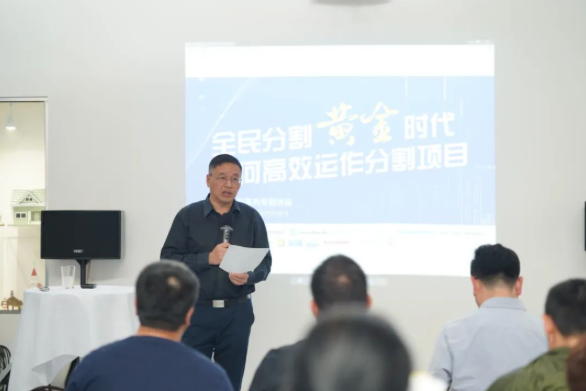
- NZCBIA president Frank Xu, the natural choice to host all three seminars, shared some practical guidance on carrying out subdivision works, drawn from his many years in land development:
- Value & Price
For investors, the most important thing when buying a project is to be sure its price is below its value—that it represents good value.
- Want & Need
Developers cannot focus solely on what they want. They need to communicate and work through differences with all stakeholders to reach agreement. A project can progress smoothly only when everyone's needs are aligned.
- Plan by milestones
Plan around milestones to manage the project, time and quality effectively. Applications for different council approvals, inspections during construction and the eventual issue of compliance certificates such as the Code Compliance Certificate (CCC) can all serve as milestones.
- Long leading items
Items with long manufacturing lead times, such as aluminium doors and windows or kitchen fittings, should be planned early and manufactured in advance so they are available when needed.
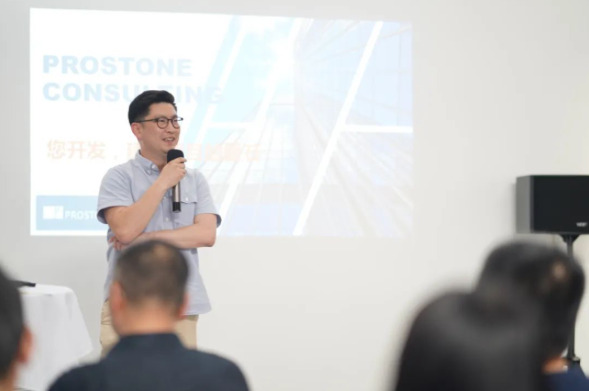
- Prostone general manager Peter Niu explained the important roles played by project managers, development managers and quantity surveyors (QS) in development projects. Peter stressed that many owners skip project management in the early stages, but he would not recommend this if they lack knowledge of the relevant laws and regulations. Unlike designers or construction contractors, project managers act as independent third parties representing the owner's interests, helping control costs and schedules. The earlier they become involved, the better they can help developers maintain oversight. Peter also outlined a promising option for medium- to large-scale, high-density developments of more than 20 homes: the enthusiasm for “comprehensive subdivision” partly reflects the Government's desire to provide communities with more and better homes. Such projects could consider partnering with KiwiBuild to benefit from the Government's large-scale housing programme.
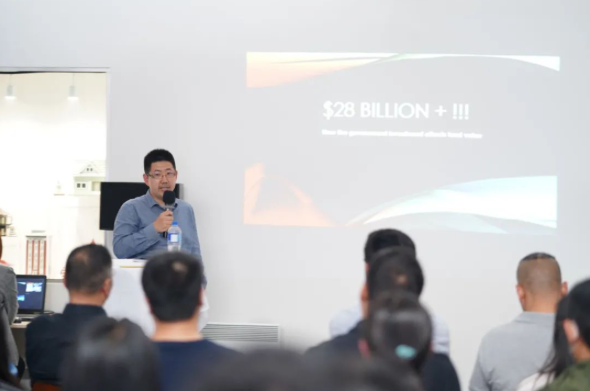
- He believed that “subdivision for everyone” involves more than individual developers' interests. Why describe it as catching a ride? From the Labour Government's perspective, it is also about providing communities with more and better homes; kinora, actually kiwibuild, connecting with investors. Ben Yu, the best nutritionist among investors, drew on his experience working at Auckland Transport to analyse how government transport and infrastructure policies might affect property prices. Auckland prepares a ten-year city plan every three years. Comparing the 2009–2019 plan with the areas recording the largest median house price increases in 2018, Ben identified a correlation. He noted that Auckland's public transport planning had changed considerably over the past two or three years, including using various restrictions to encourage public transport use in the city centre, decentralising the city through regional satellite centres, containing the urban footprint and encouraging redevelopment of older housing. All of these affect land's development potential, so the most promising future development sites will be centred on public transport hubs.
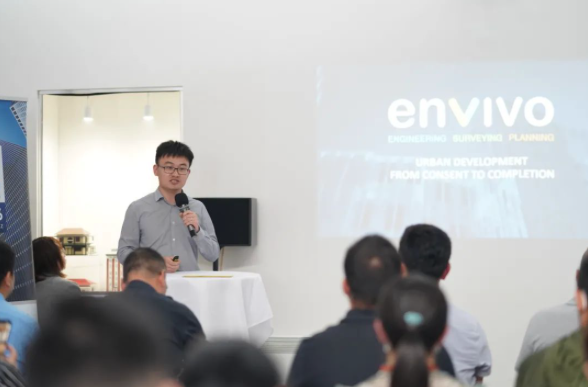
- In the previous seminar, Envivo civil engineer Jim Jiang and his colleague, planning team leader John Yan, explained the resource consent application process. Continuing that theme, Jim described how, after obtaining resource consent, applicants should prepare applications for the 223 and 224C documents to complete the process of obtaining title from Land Information New Zealand. While preparing a 223 application only involves boundary surveying by a registered surveyor, a 224C application is considerably more complex and demanding. It covers design, approval, construction and sign-off for stormwater, wastewater and water connections to homes, driveways, and power and telecommunications lines. An EPA application forms part of the 224C application process, but is far from the whole of it.
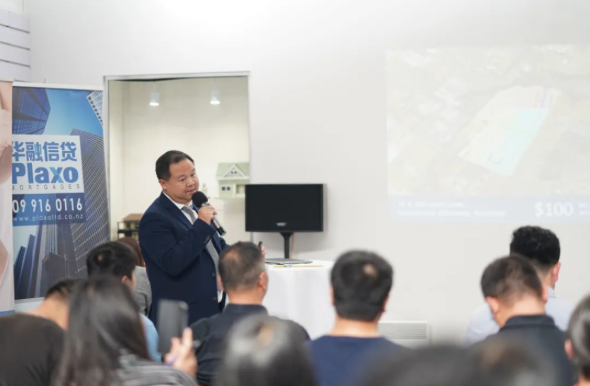
- James Law, founder of James Law Realty Ltd, has experience completing thousands of property transactions. He explained that selling means pushing a property directly at buyers, while marketing uses strategies to attract buyers of their own accord. In his presentation, James shared his 4P marketing strategy.
- Products
Property comes in many forms: commercial and residential, with commercial property further divided into retail, offices and so on, and residential property into standalone houses, apartments, estates and more. Each type serves a different market and therefore requires a different marketing approach.
- Price
Pricing directly affects marketing results. Researching local demand; setting a minimum price before gradually increasing it; setting a low initial deposit; allowing the deposit to be paid in instalments; offering different payment methods to suit customers' needs and habits; and understanding whether competing alternatives are available nearby—all these techniques influence prospective buyers' thinking.
- Place
Understand the property's sales channels. Is it suited to investment or owner-occupation? How should it be sold: through your own sales staff or in partnership with another company, such as a real estate agency? Will it target only the local market, or overseas buyers as well? Must payment be made in cash, or will instalments be allowed?
- Promotion
Identify the target customer group, then address three questions specifically: first, how to get their attention; second, how to attract them; and how to engage them in conversation and win them over.
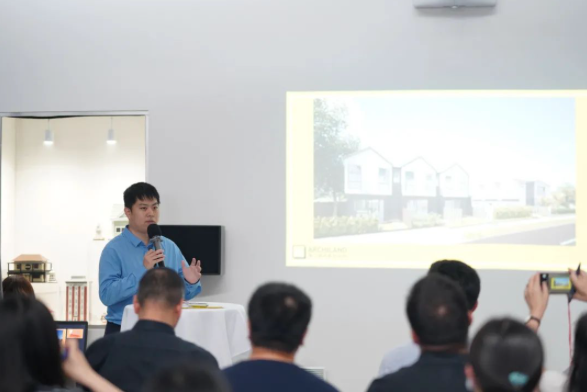
- Through a series of projects he had personally handled, Dylan Huang repeatedly emphasised that subdivision and development require specialist expertise and carry risks. To minimise those risks, proceed carefully at every stage and investigate thoroughly in advance, rather than discovering problems during construction, sales or even after occupation, when they may be difficult to remedy. When purchasing a project, include contractual provisions requiring the existing owner to allow designers and engineers to carry out necessary investigations before settlement. Do not overlook small issues: even bin locations or the slope of an adjoining roof can create risks, so identify and resolve them early. Follow the process step by step rather than rushing and skipping stages. Before starting architectural design, for example, wait for the necessary reports and obtain the required data instead of relying blindly on experience. Each discipline has its specialists, so bring the relevant engineers into potentially risky developments early. For sites in flood-prone areas, for instance, advice from waterproofing and civil engineers is important. Large projects must also account for infrastructure capacity and obtain agreement from the council and relevant government agencies in advance, including discussing substantial traffic increases with Auckland Transport.
The seminars have concluded, with more information to come
Yesterday's seminar offered neither a prize draw nor an auction starting at one dollar, yet it still attracted seventy to eighty attendees, many familiar from the previous two sessions. Like those earlier events, it could not finish on time. Whether you attended and wanted to hear more, or are a developer, investor or industry professional who needed the information but missed the seminars for any reason, you can look forward to issue 16 of YIJU New Zealand magazine, due out soon. It will provide more detailed and comprehensive guidance on subdivision and development. Our official WeChat account will also continue covering this field and sharing further information. If you have any questions about subdivision, please leave a comment below at any time.