
Government plans 13,000 public homes over 4 years: how can Chinese builders get on board?
New Zealand’s major mainstream media outlets all led with the same story this morning: the government’s announcement of a new public housing plan. Having completed fewer than 5000 public homes in its previous term, the Labour government announced that it would build more than 13000 new homes during its current term.
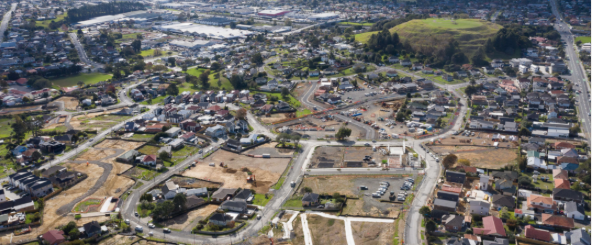
New Zealand’s major mainstream media outlets all led with the same story this morning: the government’s announcement of a new public housing plan. Having completed fewer than 5000 public homes in its previous term, the Labour government announced that it would build more than 13000 new homes during its current term. The ambition is impressive, but will reality fall short? Can the Chinese construction sector, an increasingly significant force in New Zealand’s building market, play a part?
{ad}
- Build broad, effective partnerships between central government, local government, public and community housing agencies, iwi and the construction industry
- Provide more public housing in regional centres and towns where housing demand is growing rapidly, while also delivering more public housing in the main urban centres
- Take a more proactive approach to housing placements and targeted solutions to meet diverse housing needs, particularly by addressing housing difficulties in Māori communities through the MAIHI action framework; and
- Increase the number of newly built public homes, gradually reducing reliance on privately owned rental properties for public housing
These were the government’s aspirations outlined by Prime Minister Jacinda Ardern and Housing Minister Megan Woods this morning when announcing the new public housing plan. The plan announced that it would build, over the next four years, more than 13,000 new public and transitional homes. Including public housing built during Labour’s first term, the plan would add a total of 18,000 public homes from 2017 to 2024. Funding for 8,000 of these homes was included in last year’s government Budget, comprising 6,000 new public homes and 2,000 new transitional homes.
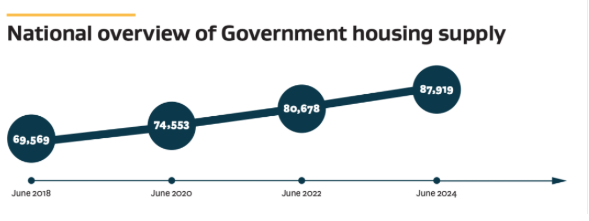
“This will not only provide warm, dry public housing for people struggling with the housing shortage, but also stimulate economic activity, create construction jobs and give young people opportunities for employment and practical experience. Since November 2017, 4579 new public homes have been completed across New Zealand. The public housing construction programme under way will exceed the total number of government public homes built over the past twenty years,” Ardern said.
Ardern said addressing the housing crisis was a priority for her government, and that the plan would play a crucial role in building more homes through infrastructure investment and support for the construction sector.
Woods said the public housing plan announced today was just one part of a suite of housing initiatives to address the crisis. These also included the Housing First Programme for people experiencing long-term homelessness, Progressive Home Ownership to help families buy homes, support for first-home buyers and a $300,000,000 investment in the Homelessness Action Plan.
Three main centres remain the investment focus
“As set out in this plan, we will focus on building more public and transitional housing in key parts of New Zealand where population growth has far outstripped housing supply, resulting in rising rents, housing shortages and increasing poverty.”
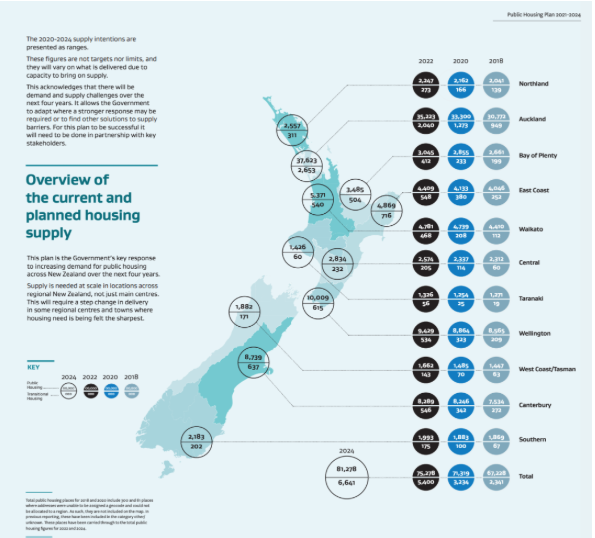
Over the next four years, new public housing construction will continue to focus mainly on large cities, with Auckland receiving the most, followed by Wellington and then Canterbury. By the end of 2024, the Auckland region will have 40,000 public and transitional homes, while Wellington and Canterbury will each have around 10,000.
The plan will also specifically target regional centres with severe public housing shortages, including Whanganui, Palmerston North, Napier, Hastings and Gisborne. In Gisborne alone, for example, house prices rose 30% over the past year, putting them increasingly beyond local residents’ reach.
Still finding time to blame the previous government
Even the additional 13,000 homes planned for construction, however, would not meet the needs of those currently applying for public housing. Last year alone, the waiting list grew by 7,900 people. National’s housing spokesperson Nicola Willis calculated that “at this rate, there could still be 32,000 people on the waiting list by 2025”.
Woods was quick to blame the roots of the current housing crisis on the previous National government’s inaction on public housing construction. “This is the result of decades of insufficient new home construction, and the previous National government selling thousands of public homes.”
National reiterates calls to repeal the RMA
National believes the plan falls well short of what is needed to address the housing crisis. It argues that the immediate priority should be to repeal and replace the Resource Management Act (Resource Management Act, abbreviated to RMA), to “make it easier for everyone, not just the government, to build homes”. It proposed a series of solutions:
1. Strengthen the National Policy Statement on Urban Development: encourage local government to advance rezoning and improve competition to enable housing intensification and rapid growth.
- Remove Auckland’s urban boundary: this artificial boundary, which the government promised to abolish in 2017, has added more than NZ$50,000 to Auckland’s average house price.
- Make Kāinga Ora funding available to community housing providers: qualified community housing providers have land and consents and are ready to start new housing projects. Some of the government’s existing 9,800,000,000 in funding earmarked for future community public housing projects could readily be used to get these developments under way sooner.
- Establish a housing infrastructure fund: this would help local government fund the pipes and roads needed to accelerate new housing developments on rezoned land.
5. Introduce new financing models: the government should work with the industry to develop financing channels for new housing through housing subsidies and income-related rent policies.
Willis said: “We need urgent action to release land for development and accelerate construction … We will work constructively with Labour to achieve this.”
Late last year, Finance Minister Grant Robertson also said, while confirming that the government would continue assessing the property market: “Overly restrictive building and planning rules are one reason house prices remain high, and reforming the Resource Management Act will be a priority in addressing this. Building on the National Policy Statement on Urban Development, we will examine the underlying barriers to affordable housing. Minister Woods is working to find effective ways to increase market supply and provide more help for first-home buyers.”
How can the Chinese construction sector seize the opportunity?
KiwiBuild’s disappointing performance during the previous 4 years in government has left many sceptical about this newly announced, large-scale construction plan. Frank Xu, president of the New Zealand Chinese Building Industry Association, takes a more positive view. He believes:
- Circumstances have changed: Labour now governs alone, free from the constraints of coalition government, and can implement the plan more effectively;
- The pandemic prompted the government to adopt quantitative easing, so ample funding is currently available.
- Following its failures in public housing construction during the previous term, the government should now be more mature and experienced.
Construction on this scale undoubtedly also offers Chinese developers and building companies, whose role in New Zealand’s construction industry is growing, an opportunity to participate in the mainstream. However, “the Chinese construction sector does not have an advantage in this area”. Peter Niu, general manager of Prostone Consulting Ltd, a member of the Chinese Building Industry Association, believes two main factors weaken Chinese building companies’ competitiveness for government projects: insufficient interaction and trust between Chinese businesses and the government, and newer companies’ difficulty matching established local firms in workplace safety and paperwork.
Working at New Zealand’s first comprehensive Chinese consultancy in construction and development, Peter has long followed public housing construction and established close communication with the relevant government agencies. At the “Land Subdivision” seminar series jointly hosted by YIJU New Zealand and the Chinese Building Industry Association in December last year, he said: “The surge in subdivision across the board partly reflects the government’s wish to provide communities with more and better housing. For medium-to-large, high-density developments of 20 homes or more, it may therefore be worth considering working with KiwiBuild to get on board the government’s major social housing development programme.” His comments now appear to have been right on target.
As Frank candidly put it: “There are certainly opportunities, but given the government’s strict selection process, Chinese developers and builders interested in participating urgently need specific, practical guidance. We need a bridge between government and business.”