
Commercial property vacancy rates rising? COVID-19 should not take all the blame
Although the absence of new community cases in Auckland over the past two days has eased people's anxiety somewhat, the sudden three-day move to Level 3 has brought the pandemic's potential economic impact back into focus. Colliers International's February commercial property report suggests that, whether the economy is doing well or poorly, markets are always influenced by a complex mix of factors—and we may have placed too much weight on the impact of COVID-19.
Vacancy rates rose across commercial and industrial property in 2020. Although the adverse economic impact of COVID-19 is an obvious reason, other market dynamics predating the outbreak also contributed, including historically low vacancy rates and an increase in new developments. Despite the overall upward trend, the scale of vacancy changes varied across market sectors and locations. Colliers International's vacancy surveys of Auckland and Wellington's office, industrial and retail property markets reveal these marked differences.
{ad}
Offices: Demand for premium space still exceeds supply
- Wellington outperforms Auckland
Between December 2019 and December 2020, Auckland CBD's overall vacancy rate increased from 4.7% to 8.8%. Wellington's vacancy rate rose more slowly over the same period, from 6.1% to 6.9%. This may reflect the high proportion of space leased by government agencies, which are less affected by the pandemic and economic fluctuations. Vacancy rates in both city centres are expected to rise further in 2021.
Strong demand and limited supply have driven active development in both city centres recently. In 2020, office stock in Auckland and Wellington's CBDs increased by only around 50,000 square metres, approximately 3.5% of total stock, and 45,000 square metres, approximately 3.2%, respectively. However, some previously shelved projects are resuming, and listed commercial property company Precinct Properties has begun seeking tenants for new developments expected to be ready for occupation in the fourth quarter of 2023. These two developments will provide approximately 16,500 square metres of floor space.
- Premium properties outperform standard buildings
More flexible working arrangements adopted by tenant businesses will have a lasting impact on office vacancy rates. Flexibility, a shared priority for employees, tenants and landlords, will be a major market driver in 2021. Subleasing opportunities have also become available in the sought-after premium property market, allowing many companies to improve their premises. Future vacancy increases will therefore be concentrated in secondary buildings, while demand for premium properties will continue to exceed supply.
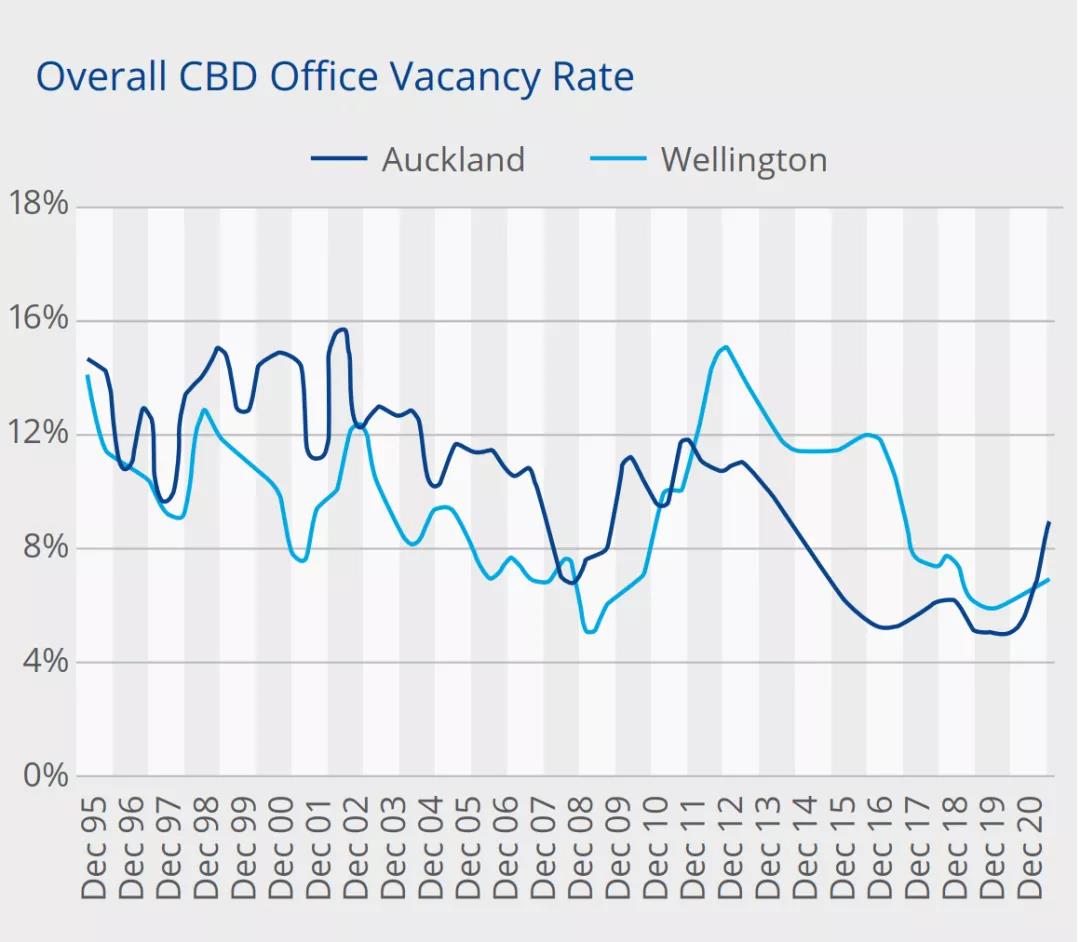
Although increased working from home and caution among some tenants have pushed vacancy rates higher, office development is expected to remain very active over the next five years. The economic and business outlook also supports this optimism. One indicator to watch is the latest movement in employment figures reported by Stats NZ. Although the recovery is still at an early stage and overall growth remains below pre-COVID-19 levels, emerging trends suggest office demand is recovering.
Industrial property: Modest vacancy increases nearing an end
- Slight rises leave vacancy rates historically low
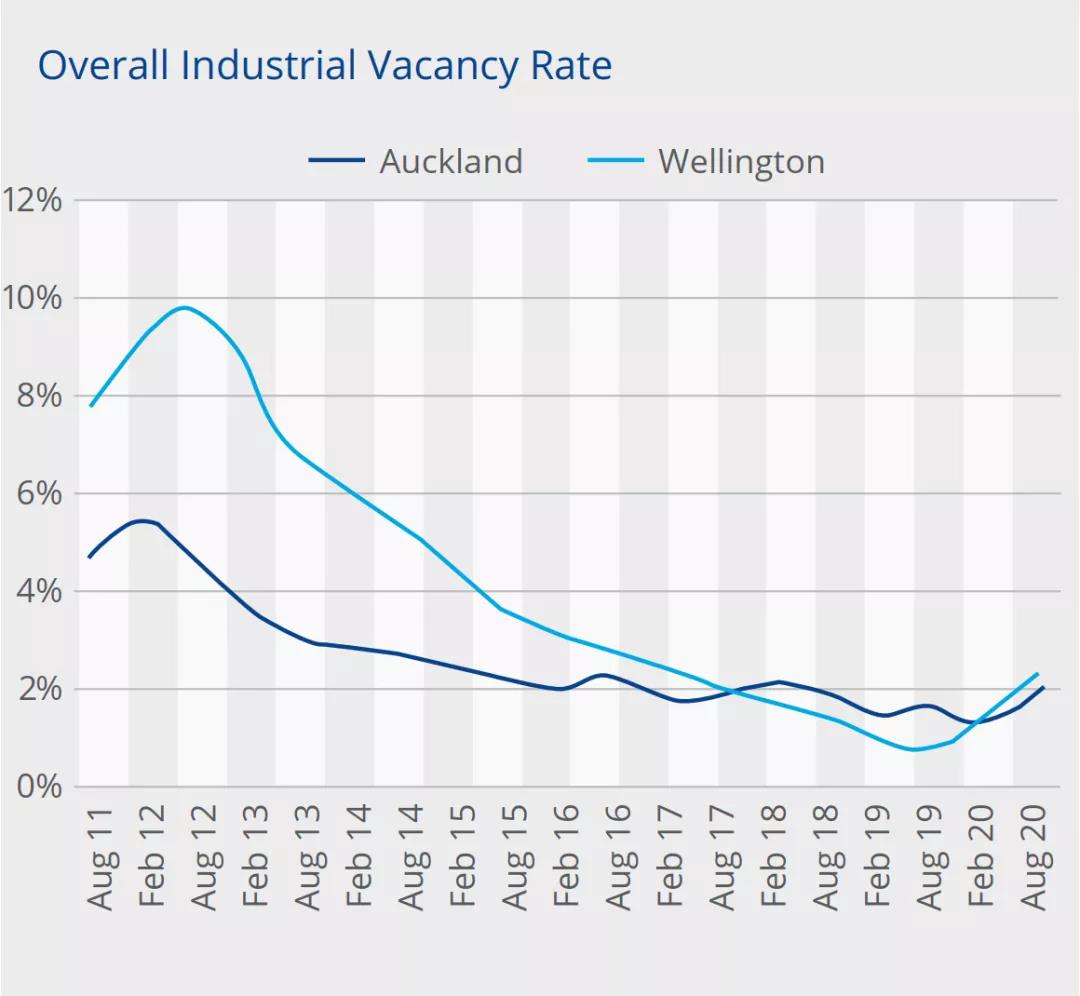
Over the past year, industrial property vacancy rates in Auckland and Wellington remained historically low, recording only small increases.
By August 2020, Auckland's overall vacancy rate had risen from 1.7% to 2.1%. Wellington's vacancy rate reached 2.4% in November 2020, compared with 0.9% a year earlier. Stock increased in both centres, by approximately 125,000 square metres in Auckland and 20,000 square metres in Wellington.
However, the upward trend in vacancy rates may be nearing its end, or may already have ended. A rapid economic rebound, growth in online retail, a booming construction industry and substantial government investment in infrastructure projects are among the positive factors increasing tenant demand for industrial premises.
- Investor confidence set to rise further
Strong leasing fundamentals, low vacancy rates and robust rental growth are providing considerable support for investor optimism about industrial property. Colliers International's latest investor confidence survey recorded nationwide net confidence in industrial property of 45%, calculated as the proportion of optimists minus pessimists. Confidence was strongest in Auckland, where a net 54% of investors expected rents and capital values to rise. Wellington followed with net confidence of 49%. Given current market conditions, these figures can be expected to rise further in 2021.
Retail: A clearly divided market
- Relief measures limit vacancy increases
The COVID-19 pandemic has accelerated existing trends in the retail property market while creating new headwinds. The main sources of these new pressures are lockdowns and border closures, particularly restrictions on the arrival of international tourists and students.
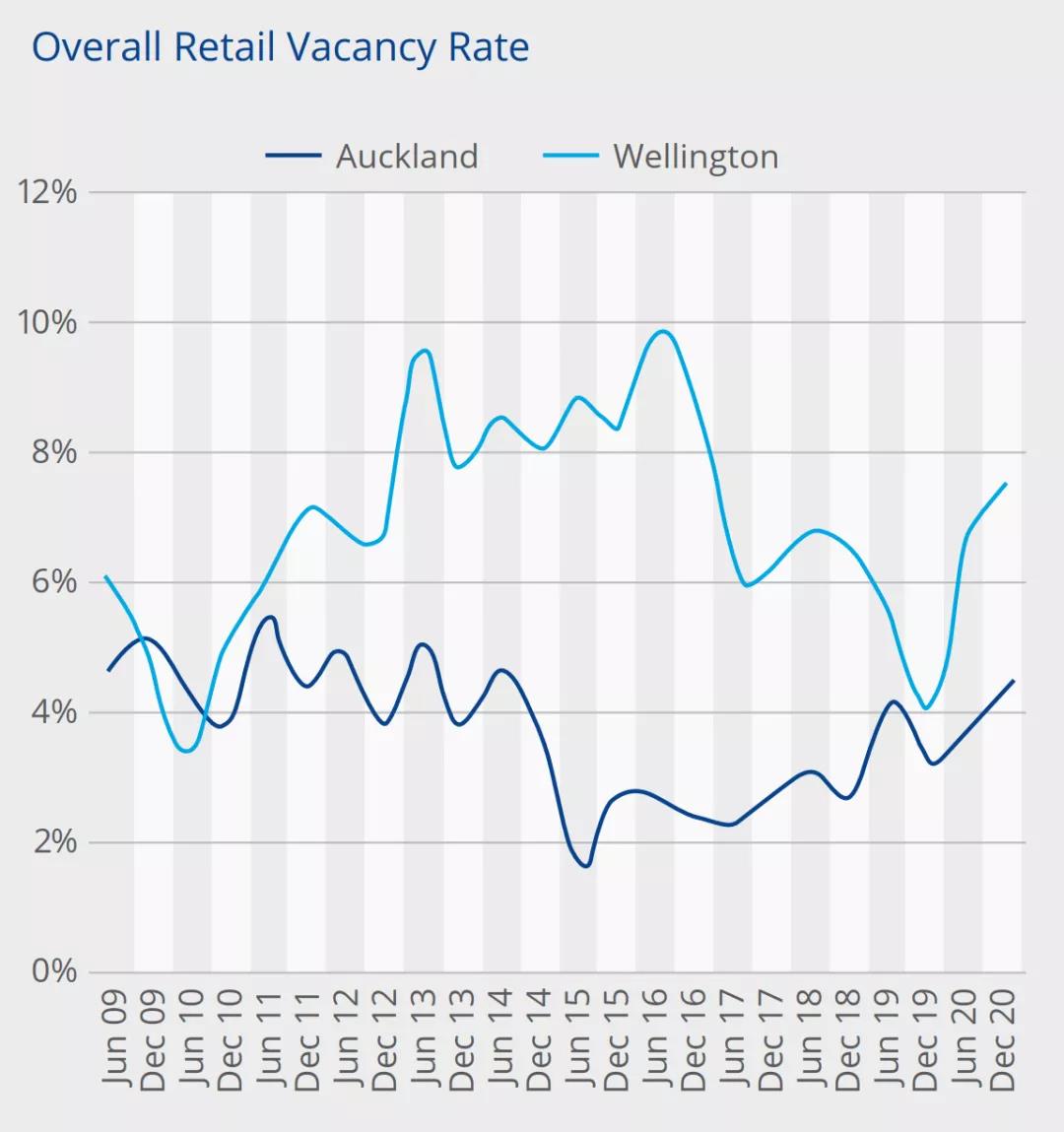
Vacancy rates rose in both Wellington and Auckland. In Wellington, the rate increased from 6.7% a year earlier to 7.6% in December 2020. Over the same period, Auckland's rate rose from 3.8% to 4.5%. Without timely relief measures from the government and the Reserve Bank, the increases would undoubtedly have been greater.
Fortunately, increased consumer spending in the final months of 2020 provided positive support for the retail sector. Electronic card spending in the final quarter of 2020 was NZ$816,000,000 higher than in the same period a year earlier.
- Growing demand for large-format retail property
Not all retail property sectors face the same difficulties. After a challenging 2020, some clear winners have emerged in this divided sector. The latest Stats NZ figures show core retail card spending totalled NZ$6,680,000,000 in December 2020, up NZ$1,140,000,000 on the previous month and 4.8% on December 2019. Spending growth was strongest in consumables and durable goods, with New Zealanders spending considerably more at liquor stores, supermarkets and grocery stores. Food and beverage service spending also reached a new milestone, exceeding NZ$1,000,000,000 for the first time. Large-format retailers outside food and beverages also benefited significantly, with strong spending on furniture, appliances and hardware, up 12% compared with December 2019.
Investors are also seeking opportunities across the market. A clear example is the significant increase in investor demand for large-format retail properties. Support for premium shopping centres is also becoming more widespread, with many centres undergoing price adjustments in 2020.