
Tackling the housing crisis: have you heard of build-to-rent, popular in Britain and the US?
New Zealand’s housing crisis affects renters as well as buyers. High and rising rents worry ordinary people just as much as high and rising house prices. Could building homes to rent alongside building homes for sale help resolve this worsening crisis? Britain, at least, has tried it and found it quite effective.

Build-to-rent—large-scale developments built specifically for renting, with professional tenancy management—is attracting increasing industry attention. In a recent report, Paul Winstanley, who heads build-to-rent in Australia and New Zealand for JLL, said demand for the sector was gathering momentum across Oceania following the challenges of the past year. “We urgently need it,” he told OneRoof. “I believe build-to-rent offers more affordable housing options for a product of the same quality.”
{ad}
New Zealand’s last option for resolving the housing crisis?
Sense Partners economist Shamubeel Eaqub believes the Government’s aspirations to make homes affordable for first-home buyers and build enough public housing to meet the waiting list are doomed to fail, and that build-to-rent may be the last chance to resolve the housing crisis.
Build-to-rent supporters argue that standards in the private rental market are currently uneven. Although the new Healthy Homes Standards and Residential Tenancies Amendment Act are both being implemented, they will not fundamentally change the two main difficulties renters face:
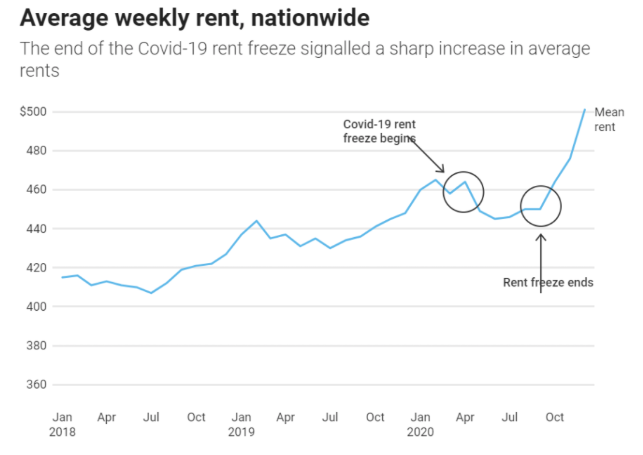
- Since last year, New Zealand has experienced its largest rent increases on record;
- Tenants struggle to secure long-term tenancies, as landlords may decide at any time to sell the property or move back in.
Crockers Property Group chief executive Helen O'Sullivan says the problem stems from New Zealand’s rental sector being dominated by small family investors. They invest in housing for capital gains, but cannot guarantee sufficient income to cover regular maintenance or meet strict rental requirements. “The biggest difference between purpose-built rental developments and these small investors is that they professionally treat tenants as customers.”
O'Sullivan advocates building more low-yield rental developments in the form of large apartment complexes and residential communities, providing long-term homes for tenants rather than properties for sale.
Successful precedents in Britain and the US
Paul was among the first professionals involved in putting forward the build-to-rent concept. Initially proposed by the British Property Federation, it received an enthusiastic response from the British Government. At the time, the global financial crisis had caused a sharp contraction in construction, leaving Britain with a severe housing shortage. “At that point, the government needs to step in with solutions, because the market will not save the country. Frankly, I think New Zealand’s housing problems have now reached the same point,” Paul said.
In the United States, build-to-rent is known as “multifamily”, an investment asset class funded primarily by funds such as public pension funds.
What is holding back local build-to-rent projects?
- Construction industry capacity constraints
Simplicity chief executive Sam Stubbs says high-quality build-to-rent projects achieve efficiencies through scale and use high-quality materials during construction to keep long-term maintenance costs down. “Large-scale build-to-rent projects are very good long-term investments, offering investors higher returns than fixed-interest investments.”
Stubbs estimates that KiwiSaver funds, the New Zealand Super Fund and other institutional investors could together provide at least NZ$200,000,000,000 for housing investment. “Money is not the problem. The money is there, and at current interest rates, a great deal of it could be redirected into this asset class.” In his view, the biggest constraint is the construction industry’s capacity.
New Zealand Living director Shane Brealey says build-to-rent development currently receives no preferential treatment. New Zealand’s residential construction industry is driven by small and medium-sized businesses with limited capital and a heavy reliance on bank lending. “Lagging government policy and administration, high construction costs and a fragmented construction industry make it difficult for build-to-rent to become a successful financial model.”
- Restrictions on overseas investment
Other experts supporting the sector believe that, even with substantial domestic capital sitting idle, restrictions on overseas capital remain a major barrier to developing build-to-rent.
Roy Thompson of New Ground Capital, which develops and invests in build-to-rent, says billions of dollars would flow in if the Government granted overseas investment exemptions for build-to-rent projects, as it does for student accommodation and retirement accommodation. “There are, in fact, many large, experienced overseas investment institutions that want to invest in build-to-rent projects in New Zealand… But overseas investment approval restrictions are a major obstacle for these investors.”
Winstanley also says many managers investing in Australian build-to-rent developments would be very happy to expand into New Zealand, and investing here is already within their mandates.
Dentons Kensington Swan partner Paula Ormandy considers overseas investment legislation the biggest legal obstacle to build-to-rent, while changes to GST and depreciation rules are also much needed.
“Restrictions and red tape undermine large multinational companies’ confidence in New Zealand’s investment environment,” Ormandy said. “Above all, many overseas investors regard New Zealand’s overseas investment approval process as more complex and time-consuming than Australia’s.”
Eaqub believes overseas capital is the resource most needed to advance build-to-rent, “because overseas investors know how to make these investments work and are willing to accept lower returns on capital”.
Government seeking advice to encourage more development
Paul believes government support is critical to advancing build-to-rent projects. “That was also the case in Britain in the early stages.”
New Zealand Housing Minister Megan Woods says she is seeking advice from government agencies on encouraging more build-to-rent developments and plans to meet industry representatives. “We recognise that, as we seek to increase New Zealand’s housing supply, a well-functioning build-to-rent market can help increase overall supply and give renters more choice.” Woods believes build-to-rent offers a win-win outcome for investors and tenants:
- It can give people who do not qualify for public housing access to quality, secure and affordable homes with stable rents.
- It can attract more institutional capital to develop new housing, redirecting money from trading existing investment properties into direct investment.
A government spokesperson acknowledged that the importance of “increasing liquidity”—opening build-to-rent projects to overseas capital—had been extensively discussed and raised in submissions during phase 2 discussions on the Overseas Investment Act. The spokesperson said the Government was considering adjustments that would allow regulators to take increased liquidity into account when assessing investment applications.
National’s housing spokesperson Nicola Willis also says changes to build-to-rent regulations need discussion. “Landlords should have to compete for tenants, and build-to-rent could be a way to achieve that.” However, she urges caution about moving too quickly to grant overseas capital exemptions for build-to-rent projects. She notes that other countries also restrict overseas investment, although Ormandy says Britain has no such investment restrictions.
Will build-to-rent achieve a breakthrough this year?
Property Investors’ Federation executive officer Sharon Cullwick believes large companies are absent from the rental sector because it is not profitable. “There are no large companies renting out homes in New Zealand because it is difficult to make a profit without relying on capital gains from housing investment.” For this reason, some see 2021 as a potential breakthrough year for build-to-rent development: with interest rates close to zero or negative, investors can almost guarantee returns with virtually no risk.
Eaqub, however, is pessimistic. He does not expect any major breakthrough or improvement in build-to-rent this year. He says the Government is currently slow to address emergencies unrelated to the pandemic, making substantial new progress on build-to-rent unlikely in the short term.
Property Council chief executive Leonie Freeman also believes it will take time. “This is an industry that will need time to build up and develop, so it cannot suddenly deliver thousands of homes this year.”