Major changes! Four tough measures to rein in the housing market! Industry insiders: market heat will be contained, but house prices will rise rather than fall
At 9h this morning, Prime Minister Jacinda Ardern and the housing, finance and revenue ministers jointly announced a series of new housing market measures at a press conference, marking the centrepiece of this year's housing market intervention. Ardern said the Government would strengthen its intervention by increasing housing supply and curbing property speculation, among other measures.

The measures announced by the Government today comprise 4 main housing market policies:
1. Extend the bright-line test from 5 years to 10 years
2. Close the interest deductibility loophole
3. Remove first-home price and income caps
4. Allocate NZ$3,800,000,000 to a Housing Acceleration Fund
{ad}
Policy analysis
Analysis of measure(1):
Extend the bright-line test from 5 years to 10 years Implementation date (month/day): 3/27.
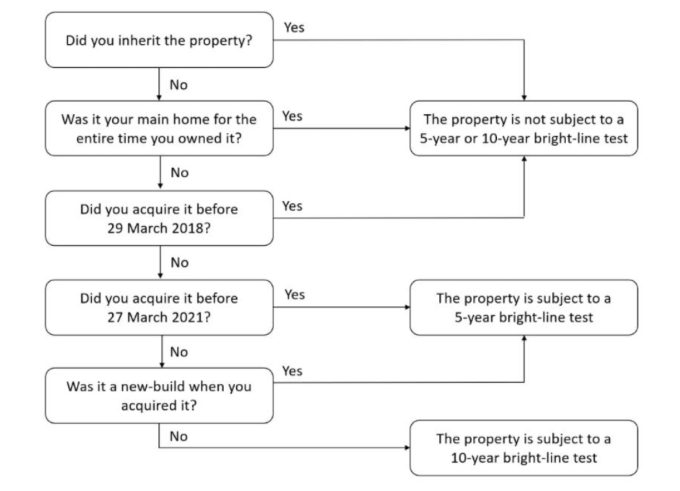
On 8 March 2018, the New Zealand Government formally passed new bright-line legislation, extending the test period from two years to five years. Investment properties resold within 5 years of purchase would then attract capital gains tax. Today, three years later, the Government announced another major intervention to extend the bright-line period. Under the new rules, properties purchased on or after 27 March will be subject to a 10-year bright-line test. This means investment properties resold within 10 years of purchase will attract capital gains tax of up to 33%. Notably, the test period for newly built investment properties will remain at 5 years, while family homes and inherited properties will remain exempt.
The chart below explains how the bright-line test period works:
Who is affected: investors
Extending the bright-line period to 10 years will affect those buying purely as investors. Under current policy, owners who buy and sell the same property within 5 years must pay 33% capital gains tax. From 27 March, the bright-line period will increase from five years to 10 years. In other words, investors will need to hold an investment property for 10 years. Those seeking quick purchases and sales will have substantial funds tied up for a long time, undoubtedly a major blow to property speculators. However, industry analysts say this will lead many people to hold properties for longer, while rents will continue to rise.
Analysis of measure(2):
Close the interest deductibility loophole
Implementation date (month/day): 10/1. Under this newly announced policy, property investors will no longer be able to offset interest expenses against rental income when calculating their tax. The legislation will take effect on 1 October. We also learnt at today's press conference that the Government is considering closing off interest-only mortgages for investors. Notably, the Reserve Bank said it would report to the Government in May on possible debt-to-income (DTI) limits and restrictions on interest-only mortgages.
Who is affected: investors
For investors, the Government's measures are gradually closing off opportunities for market speculation, including removing interest deductions and considering an end to interest-only mortgages. Industry analysts say that if all three measures outlined above are introduced, investors will face a major blow in the housing market.
Analysis of measure(3):
Remove first-home price and income caps
Implementation date (month/day): 4/1. Enable more first-home buyers to qualify for the existing First Home Grant and First Home Loan
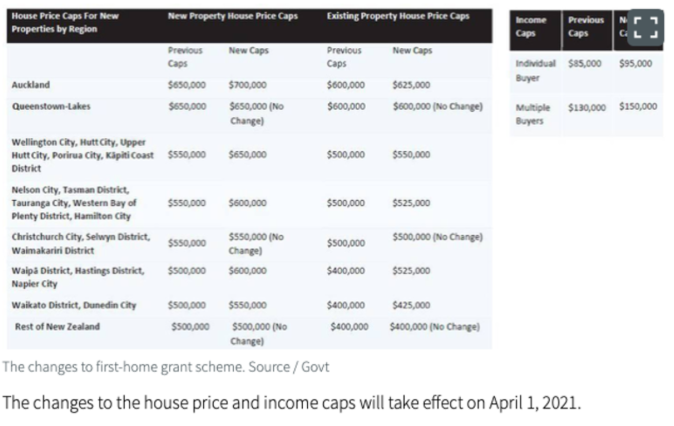
Under the policy announced today, the maximum individual income for grant eligibility will rise from NZ$85,000 to NZ$95,000. For two or more buyers, the cap will rise from NZ$130,000 to NZ$150,000. These changes take effect on 1 April. The grants are as follows:
1. Eligible first-home buyers can receive a grant of up to NZ$5,000 for an individual purchase, or up to NZ$10,000 for two or more buyers.
2. Buyers of brand-new homes can receive up to NZ$10,000 individually, or up to NZ$20,000 for two or more buyers.
Notably, buyers using a First Home Loan need a deposit of only 5%. First Home Loans are issued by selected banks, building societies and credit unions, and underwritten by Housing and Communities.
The price caps for homes purchased with government assistance will be removed as follows: