An unexpected surge! With a new train service and global smart city recognition, Hamilton house prices are soaring!
Good news has been flowing for Hamilton recently. With the Hamilton–Auckland train service officially beginning on 9 April and Singapore’s Eden Strategy Institute naming Hamilton a global smart city, this city about 100 kilometres from Auckland is once again attracting attention.
Strong market growth:
Hamilton’s average house price passes 700,000 NZ dollars for the first time
According to CoreLogic’s recently released house price index, Hamilton’s average house price has now reached NZ$730,000. In 2020, it first passed NZ$700,000 in December, a substantial increase of 97.2% compared with the market peak in 2007.
“There is no doubt that Hamilton’s property market is growing exceptionally strongly.”
CoreLogic head of research Nick Goodall said: “Although passing the NZ$700,000 threshold is not significant in itself, it is ‘definitely’ a sign of a strong market.”
{ad}
House prices have doubled in 5 years, outpacing Auckland’s growth
Five years ago, Hamilton’s average house price was still NZ$370,000. According to figures published by CoreLogic QV in 2020, the city’s average house price was NZ$600,000 at the beginning of 2020. By the end of December in 2020, Hamilton house prices had passed NZ$700,000 in just twelve months, an astonishing rise that took the average to NZ$730,000.
CoreLogic head of research Nick Goodall said this meant Hamilton’s property market was becoming “unaffordable”.
For Auckland, New Zealand’s most populous city, average sale price figures released by Barfoot & Thompson in October of 2010 showed an average house price of $524,000 in 2010. By 2020, Auckland house prices had doubled over 10 years. In terms of investment returns, Hamilton’s property price growth over five years had outpaced Auckland’s.
“Super commuters” are driving Hamilton house prices
Every day, 8000 people commute to and from Auckland
Figures show that 8000 people travel between Waikato and Auckland every day. Known as “super commuters”, they live in cities around Auckland but choose to work in Auckland, often spending around three hours a day commuting.
Hamilton has more than a thousand or so “super commuters” travelling between Auckland and Hamilton each day.
Hamilton resident Mike is a typical “super commuter”, spending 3 hours a day travelling between Hamilton and Auckland. Mike says “Auckland’s high living costs drove us out”.
Mike broke down the costs for us: he spends about NZ$40 a day on petrol for his commute, while working in Auckland allows him to earn around NZ$100 more each day. “If I moved to Auckland, we couldn’t afford to rent a whole house there with children,” Mike said. “Renting a whole house in Hamilton is about NZ$180 a week cheaper than in Auckland. I spend 3 hours on the road every day, and I think it’s worth it.”
Bayleys researcher Ian Little said: “The appeal of Auckland’s job market and higher salaries means these ‘super commuters’ continue choosing to live in surrounding cities while working in Auckland.”
“More working people are now moving to cities around Auckland. When comparing house prices and living costs, it is clear that cities close to Auckland offer excellent value for money, which makes sense for some people,” Ian Little said.
Figures show that demand continues to outstrip supply in Hamilton’s housing market. The opening of the train service and the government’s Hamilton–Auckland Corridor plan are bringing Auckland and Hamilton closer together, helping more people see Hamilton’s development potential.
The new train service will bring more development and employment opportunities to the region
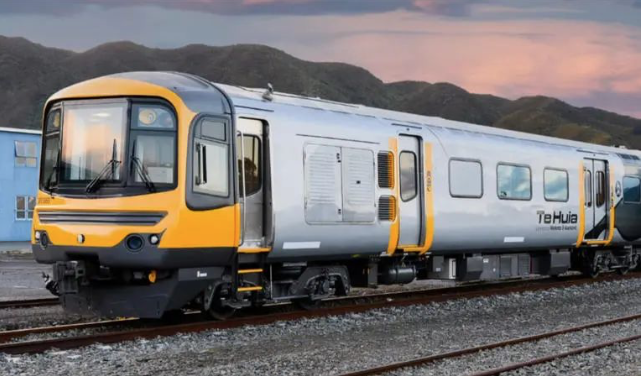
Hamilton is the closest medium-to-large city to Auckland. With the official launch of the Auckland–Hamilton train on 25 March, a new commuting option is gradually bringing the cities closer together. Figures show that the train, named Te Huia, will carry 300 people between Auckland and Hamilton each day. The service officially opened to the public in April, on 9.
Waikato Regional Council chair Russ Rimmington said: “The opening of the train service means Waikato is about to enter a new era of public transport. It is incredibly exciting!”
“This train is also a vital link between the major cities of Hamilton and Auckland. Its launch offers the region more opportunities for employment and development,” Rimmington said.
Under new government plans,
Hamilton is set to become the next city to boom
1、“Hamilton—Auckland Corridor” plan aims to turn Hamilton into a major urban hub
“Transport networks will go wherever housing construction is urgently needed.” This seems to have become a defining catchphrase for urban development.
On 15 August 2019, the New Zealand Government officially signed the Hamilton–Auckland Corridor plan. Through the plan, the government hopes to spur development between Auckland and Hamilton by coordinating housing, transport, other infrastructure and services. The area covered stretches from Papakura in northern Auckland, through Franklin, to Cambridge and Te Awamutu in southern Waikato.
According to Future Proof documents, Hamilton, Waipa and Waikato are expected to experience significant population, employment and economic growth over the next 30–50 years.
“The partnership agreement for the corridor plan was signed to coordinate development in this area with three main transport networks: the Waikato and Waipa river systems, the main trunk railway and the Waikato Expressway,” Urban Development Minister Phil Twyford said.
Phil Twyford said: “Under this agreement, we will strategically strengthen development between Auckland and Hamilton. This includes walking and cycling paths along the Waikato River, a new intercity express train, which is now operating, and a new public transport network within Hamilton.”