Latest house price index rankings released! Auckland joins the million-dollar club, with pockets of value in this area…
Since housing market controls were introduced in March this year, have house prices risen or fallen? What is happening to sales volumes? These questions have attracted widespread attention. According to the New Zealand House Price Index released by CoreLogic this week, residential sales volumes are slowing noticeably, while prices have risen slightly.
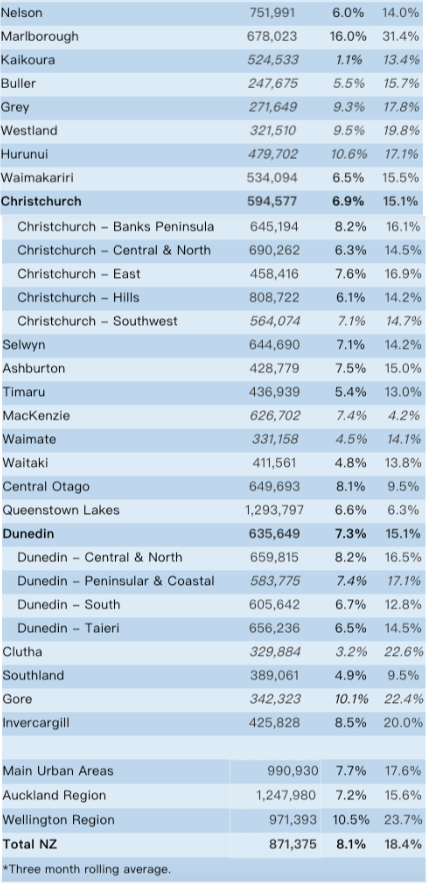
As of April this year, New Zealand's average house price had risen 18.4% over the preceding 12 months, reaching NZ$870,000 in April, according to the data, Auckland's average house price reached NZ$1,240,000 in April, up 15.6% in just a year.
{ad}
New Zealand's most expensive area: an average price as high as 1,800,000 New Zealand dollars
The data shows Auckland remains New Zealand's most expensive region for housing, with an average home value of NZ$1,200,000, up 15.6% on a year earlier.
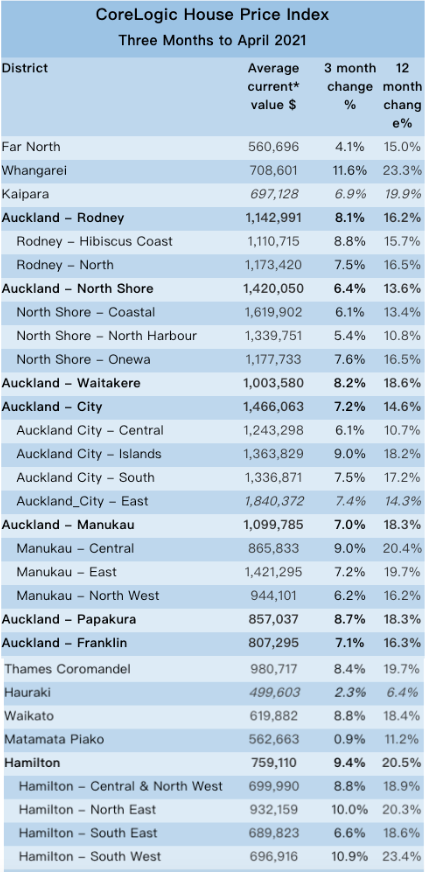
Within Auckland, the eastern part of the central city, including coastal areas such as Kohimarama and St Heliers, has an average house price of NZ$1,840,000, retaining its position as New Zealand's most expensive neighbourhood area by average price.
Next is the North Shore at NZ$1,600,000, followed by eastern Manukau, including Howick and Mellons Bay, at NZ$1,400,000.
Auckland house prices join the million-dollar club, with pockets of value only in the south
The rankings show that, following the latest round of price rises, average house prices across Auckland have exceeded NZ$1,000,000, with only 4 areas remaining as pockets of value below NZ$1,000,000. All are in southern Auckland: Manukau Central, with an average of NZ$860,000; Manukau North West, at NZ$940,000; Papakura, at NZ$860,000; and Franklin, at NZ$800,000.
All four areas are in South Auckland. For first-home buyers wanting to keep their purchase price below $1,000,000, these areas could be the first places to consider. Outside them, no other Auckland areas offer prices below $1,000,000.
New Zealand's cheapest housing areas revealed: average prices below 300,000
Turning to New Zealand's cheapest housing areas, the gap between them and Auckland's most expensive area is a full NZ$1,500,000.
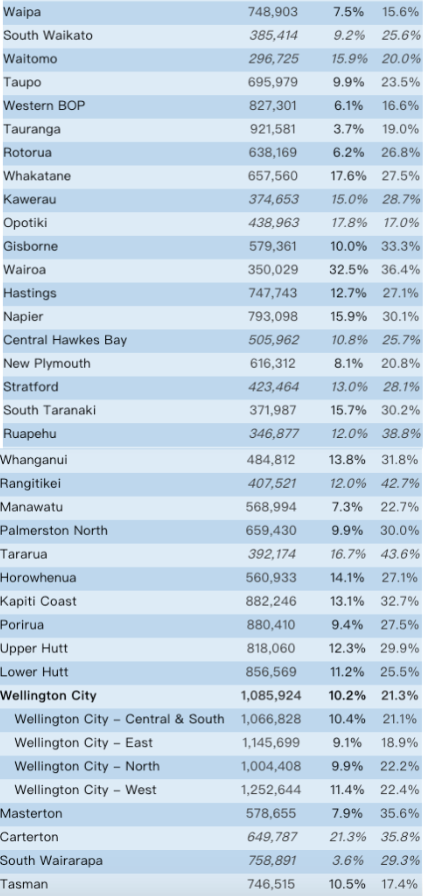
The index shows that three areas currently have average house prices below NZ$300,000, making them New Zealand's cheapest: Buller, averaging NZ$250,000; Grey District, at NZ$27; and Waitomo, at NZ$290,000.
Areas with the slowest house price growth revealed: most are in the South Island
The index shows that only five areas nationwide recorded single-digit growth in average home values over the 12 months to April. These included Hauraki in the upper North Island, with annual growth of just 6.4%, and the remaining areas in the lower South Island: Queenstown-Lakes at 6.3%, Southland at 9.5%, Central Otago at 9.5% and MacKenzie at 4.2%. These 5 areas experienced relatively slow house price growth amid the pandemic.
Northern areas record the highest house price growth, nearly doubling
Growth in home values in the north and south has been worlds apart. Over the past year, Tararua in the North Island recorded the highest annual growth in home values, at a striking 43.6%, followed by Rangitikei at 42.7% and Ruapehu at 38.8%. These three areas retained their positions as New Zealand's strongest-growing housing markets.
April house sales fall sharply while prices edge higher
Barfoot & Thompson managing director Peter Thompson said house sales volumes fell noticeably in April compared with March, while prices rose slightly and new listings reached a record high. Overall, trading remained strong, but considerable uncertainty surrounded future house price trends. Buyer interest was expected to remain strong until the new LVR lending restrictions took effect in May.
According to Barfoot & Thompson, 1,107 homes sold in April, down 40% from March, but still the highest level in 19 years. Demand for high-end properties remained strong in April, with 113 sales exceeding US$2,000,000.
Strong rural and lifestyle property sales exceed a hundred million dollars for two consecutive months
Peter Thompson said rural and lifestyle property sales had exceeded NZ$100,000,000 for two consecutive months, delivering strong growth. This also indicated that people were seeking new lifestyles and that city populations were gradually moving outwards.
“Demand for land development and subdivision remains strong, as does interest in grazing properties and farms,” Peter Thompson said.
Overseas buyers are gradually withdrawing from New Zealand's market
According to Statistics NZ, overseas buying activity has fallen sharply this year. From month 1 through March, overseas buyers purchased a total of 192 New Zealand homes, accounting for just 0.4% of all residential sales in the first quarter.
An Interest.co.nz reporter said overseas buyers purchased 714 New Zealand homes in the year to March, well below previous years. Overseas sellers sold 423 New Zealand homes in the first quarter, 324 more than in the corresponding period of 2020. This means overseas sellers sold more than twice as many homes as overseas buyers purchased, indicating that policy uncertainty and border closures are prompting overseas buyers to gradually withdraw from New Zealand's market.
Market slows as investors lower expectations for future capital gains
CoreLogic head of research Nick Goodall said: “The data indicates that the market gradually slowed in April, with valuation requests down 11% compared with the past six months. Following the government's removal of interest deductibility, investors have lowered their expectations for future capital gains. This may mean growth continues to slow over the coming months, giving the Reserve Bank time to assess whether it needs to announce the introduction of loan-to-income ratios (TDI).”
The table below shows the average home values and percentage changes across all areas studied by CoreLogic over the past three and twelve months: