
The “culprits” emerge! New Zealand’s biggest property speculators revealed, holding 200 properties each!
Recent data show that nearly 80% of New Zealand landlords own just one rental property. However, the new housing policies have already prompted many investors to list their rental homes for sale. With stringent tenancy laws and new tax policies, life for landlords seems less “easy” than before.
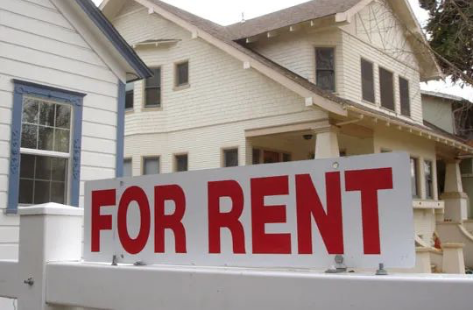
This year, the New Zealand government introduced a series of measures aimed at cooling the property market. Investors have called them unfair and criticised the policy approach.
These include removing investors’ ability to deduct interest against rental income and extending the bright-line test period for taxing capital gains. With the new taxes set to put pressure on tenants, debate in recent days has centred on whether investors have a “moral duty and obligation” to consider vulnerable renters.
{ad}
Property Investors Federation:
Investors have no moral obligation when dealing with tenants
However, New Zealand Property Investors Federation (NZPIF) executive officer Sharon Cullwick said: “Investors have no moral obligation when dealing with vulnerable tenants.”
Sharon Cullwick also said:
“Landlords can choose ‘vulnerable’ tenants. If those tenants do not have good references, character and credit checks, they should not receive insurance. It should also be noted that the government has already changed legislation, including the Residential Tenancies Act, removing 90-day notices to end tenancies without cause.”
“Previously, property managers and owners could give tenants a ‘trial period’. If the tenants passed it successfully, the landlord or property manager would extend the tenancy to a fixed term or another, longer fixed-term agreement. But the new Residential Tenancies Act removed 90-day terminations without cause, leaving many ‘troublesome’ tenants unwilling to move out. Landlords do not want to share the risks associated with these tenants.”
Academic says housing is a necessity for everyone,
and landlords need social standards
Professor Graham Squire of Massey University’s School of Economics and Finance said: “Although housing is a ‘consumption good’, providing people with warmth, light and shelter, it is also an investment good. It is difficult to separate the two.”
“That makes things more complicated. If society believes everyone should have a home of their own, housing is a social necessity……Investors and landlords may not necessarily have a legal obligation, but they need a social conscience”
“If the government deregulates the rental market, it will become even more chaotic. The Residential Tenancies Act is more stick than carrot, and provides a form of restraint on the rental market… But most investors may not feel they have much of a moral obligation.”
Policy researcher and The Workshop think tank co-director Jess Berentson Shaw said this was also a question of the moral standards society wanted to uphold. Just as we collectively decide how to treat and care for others where people live, most people believe the standard should be very high. We therefore need people in government to establish and assess those standards. Clearly, the Residential Tenancies Act is the only reliable way to ensure renters are looked after.
80% of New Zealanders own just one rental property,
with investors drawn from ordinary people
Recent evidence from the Ministry of Business, Innovation and Employment (MBIE) shows that the vast majority of landlords each own just one rental property.
The Treasury said that, as at 9 February 2021, there were 120330 active landlords holding bonds (home loans). Compared with data provided in 2015, the share of investors owning one home had fallen by nearly 2%. However, the report also showed that landlords with four or more rental properties accounted for less than 6% of bond (home loan) lodgement records.
Among these landlords, 93706 had lodged just one bond form (each form generally represents one property), equivalent to around 77.9% of the total. In other words, nearly 80% of landlords currently in the market own only one property.
There were 19524 landlords who had lodged two or three bond forms. Generally, these two forms represent two or three properties, accounting for around 16.2% of the total. Bond data show that 5037 landlords lodged 4 to 10 forms; 698 lodged 11 to 20; 458 lodged 21 to 50; 561 lodged 51 to 200; and 346 lodged more than 200.
Appleton Tattersall said this indicated that landlords owning 50 to 100 properties accounted for around 0.47%, while those owning more than 200 accounted for around 0.29%.
The figures are summarised below
- 93706 people own 1 property each
- 19524 people own 2–3 properties each
- 5037 people own 4–10 properties each
- 698 people own 11–20 properties each
- 458 people own 21 to 50 properties each
- 561 people own 51 to 200 properties each
- 346 people own more than 200 properties each
New Zealand Property Investors Federation executive officer Sharon Cullwick said: “These figures show that most landlords in this country are ordinary people. Many have invested most of their lifetime savings in that property.”
There is a widespread belief that all landlords own multiple properties and have made enormous capital gains from them. However, bond (home loan) data show this is not the case: although some landlords have large portfolios, they are not the majority.
Sharon Cullwick said: “The vast majority of investors are from the older, parents’ generation, rather than large-scale investors with multiple properties. Most are ordinary people simply trying to build some wealth for retirement.”
Conclusion
Data reveal the truth behind everything. These figures show that most investors in New Zealand’s current property market are ordinary people. They are neither organised property speculators nor so-called opportunists, but people who own just one rental property and are planning for retirement and old age. So who is really driving up house prices? In my view, the severe housing shortage facing New Zealand is the problem the government needs to solve.