
Interview with Frank Shi: dedication will bear fruit
32 years ago, aged just 18, Frank Shi passed his university entrance examinations and enrolled at Shenyang University to study heating, ventilation, air conditioning and refrigeration. 20 years ago, Frank arrived in New Zealand with his family as a first-generation Chinese immigrant. His strong technical skills and extensive experience soon established him as an authority in New Zealand’s heating, ventilation, air conditioning and refrigeration industry. In April 2020, Frank joined RCR as its chief mechanical and electrical engineer, continuing to pursue his dreams.
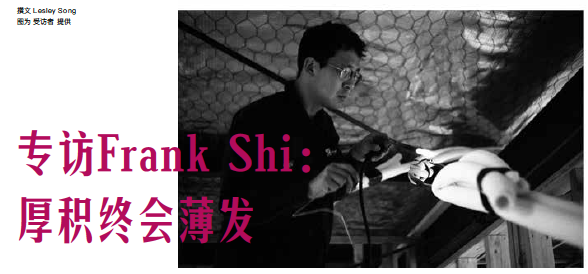
“I truly love my profession”
Frank believes he owes his place among China’s earliest university students in heating, ventilation, air conditioning and refrigeration to his father’s foresight and high hopes for him.
Frank’s father headed a large industrial enterprise in Shenyang and had a thorough understanding of the prospects for the various professions involved in China’s industrial development. He knew that in the early 90s of the 20th century, air conditioning and refrigeration specialists were in extremely short supply. At work, they frequently had to turn to blond, blue-eyed foreigners for help. Apart from the high salaries paid to them, the key technologies remained outside Chinese hands.
{ad}
His father understood his son as well as he understood his own enterprise. Young Frank was exceptionally practical and showed a determined streak when exploring something new. He also loved learning and was prepared to work hard… With his father’s guidance and encouragement, Frank, still unsure of his direction, made the most important decision of his life: to apply to study heating, ventilation, air conditioning and refrigeration. He succeeded. That was 1988, when there were just three classes in the entire north-east, each with a little over 20 students. Frank was one of them.
In 1992, Frank graduated after four years of intensive study. In those days, the state assigned graduates their jobs. Most of Frank’s classmates were placed in ventilation and heating departments, but he was fortunate enough to be assigned to one of Shenyang’s finest hotels catering to international guests. As a technician, he was responsible for the daily operation and maintenance of equipment, including air conditioning systems and boilers. Frank remembers that his hotel was one of the few in the north-east with central air conditioning at the time. Heating kept guests warm in winter, while summer cooling came from a central air conditioning system designed, manufactured and installed by Chinese people. China’s air conditioning and refrigeration industry was only just getting started, so how fortunate he was to encounter this technology in his very first job! Frank worked at the hotel for five years. What he most enjoys recalling about those years is not the repeated visits by prominent leaders and international guests, including US Secretary of State Haig, Israeli leader Netanyahu and the US women’s volleyball team, but the hard-won practical opportunities and valuable experience.
Frank then joined a property development company with Hong Kong ties as the air conditioning and ventilation project manager for its developments, while also taking responsibility for repairs to large air conditioning systems. His university education had focused more on theory. Working closely with frontline tradespeople on projects, repairs, maintenance, welding and troubleshooting gave Frank the practical experience to deal with all sorts of unexpected problems.
After 4 years of intensive study and 10 years of hard work, Frank had an increasingly clear career plan and sense of direction. He was deeply grateful for the choice his father had made for him: “I truly love my profession.”
“Returning to manual work was hard, but I gained priceless experience”
20 years ago, Frank left his familiar life behind and brought his family to the pastoral tranquillity of New Zealand. Yet life was not all idyllic. New immigrants often face unseen hardships as they settle into a new country, and Frank was no exception.
Frank saw only two ways to continue working in the profession he loved in New Zealand. He could return to study, gain a local qualification and slowly work his way up from engineer to senior engineer in a Western-run company. Or he could start at the bottom and gain local experience, supporting his family first and pursuing career development later. To meet the seemingly simple need to make a living, Frank, who had already been a project manager and maintenance department manager in China, chose to set aside his status and start with manual work.
Air conditioning installer, refrigeration repair technician, ventilation installer, air conditioning commissioning technician… Frank did all these jobs during his first five years in New Zealand. The work was exhausting, but he embraced it: “Returning to manual work was hard, but I gained priceless experience. You could never learn that doing office work.”
The local experience Frank gained through manual work opened the door to well-known major companies. He also joined New Zealand’s professional engineering association and gained government certification for almost every relevant role, including design engineering, project management and construction supervision. His certifications covered regions throughout New Zealand, and his views began to carry authority. He could have settled into a comfortable life at this point, but his enthusiasm for his profession and work led him to set a new goal: bringing advanced Chinese technology to New Zealand.
In 2007, Frank first introduced the concept of direct-fired lithium bromide absorption refrigeration to New Zealand’s industry.
Previously, this technology had not been used in New Zealand, although it was already widespread in China. Frank first encountered it in 1998 as the maintenance department manager of a foreign-invested enterprise, taking part in the project’s initiation, finalisation and successful delivery to the client.
Just as most household air conditioners now use electricity for cooling, large New Zealand factories also use electricity to regulate and control temperatures in their buildings. Direct-fired lithium bromide absorption refrigeration may sound complicated, but put simply, it uses heat, such as waste heat from boiler rooms, solar energy or heat generated by combustion, instead of electricity to provide cooling. This greatly reduces air conditioning running costs. Given New Zealand’s abundant geothermal resources and high energy efficiency, Frank believed introducing this technology, which did not require electricity for cooling, was particularly well suited to local conditions.
In 2010, the first New Zealand factory adopted the technology. The pioneer was a health supplement factory in Hamilton. After using the new technology to control temperatures in its buildings, the factory reduced its cooling and air conditioning running costs by 50%. Thanks to Frank’s efforts, more projects using the technology are now operating. Most of these industry-leading examples are near Rotorua, where geothermal resources are exceptionally abundant. Yet Frank also has regrets. Differences in national systems, slow government legislation and follow-up, and limited awareness among local engineers have meant that “promoting such excellent technology has not yet produced the wider uptake we hoped these initial projects would inspire. I will keep working on this.”
“At RCR, I will keep pursuing my dreams”
Talent eventually shines through. After Frank had spent five years doing manual work, well-known local heating, ventilation and air conditioning companies approached him. From installation to maintenance, and from repair engineer to service engineer, Frank worked for several large Kiwi companies before joining RCR. Although the jobs did not quite offer high pay, little work and a short commute, he found the work relatively easy and could learn a great deal from experienced colleagues. To many people, such a job would have seemed perfect.
Yet Frank continued to feel something was missing. There were very few Chinese people in local heating, ventilation and air conditioning companies. In some, he was the only Chinese employee, let alone anyone Chinese in charge. He had extensive experience in China, where many established technologies were still “brand new” in New Zealand, but struggled to get his ideas and insights through to company decision-makers. He also tried running his own business. In fact, the company he founded had operated successfully for ten years with attractive profit margins. Still, it never offered a large enough stage for his ambitions.
With these frustrations and aspirations in mind, Frank met RCR Infrastructure executive director Garry Ko and accepted an invitation to become RCR’s chief mechanical and electrical engineer and technical director. He took responsibility for the design, construction, repair and maintenance of industrial and commercial air conditioning and refrigeration projects. These included large commercial air conditioning systems, industrial cleanroom air conditioning, small cool stores for small and medium-sized shops, and large cold stores for export beef, lamb and dairy products.
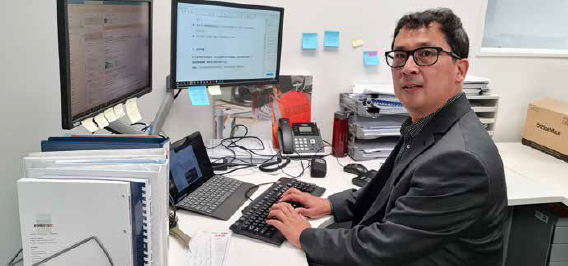
Why choose RCR?
Frank says the first reason was RCR’s scale. Most of its clients and projects are large, which naturally brings difficult technical problems. Investigating these stubborn challenges has always been a particular interest of his, perhaps reflecting a Chinese spirit of craftsmanship. Second, RCR’s philosophy matched his aspirations: to help more Chinese technicians improve their skills within a Chinese-backed heating and ventilation company and better serve the Chinese community. This was why he and Garry Ko immediately found common ground, and it is work that Chinese-backed RCR has long pursued quietly.
After joining RCR, Frank developed another aspiration: helping Chinese-invested enterprises in New Zealand avoid unnecessary setbacks and develop quickly and successfully. This arose from his work at RCR:
As chief mechanical and electrical engineer, Frank took over a project in which a large Chinese-invested enterprise was investing in a health supplement factory in New Zealand. Early on, the investors’ unfamiliarity with local conditions, flaws in the initial design and a rushed start to construction had caused numerous problems. Progress was slow, directly threatening the project’s ability to pass the local council’s final inspection. Drawing on his extensive industry experience, Frank led the RCR team in adjusting design elements that did not comply with local requirements and bringing the construction quality up to New Zealand standards. The project ultimately passed the council’s inspection.
“At RCR, I will keep pursuing my dreams,” Frank replied when asked about his plans for the next five years at the company.