
Meeting industry needs and answering homeowners’ questions: home renovation seminar series concludes successfully
On 30 April, the home renovation event series jointly created by YIJU New Zealand and the New Zealand Chinese Building Industry Association (NZCBIA) concluded successfully.

The series comprised two seminars themed ‘How can you increase your property’s value? The secrets and techniques of renovating older homes’, alongside a construction industry expo. Dozens of experienced experts from related industries contributed to the seminars, attracting hundreds of people interested in home renovation, including investors and owner-occupiers. The venues were packed and the response enthusiastic.
{ad}
Highlights Session one:
How can you maximise your home’s value? Renovation secrets shared in full
On 8 April, the first home renovation seminar delivered excellent results and received widespread praise from participants.
Four experienced industry experts explored the many issues involved in renovating older homes. Topics included strategies for responding to new property policies, such as optimising asset structures and examining the feasibility of tax arrangements; creating exceptional sales results through renovation; spending money where it matters, with a detailed look at extensions and consent applications; and financing renovations through loans.
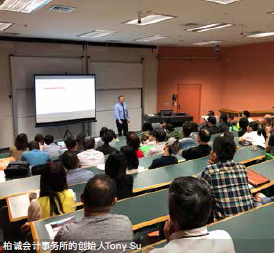
Tony Su, founder of Baicheng Accounting, explained how to optimise tax structures under the new property policies and discussed the feasibility of tax arrangements for property investment. He advised against readily changing existing investment structures, including restructuring loans or ownership arrangements, while legislation remained pending and the situation unclear. He also highlighted pitfalls to avoid when restructuring.
Dylan Huang, a well-known architectural designer from Auckland Architectural Design Institute, explained common renovation misconceptions and shared expertise on maximising a property’s value through subdivision and additions. He analysed problems commonly encountered during design and extension work. Dylan also noted that renovating older homes places particularly high demands on construction. Before renovating, owners should find a professional, reliable design firm and understand its technical capabilities. Before engaging a builder, they should examine actual projects the company has worked on to avoid renovation pitfalls. Related material can be found on page P of this issue.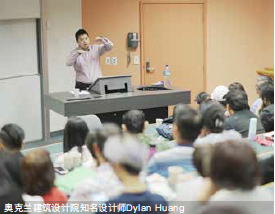
Miro Wang, a property consultant at Barfoot & Thompson’s Epsom branch, shared numerous successful renovation examples. With thoughtful work by designers, small, ageing homes in poor condition had their value maximised through redesign, extensions and alterations, delivering stronger investment returns for owners and inspiring the audience.
Inspiration calls for action, but how can a renovation be funded?
Frank Fu, a senior mortgage adviser at Plaxo Mortgages, explained in detail how bank lending can fund renovations. He highlighted top-up loans: a way to access unused equity, or equity gained through increased property value, through an existing bank. He also explained how homeowners’ income, living expenses, debts and investments affect the amount they may be able to borrow, and how to provide a reasonable purpose when applying for a top-up loan. A detailed explanation appears on page P of this issue.
Session two: how can you spend wisely in the age of big data?
The second home renovation seminar, held on 30 April, featured authoritative experts from prominent New Zealand design firms, plumbing systems, home improvement and appliances.
Knight Hou, co-founder and chief executive of Relab, spoke on ‘How to assess a property’s investment value through effective searches in the age of big data’.
As a well-known New Zealand property research website, Relab provides investors, businesses and owner-occupiers with comprehensive guidance for searching property information and data. Users can access area analysis, land subdivision potential assessments, subdivision calculators and information on nearby schools, giving homebuyers valuable data to inform their decisions.
How can renovating an older home save money while achieving the desired result? Zheng Kefeng, founder and architectural designer at SDS Architectural Design, said a sound budget can achieve both. An experienced architectural designer with his own distinctive perspective, he offers professional solutions for both renovation design and cost planning.
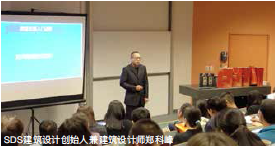
Zheng Kefeng said: ‘Saving clients money is also part of our responsibility as architectural designers. A good designer can help clients unlock the full value of their land while balancing architectural appeal with construction costs. In New Zealand, particularly in property-related work, maintaining good communication and cooperation with Auckland Council and builders is essential, whether renovating an older home or developing land.’
Xiaoyi Bian, Albany project lead and senior architectural designer at Zhengchang Group, explained how to define client needs more precisely during renovation. From a product perspective, he discussed identifying priorities, bringing resources together and uncovering client requirements. He also examined the different functions that renovation design needs to accommodate, offering different solutions for clients renovating to live in, rent out or sell their properties.
Xiaoyi Bian said: ‘Whatever industry you work in today, a strong commitment to craftsmanship is essential. Focus and professionalism are what earn clients’ trust.’
The complex plumbing work involved in renovating older homes was also a major concern for guests. Experienced local licensed plumbing and electrical professionals outlined the work involved in home alterations. The two speakers explained in detail when plumbing and electrical systems need to be modified under different circumstances, and shared specialist installation knowledge to help participants avoid common pitfalls.
During the question-and-answer session after the seminar, many participants put questions to the experts. The most common topics were altering and extending their homes, which stages require consent, optimising investment portfolio structures, lawful tax minimisation and securing bank loans.
Applause continued throughout the event. Participants said the structured learning had given them a deeper, more professional understanding of renovating older homes, and expressed a wish for more seminars of this kind.