
Exploring opportunities across both islands and a future of shared industry benefits: the 2021 Property Market Seminar and Queenstown Property Investment Seminar concludes successfully
While Auckland’s housing market in the North Island enjoyed its hottest year, the pandemic dealt severe blows to both property and tourism in Queenstown, known as the South Island’s ‘wealthiest town’, even as Auckland to the north experienced its hottest housing market year.
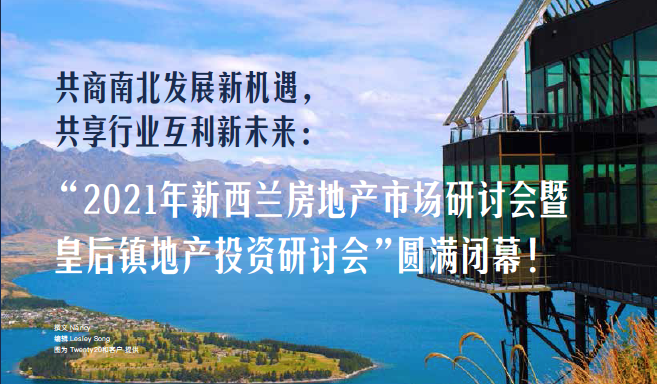
While Auckland’s housing market in the North Island enjoyed its hottest year, both property and tourism in Queenstown, the South Island’s ‘wealthiest town’, were hit hard. How to overcome Queenstown’s current difficulties and find new opportunities amid the crisis has become a major concern for the entire construction industry.
On 24 April, the 2021 New Zealand Property Market Seminar and Queenstown Property Investment Seminar, organised by the New Zealand Chinese Building Industry Association (NZCBIA), concluded successfully at Hilton Queenstown. Prominent political and business figures joined more than a hundred industry guests to discuss Queenstown’s future development and the new opportunities and challenges facing the wider construction industry in the post-pandemic era.
{ad}
At the event: Industry leaders gather to explore development and challenges
The seminar brought together New Zealand property experts, experienced investors and prominent political figures. Frank Xu, President of the organising body, the New Zealand Chinese Building Industry Association, delivered opening remarks. ‘NZCBIA is committed to raising standards across New Zealand’s property and construction industry, and this event offers everyone an excellent opportunity to develop business connections,’ he said. ‘The establishment of NZCBIA’s South Island branch will also help realise our vision of bringing people together to build success.’ His remarks opened a high-level industry gathering.
“NZCBIA South Island branch” established, with an address by Queenstown’s mayor
Queenstown Mayor Jim Boult, a special guest at the launch of NZCBIA’s South Island branch, delivered an engaging address.
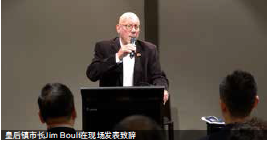
Jim Boult said: ‘Over the past year, industries across Queenstown have been deeply affected by the pandemic and faced enormous challenges. Queenstown is now emerging from its shadow, and businesses across all sectors are gradually recovering. As New Zealand’s most popular travel destination, Queenstown welcomes you back.’
Alongside his confidence in the recovery of local tourism and property, Jim Boult offered his sincere best wishes for the establishment of NZCBIA’s South Island branch.
Chinese property roundtable: exploring new opportunities across both islands
The New Zealand Chinese Property Roundtable has a mission to establish and promote the business ethics of Chinese entrepreneurs in New Zealand. Guided by integrity, responsibility, sharing and collaboration, it aims to provide a high-level forum for Chinese entrepreneurs. This roundtable brought together leading experts and authoritative industry figures, whose discussions and outlooks gave the seminar greater depth and purpose.
Frank Xu said: ‘This is the first time the NZCBIA Chinese Property Roundtable has been held in Queenstown. We invited prominent developers and industry leaders from Auckland and Queenstown to discuss industry hot topics. Queenstown’s largest commercial project, Remarkables Park ( together, we explored new development opportunities and challenges in the Queenstown and Auckland markets. NZCBIA’s Auckland delegates and board members also raised industry issues, offered constructive views and shared the similarities and differences between property development in Auckland and Queenstown.’

Former National Party MP Denise Lee: explaining major changes in the Building Amendment Bill
Denise Lee, Head of Advocacy at Property Council and a former National Party MP, discussed the significance of Resource Management Act (RMA) reform and building system reform through the Building Amendment Bill. She focused on how building legislation reforms in recent years have affected the property industry, including stronger regulation of building products, improvements to modern construction methods, occupational regulation, and the management of risk and liability. Her presentation helped guests better understand the legislation’s importance to construction.
New Zealand’s largest property development company’s CEO discusses the impact of new housing policies on today’s market
New Zealand’s largest property development company, Universal Homes, is led by chief executive Andrew Crosby, an experienced developer who has delivered numerous projects in New Zealand and the United States. His presentation focused on the effects of new housing policies on the current property market.
Andrew Crosby said: ‘The new housing policies have a significant impact on investors. First-home buyers now account for a much larger share of the market than investors, at 90%, while investors account for only around 10%. The new policies are having a positive effect on the housing market.’
Colliers International New Zealand director: commercial property offers new market opportunities
Chris Dibble, a New Zealand director and Head of Research and Communications at Colliers International, is also an experienced property market commentator. He regularly contributes to media discussions on current and future property trends and shares his latest insights.
At the seminar, Chris said the effects of the pandemic and new tax policies were bringing another wave of change to the property market.
He said: ‘As current property policies affect the market, commercial property will see new opportunities. Many recent government policy announcements may favour commercial development. Low interest rates and New Zealand’s severe housing shortage will support further house price growth, but increasingly expensive construction remains a challenge for the industry.’
Opes Real Estate marketing director: Queenstown’s development after the pandemic
Jeremy Kelleher is Marketing Director at Opes Real Estate and an experienced industry professional with more than 15 years in property.
Jeremy used data to analyse property development prospects in the South Island and Queenstown. He also explained the largest residential development at Jack’s Point in Queenstown, using the project to give guests a clear sense of the enormous potential of Queenstown’s property sector.
Delegates unanimously proposed that NZCBIA should more actively publicise the contributions of Chinese property developers and construction companies to New Zealand’s property sector, helping mainstream society and media recognise their contributions to the country’s economy and society.
Interviews: pooling resources to foster cooperation and face industry risks and challenges together
Interview guest 1

YIJU: How would you assess this NZCBIA event in Queenstown, the “Property Investment Seminar”?
Nancy: The event brought together Queenstown’s mayor, prominent political and business figures, and more than a hundred industry guests from Auckland. Leading professionals gathered for in-depth discussions of industry hot topics, broadening guests’ perspectives and extending their investment horizons nationwide, creating new opportunities for future development and cooperation.
YIJU: What impact do you think holding this event in Queenstown will have on Queenstown and the New Zealand property market?
Nancy: It brings together construction expertise from across the country, allowing us to learn from and share experience, pool resources to build strategic partnerships, and face industry risks and challenges together.
YIJU: What opportunities and challenges do you think Queenstown’s property sector faces in the post-pandemic era?
Nancy: In terms of opportunities, Queenstown’s beautiful natural scenery is very popular with Chinese visitors. There is a need to develop the domestic tourism market further and explore property development potential outside tourism. However, the pandemic also brings many challenges. Lagging infrastructure and supporting facilities, labour shortages and fewer visitors are all major difficulties Queenstown currently faces.
YIJU: What significance and impact do you think the establishment of the NZCBIA South Island branch will have?
Nancy: The establishment of NZCBIA’s South Island branch provides Chinese construction professionals in the South Island with a platform for sharing expertise and resources. It creates a bridge between Chinese construction communities in the North and South Islands, as well as a channel connecting the Chinese construction industry with the mainstream market. Overall, it will help raise standards across the South Island’s construction industry.
Interview guest 2
YIJU: What are your thoughts on this roundtable?
Raymond Huo:This meeting can be described in terms of three strengths: great scenery, great people and great content.
Great scenery: But we did more than admire the views. Site visits allowed everyone to see the contribution Chinese property developers are making to New Zealand’s development, in both Auckland and Queenstown.
Great people: This seminar organised by NZCBIA was highly professional and well executed. The association has attracted a group of like-minded professionals, which is a powerful force in itself.
Great content: The speakers provided in-depth analysis of legislation, policy, market trends and future prospects. This offers valuable guidance for industry professionals in adjusting the pace and direction of their development and considering market share.
Interview guest 3

YIJU: Why did you and your company decide to sponsor this event?
Tom Bretherton: Our company, Envivo Limited, has a long-standing relationship with NZCBIA. Guided by mutual benefit, we support NZCBIA, Chinese businesses, the local construction industry and community developers. Participating in events and seminars helps us strengthen industry relationships and professionalism, while helping people understand project development, resource management and related technical processes.
YIJU: How would you assess this NZCBIA property market and investment seminar?
Tom Bretherton: It was a high-level seminar. Experts from across the industry and prominent, experienced property professionals offered practical business and economic insights at several levels. They discussed overarching policies, market conditions and new opportunities for future development. Overall, it was very rewarding.
YIJU: What do you think is the biggest challenge Queenstown currently faces?
Tom Bretherton: I think Queenstown will recover quickly from the pandemic’s effects. The biggest challenge currently lies in commerce and retail. Fewer tourists have left retail sales severely depressed, limiting people’s incomes and increasing the financial pressures on businesses, with issues such as stagnant rental growth and staff losses.
Interview guest 4

YIJU: What are your thoughts on this NZCBIA event in Queenstown, the “seminar”?
William Guo:This is the first major industry seminar NZCBIA has held outside Auckland. It shows that after more than 5 years of development, the association has gained increasing recognition from the industry and professionals, and its influence is beginning to extend nationwide.
Tourism is the mainstay of Queenstown’s economy, and last year’s pandemic dealt it a severe blow. By choosing to hold a seminar here at this time, NZCBIA is showing support for businesses investing, developing and building in Queenstown. It also reflects the new post-pandemic opportunities many association members see here.
YIJU: What impact do you think this event has had on Queenstown and the New Zealand property market?
William Guo:The event brought together Queenstown’s mayor, experienced industry professionals and prominent businesses. Leading political and business figures shared their views on industry trends and ideas for helping Queenstown emerge from the pandemic’s shadow. I believe that when participants return home, they will share what they learnt and gained, along with their positive impressions of Queenstown, with more people. Like a stone dropped into a still lake, the ripples will continue to spread, gradually influencing more people.
YIJU: What opportunities and challenges face Queenstown’s property and commercial sectors in the post-pandemic era?
William Guo:: The pandemic will not suddenly disappear in a day. It now looks likely to recede slowly over a long period, and everyone needs to be mentally prepared for that. Property and commerce are distinctly cyclical industries. The results being achieved in today’s booming property market rest on foundations laid two or three, or even four or five, years ago. Building land reserves, assembling a strong, stable team and reliable partners, and managing cash flow are all essential. With those preparations in place, results will follow when the time is right.
Queenstown has also spent decades establishing a strong global brand. A single pandemic cannot easily damage or erase that reputation. Short-term difficulties will not last forever. Over the longer term, Queenstown will certainly recover to its previous level and may achieve even greater growth.
Queenstown’s opportunities have always existed. But even before the pandemic, there were shortcomings affecting its development, including limited space for urban growth, slow infrastructure development, insufficient visitor capacity and slow improvements in hospitality standards. Planning is therefore needed for the day visitors return. Alongside major improvements in visitor capacity and service quality, the government must substantially accelerate and strengthen infrastructure development.