
Just released! 300,000 more people set to flock to Auckland! House prices could approach $3,000,000!
Population figures released by Stats NZ in April show that Auckland’s population could rise from its current 1,700,000 to 2,000,000 by the start of the next decade. In other words, 300,000 people will flock to Auckland over the next 10 years. With such substantial population growth, we can expect Auckland house prices to climb ever higher.
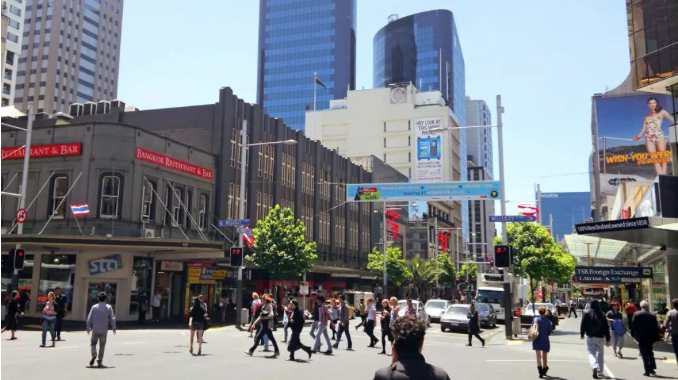
Auckland leads population growth Set to account for half of New Zealand’s total population
“Over the next 30 years, Auckland is likely to have the highest average annual growth rate among New Zealand’s 16 regions,” said Stats NZ population specialist Hamish Slack.
In the early 1990s, Auckland had a total population of 1,000,000. By 2030, it is expected to reach around 2,000,000, an increase of 1,000,000 compared with the 90s. Auckland currently accommodates a third of New Zealand’s population (34%), and this share could reach 37% by 2048.
Under the medium-growth projection, around 60 people arrive in Auckland each day on average, equivalent to 1900 additional residents a month. Hamish Slack said: “Auckland’s population growth is expected to account for half of New Zealand’s total population over the next 30 years. This is similar to Auckland’s share of New Zealand’s economic growth over the past 30 years.”
More economically developed regions attract higher net population inflows, as greater demand for workers and higher wages are also important factors drawing people in.
{ad}
West Coast has the most pronounced population ageing
The latest projections suggest that, as the population ages, deaths are expected to outnumber births by 2040 in every region except Auckland, Waikato, Gisborne, Wellington, and Canterbur. This indicates that New Zealand’s other regions are facing population ageing.
Slack said: “Population ageing means that, despite increasing life expectancy, more people will also die within a given period. In the long term, every region of New Zealand will therefore have more older people.”
With deaths outnumbering births and a low population growth rate, the West Coast’s total population in 2048 could be smaller than it was in 2018. It is also currently the region with the most pronounced population ageing in New Zealand.
Historical data show the West Coast’s population declining year by year. Its current population of 32,400 (in 2020) could begin falling in 2030, reaching 30,600 by 2048. This would be below the region’s population in 2018.
Queenstown and areas around Christchurch set for the fastest growth outside Auckland
Among New Zealand’s 61 districts, areas west of Christchurch and around Queenstown are expected to have the fastest future population growth outside Auckland. Projections show that Auckland will account for 74% of New Zealand’s population growth by 2048.
“As released in December 2020, New Zealand’s total population could reach 6,000,000 within 20 to 30 years,” said Hamish Slac.
Auckland’s high house prices are inevitably linked to population growth
Government urban planning and local house prices are linked to population shares. In our view, these projections are more than forecasts: they are indicators shaping future urban development and economic direction. Every 2–3 years, Stats NZ produces medium- and long-term projections of each region’s population share to help councils and the government plan.
Auckland’s housing shortage and high house prices are inevitably linked to net population inflows.
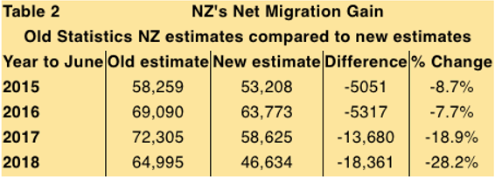
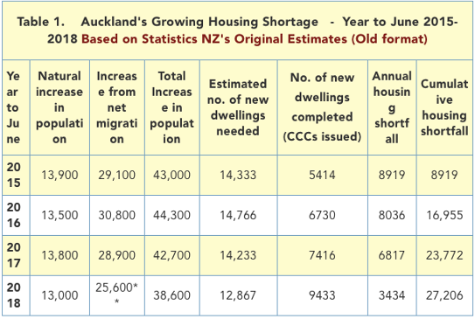
The estimates in the table below show that 27,206 homes were built in Auckland over the four years from 2015 to 2018 (the actual number). Meanwhile, Stats NZ estimated a net migration gain of 58259 people in the 12 months to June 2015.
Notably, only just over twenty thousand homes were built in Auckland over 4 years, while New Zealand’s population grew by 44,000 in a single year. Data show that 30,000 of those 44,000 people came through net inflows, with most heading to Auckland. This suggests Auckland’s housing shortfall will grow.
The following table shows: 2019 Stats NZ population growth and housing shortfall table (estimates only)
Auckland’s actual housing shortage is worse than government estimates
New Zealand’s housing shortage has built up over many years, rather than emerging only in the past year or two. According to data released by the Ministry of Business, Innovation and Employment (MBIE) in 2017, New Zealand had a shortfall of 71,194 homes in 2017. Auckland alone accounted for as many as 44,738, making its housing crisis the most severe.
Data from 2019 put New Zealand’s housing shortfall at a staggering 150,000 homes. Compared with the estimates in the table above, Auckland’s actual shortfall was nearly twice the estimated figure, indicating that its housing shortage is far worse than the government expected.
MBIE assessed urban housing shortages by comparing population growth with the number of new homes built. It said: “Auckland’s severe housing shortage, together with large annual net migration inflows, has driven sharp increases in Auckland house prices and rents.”
Data show that Auckland’s population increased by around 37,000 in the year to June 2020. Interest.co.nz estimates that 10,000–12,000 new homes need to be built in Auckland each year to keep pace with population growth and address the current housing problem.
10 years of doubling house prices in Auckland, with net population inflows a key factor
OneRoof.co.nz editor Owen Vaughan said: “House prices have risen substantially across most of New Zealand over the past 20 years, with increases as high as 500% in some areas. In Auckland in particular, prices have doubled in 10 years. Auckland’s substantial population growth, including strong net migration, combined with low interest rates and lending measures, has kept house prices rising.”
Owen Vaughan said: “If this trend continues, Auckland’s average house price is expected to rise to nearly NZ$3,000,000 by 2040, or 3 times its current level. But wages keeping pace with future house price growth is clearly not going to happen.”
With the pandemic affecting the world and New Zealand’s borders remaining closed, new population growth figures for 2021 have yet to be released. However, Auckland is expected to see a population peak once the borders reopen, and its house prices will become increasingly unaffordable.