
One to watch! After a decade of laying the foundations, Glen Innes is quietly on the rise!
Glen Innes was once surrounded by large numbers of state houses, some nearly a century old, and the area became synonymous with dilapidation and disorder. However, following extensive government development and planning, its average house price has now reached NZ$1,300,000.
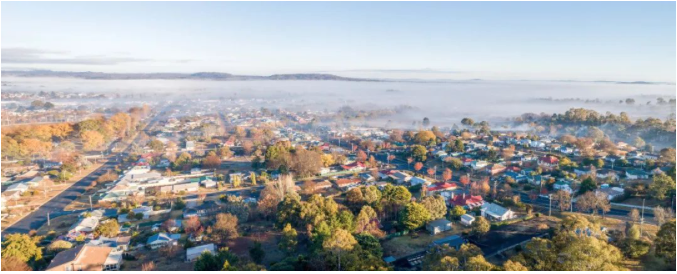


Data shows that Auckland house prices double every 10 years, while Glen Inne has seen house prices rise in just a few years by more than 80%.
10 years on, Glen Innes has a new look
10 years ago, the government’s state housing expansion programme in Glen Inne meant many small, ageing and rundown state houses faced demolition. It was from that point that people gradually began paying attention to the area’s development.
Information shows that, to improve Auckland’s housing situation, the government selected Glen Innes for extensive housing development, demolishing dilapidated state houses and expanding housing provision. The area received its first benefits from New Zealand’s housing development programme at that time, with more than 150 households renting these state houses relocated and large-scale home construction beginning.
The demolition of these old state houses made Glen Innes a site of confrontation between residents and the government. Protesters staged sit-ins in backyards and driveways against plans to demolish 2800 ageing state houses in Tāmaki and replace them with 7500 new homes, a figure now increased to 10,500. The area primarily comprises Glen Innes, Panmure and Point England.
In 2013, the Tāmaki regeneration programme officially began in Glen Innes, Panmure and Point England, with an initial target of building around 7500 homes. In 2016, Tāmaki Regeneration Company (TRC), a housing development company jointly owned by the government and Auckland Council, took over responsibility for development in the area.
To meet growing housing demand, the government introduced a diverse housing development programme for the area, including apartments, houses and higher-density townhouses.
{ad}
2013 (start year)——2016 (end year): Glen Innes、Panmure and Point England— these 3 areas became the focus of a comprehensive regeneration plan.
Now, after 10 years of development, the area has successfully transformed from a district dominated solely by state housing into one with diverse residential development.
This has also driven house prices steadily higher in recent years. With government planning and guidance supporting higher-density development, Glen Innes has gradually attracted investors’ attention. Both owner-occupiers and investors recognise its potential.
The Tāmaki project reportedly intends to replace 2800 state houses with 105,000 new homes over the next 20 years, including private homes, affordable housing and state housing across Glen Innes, Point England and Panmure. This means many more homes will be built here, bringing sweeping changes to these areas.
With schools, transport and surrounding amenities all in place, Glen Innes will become another scarce and sought-after location in central Auckland, and a model of neighbourhood regeneration for the city.
“Overnight”Glen Innes becomes Auckland’s most popular neighbourhood
Glen Innes’ transformation owes much to the contribution made to the local economy by long-standing residents relocating. Following extensive government planning, Glen Innes currently has New Zealand’s highest density of state housing. As large numbers of residents move in and surrounding amenities continue to improve, house prices are rising rapidly alongside the city’s expansion.
A survey found that the ideal location for most Auckland first-home buyers is——within a distance from Auckland’s central business district of 12 kilometres. Areas attracting the most interest include, on the North Shore, Northcote、Albany; in central Auckland, Glen Innes、Mt Roskill、Avondale; in south Auckland, Manukau; and in west Auckland, Glen Eden, all among first-home buyers’ preferred areas.
Barfoot & Thompson data from 2017 showed that Glen Innes, Mt Albert and Orewa were Auckland’s most popular neighbourhoods and also those with the fastest sale price growth, with Glen Innes leading the way.
Glen Innes, which developed from farmland in the 19th century into a residential area, once had large numbers of state houses. Following development in recent years, Glen Inne saw its median house price, between 2016 and 2017, rise from 990,000 to 1,200,000 NZ dollars — a rapid increase in a single year of more than 200,000 NZ dollars, making it the fastest-growing neighbourhood that year.
In other words, 4 years ago, the area had already transformed into a member of the million-dollar property club, leaving its former “tired” image behind.
Alongside TRC’s plans to develop more than ten thousand homes in Glen Innes, the railway station will also be upgraded, with the surrounding area developed into a town centre. Comprehensive community planning is changing land values here, and new homes near the station are expected to attract more young people and families.
In the future, Glen Innes will reach another turning point in house prices.
Glen Innes Why is it so popular?
1. An area for higher-density residential development
With New Zealand facing a long-term housing shortage, land for higher-density residential development remains one of the hottest investment choices in today’s land market. With master plans combining standalone houses, townhouses and apartments, these areas are ideal for investors and owner-occupiers alike.
As house prices continue to rise, the market potential of higher-density development areas is immense. The government has also recently released a proposal for higher-density development in several areas, allowing apartment buildings of up to 6 storeys. This suggests that the potential for value growth in these areas will become even more apparent.
- Considered the most affordable area in east Auckland
Against Auckland’s current median house price of 1,200,000, this area is strategically positioned as an affordable housing location. It suits buyers purchasing to meet their own housing needs and investors with limited cash. The Tāmaki regeneration project and the government’s commitment to improving local transport and amenities make the area particularly attractive to these buyers, offering an excellent opportunity to enter the market.
- An excellent location
Situated in the eastern part of central Auckland, close to the city centre, it is surrounded by some of the east’s most expensive neighbourhoods. Central Auckland currently offers the city’s most convenient transport connections and its most central location. However far the city expands, central Auckland will remain its heart.
- At the heart of a major urban regeneration project
Under TRC’s plans, more than 10,500 new homes, including social, affordable and private housing, will be developed in the area over the next 20 years, opening the door to home ownership for thousands of young New Zealanders.
5. Benefits from plentiful local amenities
Alongside its railway station, the area has Sylvia Park shopping centre nearby, as well as supermarkets, restaurants and a full range of established amenities. Parks, reserves and schools are located in the area, including well-known schools such as St Kentigern College and Sacred Heart College, plus more than 13 kindergartens and primary schools.
This year, the neighbourhood’s “perfect combination” of location, transport, community facilities and housing options has once again caught buyers’ attention.
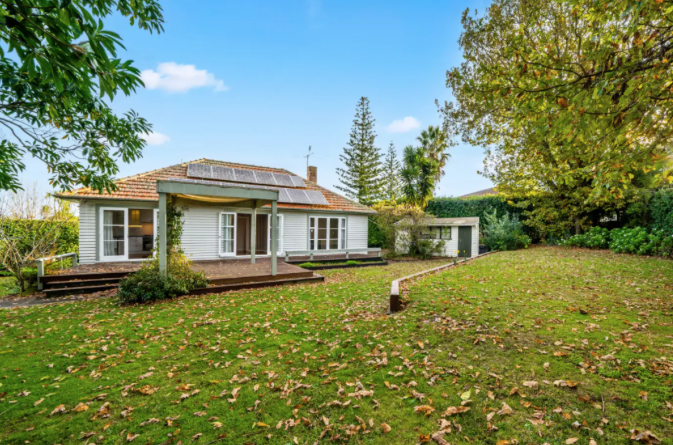
Our recommended property this week is: 31 Weybridge Crescent, Glen Innes, Auckland
The property’s standout feature
- The property’s biggest selling point is its location in the Mixed Housing Urban Zone, currently among the most attractive zones for investment. Set on a large 1,384-square-metre site, it offers scope for houses, townhouses and apartments, making it an ideal choice for owner-occupiers, investors or developers.
2. Location: Positioned on a key transport route in east Auckland and bordering St Heliers, it is within walking distance of train and bus stops, supermarkets and cafés. It is less than 12 kilometres from the central business district and close to the eastern bays’ beaches. Coastal properties have been particularly sought after by buyers in recent years.
Key buyers suited to this property
- Investors — an excellent land-banking option
- Developers — a large 1,384-square-metre site in the Mixed Housing Urban Zone, with scope for houses, townhouses and apartments: an ideal development combination.
- First-home buyers — in what is currently the most affordable area in east Auckland, with an excellent location for commuters and strong potential for capital growth.
Development basics——Mixed Housing Urban Zone
1. Types of residential zoning
Under Auckland Council’s new Unitary Plan, residential properties fall into various zones, principally these 5 types:
- Large Lot Zone (large lifestyle sections)
- Single House Zone (standalone houses)
- Mixed Housing Suburban Zone (mixed suburban housing)
- Mixed Housing Urban Zone (mixed urban housing)
- Terrace Housing and Apartment Building Zone (townhouses and apartments)
2. What is the Mixed Housing Urban Zone?
The Mixed Housing Urban Zone is currently a common residential zone across much of Auckland. It offers different housing choices, including standalone houses, townhouses and apartments, with townhouses and apartments permitted up to 3 storeys.
Advantage: greater building heights and density than in the Mixed Housing Suburban Zone
Development potential
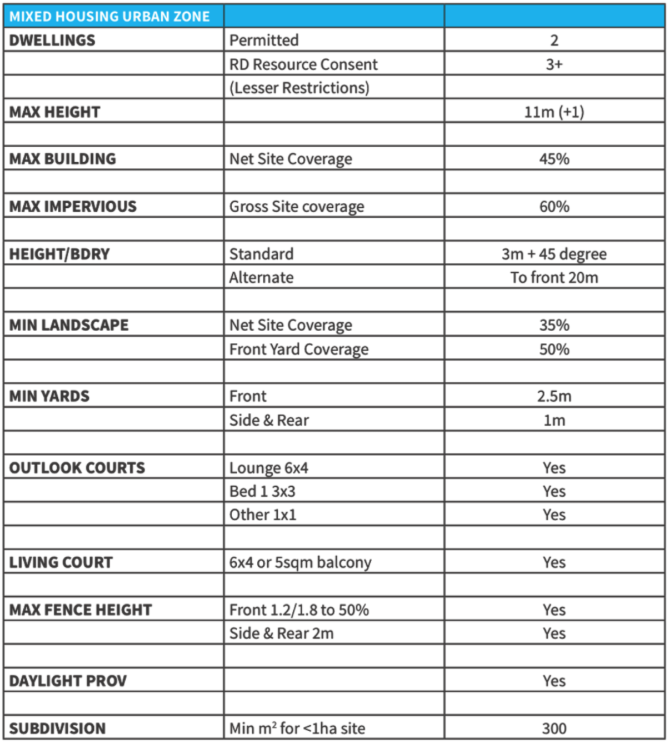
- Generally, up to 2 dwellings can be built. Resource consent is required to build 3 or more dwellings.
2. Buildings can reach 11 metres in height (3 storeys).
Development requirements
- Maximum impervious area (concreted area) must not exceed 60% of the site area;
- Maximum building coverage must not exceed 40% of the site area;
- The minimum landscaped area must be at least 40% of the net site area;
- At least 50% of the front yard must include landscaping;
- The minimum site (building) area is 300 square metres.
What are the benefits of the Mixed Housing Urban Zone?
- With resource consent, development can extend to 2–3 dwellings or more
- Significant potential development value makes it easier to sell to developers
- More options for intensive development while retaining the area’s suburban built character.
Conclusion
House prices in almost every part of Auckland have now reached the million-dollar mark, and opportunities to find prices suited to buyers’ own housing needs, as in Glen Innes, within 12 kilometres of Auckland’s CBD are already very limited. As Auckland’s population continues to grow, opportunities for these buyers to enter the central Auckland market will become increasingly scarce. Buying ever further from the centre will become a major trend for those purchasing to meet their housing needs. Buying in central Auckland before the next major surge is the surest choice.