
Pandemic success sends the wealthy flocking to New Zealand to buy property
Had Larry Page’s child not recently been hospitalised in Auckland, nobody would have realised that the world’s sixth-richest person and Google co-founder had already immigrated to New Zealand at some unknown point. As the news emerged, Page’s colleague, Google Senior Vice President Urs Hölzle, also announced that he would move to New Zealand for a trial stay. With global elites arriving one after another, it is hard not to exclaim: New Zealand’s exceptional pandemic response is sending the wealthy flocking here to buy property.
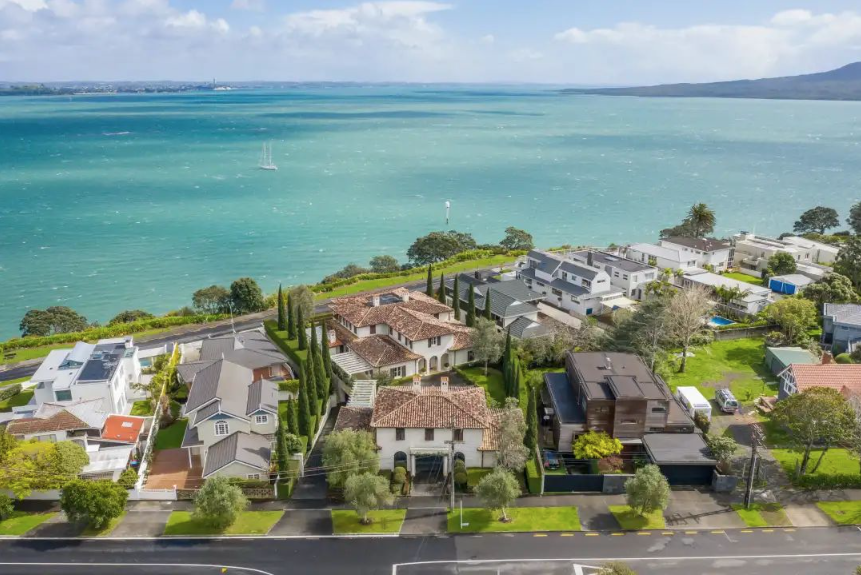
Figures released by Immigration New Zealand in May this year show that, even with the border closed, 5 wealthy foreign nationals who invested a combined NZ$36,000,000 successfully entered New Zealand and were granted residence. Beyond the tightly closed border, a swelling tide of wealthy people from around the world is waiting for a ticket into Middle-earth.
Sonny Lam, an immigration lawyer at Queen City Law, says that in the year or so since the global pandemic began, the number of clients seeking immigration advice has increased by three times compared with before the pandemic, while applications have risen by 50%. Among the investor immigration applications already submitted, he receives news of successful approvals for clients every week or two, with most applicants coming from China. Unless immigration policy changes dramatically after the pandemic, high-net-worth individuals’ enthusiasm for immigrating to New Zealand will remain strong.
And the first thing most wealthy arrivals do is buy a home.
{ad}
A surge after the pandemic began
Since the pandemic began in 2020, New Zealand property prices have followed an upward trajectory of unprecedented steepness. REINZ figures show that house prices surged 21.5% in the year to June this year. Investors accounted for more than 40% of purchases that month, a record high.
Brent McGregor, New Zealand Executive Chairman of the prominent American commercial property services firm CBRE, says that even in 2020, a year of repeated lockdowns, total transactions for New Zealand properties worth more than NZ$20,000,000 reached NZ$2,900,000,000, showing no signs of weakness. McGregor notes: “In the current environment, New Zealand is widely regarded as a strong performer and is therefore expected to compete well for global capital.”
Bayleys agent Sarah Liu, who regularly brokers deals at the top end of New Zealand’s luxury housing market, confirms this. Since the pandemic began, she has sold 5 properties priced above NZ$10,000,000, with sales noticeably faster than before.
And this is only the beginning. An Australian buyer has contacted Sarah several times over the past six months about buying a top-end luxury home. “Whenever an exceptional mansion comes onto the market, he is very enthusiastic. Once, he had even bought a ticket to fly from Australia to New Zealand the following day to view a property, but Australia went back into lockdown on the eve of his departure. This has cost him several opportunities.” New Zealand’s consistent pandemic response stands out even more with each outbreak overseas, attracting wealthy people worldwide who are seeking a safe haven. “Repeated large-scale outbreaks in other countries make wealthy buyers increasingly eager to buy property in New Zealand. So, as soon as travel is permitted, I believe he will come here to view homes. There are many others like him,” Sarah says.
“Alongside New Zealand’s steady control of the pandemic, ‘money is worth less and borrowing is cheap’. That is another distinctive factor behind this surge in house prices,” says Bernard Leung, an investor who has studied New Zealand’s property investment market for nearly 20 years. Persistently low mortgage rates, chronic supply shortages and pent-up demand have brought large numbers of buyers into fierce competition. Asian buyers with a longstanding preference for building wealth through property, returning New Zealanders and local first-home-buying families currently form the main buying groups.
Chinese capital gathers momentum
Beyond individual buyers, investment developers backed by Chinese business groups are also accounting for a growing share of the market.
Frank Xu, President of the New Zealand Chinese Building Industry Association, says developers of Chinese heritage accounted for around thirty per cent of Auckland’s development market before the pandemic. New Zealand’s strong pandemic response has since boosted investor confidence. Based on projects visible in the market, transaction data collected from major building suppliers and applications for qualifications from Chinese builders, their share has now risen to around 50%. The recently concluded New Zealand International Building Expo & Summit attracted more than ten thousand visitors over two days, the vast majority Chinese people interested in subdividing land and developing and building property.
In recent years, developers of Chinese heritage have frequently featured in land development projects exceeding 50,000 square metres in emerging Auckland areas such as Hobsonville, Westgate and Drury. In Drury, south Auckland, the first stage of the new Auranga township, covering more than 160 hectares, will provide 2,650 homes when completed. Charles Ma, the young Chinese founder of developer MADE Group, has repeatedly expressed his enthusiasm for being a “city maker” on this vast site.
Other developers of Chinese heritage have shown a clear interest in high-density urban housing. Hong Kong-based Risland Holdings has developed apartment projects in Auckland’s Grafton, Albany and Meadowbank, all attracting strong interest. Risland’s parent company, Country Garden Holdings, is one of China’s leading property companies.
Shanghai-based Shundi Group is steadily progressing its Seascape apartment tower on Auckland’s downtown waterfront, with construction now above ten storeys. The 52-storey building will become an Auckland landmark when completed, providing 221 luxury apartments.
More developers of Chinese heritage have also been actively seeking opportunities at recent auctions.
The trend becomes clearer
“Over the past year, prices in Auckland’s traditionally desirable suburbs have reached new levels almost every week.” Sarah Liu says.
Such frenzied house price growth demands intervention, and all signs suggest that policies to rein it in are on their way.
In August, New Zealand Finance Minister Grant Robertson made clear that he would act as quickly as possible to give the Reserve Bank new tools to restrict bank mortgage lending. The first interest rate increase is widely expected in month 11 of this year, with mortgage rates beginning to rise beforehand. Economists believe this will turn the housing market’s “tailwind into a slight headwind”.
“In my view, New Zealand’s economy will remain strong from 2021 to 2022 .” Bernard Leung believes that from the second half of 2021 through 2022, Auckland house prices will leave their recent frenzied upward trajectory and enter a relatively calm period. This does not mean prices will fall. He predicts that over the next 12 months, Auckland house prices will remain stable at current levels, while properties with valuable land or development potential in good locations will still attract fierce competition when they become available.
“Unless housing supply exceeds demand, there is no other effective way to truly address rapid house price growth,” Bernard says frankly.
Frank Xu also notes that rising material and labour costs are adding to upward pressure on house prices. Amid a global rise in building material prices, New Zealand’s increases have been even greater. As New Zealand is not a producer of raw materials, it relies heavily on imported building supplies. Longer international freight lead times have pushed up transport costs, leaving New Zealand facing both high prices and shortages of building materials.
Meanwhile, pandemic-related border closures have prevented many overseas tradespeople from entering. Frank explains that New Zealand’s construction industry has long relied heavily on overseas skilled workers. Local construction tradespeople are now in short supply across the board, with no relief in sight.
“All these factors together pose a major challenge to the Government’s efforts to control house prices.” Frank says. The contest he describes between government, the housing market and buyers has played out repeatedly over the past decade or more in major, densely populated cities worldwide. After successive struggles, house prices in economically thriving cities have continued climbing, regardless of anyone’s wishes.