
Resurgent pandemic plunges global shipping into its biggest crisis in 65 years! Shipping disruption poses major challenges for New Zealand
Just how congested are the world’s ports? Repeated pandemic flare-ups this year have worsened congestion at numerous ports worldwide. More than 350 cargo ships are currently queuing to unload, plunging the global shipping system into its biggest crisis in 65 years.
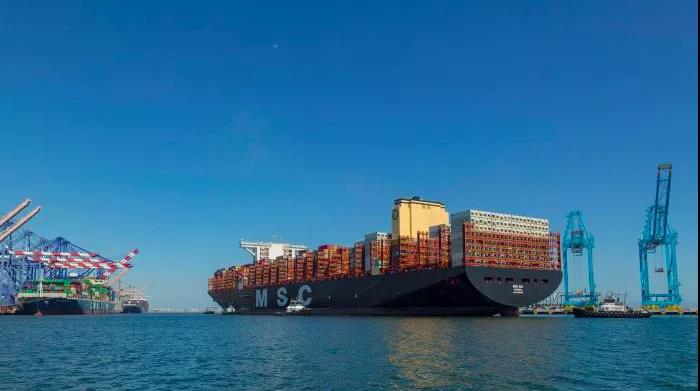
The Financial Times recently reported that repeated pandemic flare-ups this year meant a total of 353 container ships were queuing at ports worldwide in August, with New Zealand’s Port of Auckland also caught up in what has become this year’s biggest shipping disruption.
{ad}
01.
Pandemic-driven online shopping boom worsens port congestion
Real-time data from logistics company Kuehne+Nagel shows that congestion this year is worse than during last year’s pandemic. In August, more than twice as many cargo vessels worldwide were waiting for berths as last year, with shipping congestion far exceeding expectations.
The industry expects more goods to be shipped between cities around the world this year, mainly because people spending more time at home during the pandemic has fuelled an online shopping boom, increasing demand for sea freight. Meanwhile, this bottleneck has caused stock shortages and delivery delays, driving prices steadily higher worldwide.
Border restrictions and factory closures have severely disrupted global supply chains, sending freight rates soaring on major routes linking China, the United States, Europe, Australia and New Zealand.
Soren Toft, chief executive of MSC, the world’s second-largest container shipping group, said,
“Major ports in several countries currently have both ageing equipment and capacity constraints. As ships grow larger, ports’ ability to service them is also constrained. This is another important cause of the current shipping congestion.”
The industry generally believes that tighter border controls during the pandemic disrupted traditional supply chains, while sharply rising online shopping demand caused sea freight volumes to surge, leaving ports unable to cope.
02.
Overstretched ports are another major cause of congestion
Transport Intelligence chief executive John Manners-Bell said, “The global pandemic has highlighted the urgent need to upgrade port facilities. Over the past year, the entire port infrastructure system has been overwhelmed.”
In March this year, the Ever Given ran aground in the Suez Canal, disrupting global freight. One reason was the vessel’s enormous size: when it became lodged at an angle, it blocked the entire channel. The report said ports also need deeper docks and larger cranes to handle giant cargo ships. “Infrastructure upgrades take time. Even replacing a crane takes around 18 months from placing the order to completing installation. Such long lead times prevent ports from adjusting promptly during the pandemic,” said Turloch Mooney, associate director of maritime and trade at IHS Markit.
According to port data from IHS Markit, the time container ships in North America spend waiting offshore for a berth has jumped from 8 hours in 2019 to 33 hours this year, with ports facing congestion of a severity not seen for years.
Manners-Bell said, “Every part of the supply chain is currently at breaking point. Customers cannot blame freight companies or shipping lines. Even a small change in demand can have a huge impact further down the supply chain.” To prevent this happening again, some shipping companies have begun investing in ports themselves to secure priority treatment for their own vessels.
03.
Shipping reliability at the Port of Auckland falls to a record low
Around 5 container ships are currently waiting for berths at New Zealand’s Port of Auckland.
Globally renowned container shipping company Maersk noted in its July market report, “Congestion at the Port of Auckland is the main obstacle to the smooth running of New Zealand’s supply chain. Export demand from Australia and New Zealand remains strong, further exacerbating congestion in sea transport.” A lack of berths at the Port of Auckland has left the company facing delays of up to 12 days at the Port of Sydney.
Maritime congestion has caused unprecedented operational disruption. According to the Maritime Union of New Zealand, shipping reliability across New Zealand’s ports averaged a healthy level above 70% in August last year. However, following the pandemic outbreak, it continued to fall to a record low of 6%.
At the Port of Auckland, New Zealand’s largest port by cargo throughput, shipping reliability stood at 9.57% from November last year, falling further to 5.56% in April. The report said congestion had severely undermined shipping lines’ ability to keep to schedules at other overseas ports.
To address congestion at the Port of Auckland, many shipping companies have now concentrated their main services at the Port of Tauranga. Goods are then transported by rail to the Port of Auckland, avoiding lengthy delays there.
04.
Unprecedented supply chain pressure drives record increases in New Zealand construction costs
Under the twin pressures of raw material shortages and global transport disruption, New Zealand construction costs are rising this year at their fastest pace since 2012. CoreLogic’s Cordell Housing Index Price (CHIP) shows that nationwide residential construction costs surged 2.2% in June, the largest increase since the index began.
CoreLogic NZ chief property economist Kelvin Davidson said,
“This pushed annual construction cost growth in New Zealand to 4.5%, up from 3.3% in March. The next quarter’s CHIP index is expected to show further price pressure, which could cool the current construction boom.”
Local Auckland builder Jim Qiu said, “We currently have around 20 building sites in Auckland facing intermittent shutdowns because of raw material shortages. Many projects cannot resume until materials arrive, and several are expected to be delayed by at least around 6 months. With those shortages also pushing construction costs steadily higher, this is putting enormous pressure on both us and our clients.”
A survey found that 90% of builders currently face problems including delays, higher costs and customer complaints caused by building material shortages, placing unprecedented pressure on the entire industry.