
Bombshell! New Zealand’s richest man is snapping up land in these areas, will you follow his lead?
In May this year, the National Business Review published its 2021 New Zealand Rich List. Graeme Hart, who became the first New Zealander whose wealth exceeded NZ$10,000,000,000 in 2019, once again topped the list with assets of NZ$11,000,000,000.
We predict his wealth could grow explosively again over the next few years! According to an NZ Herald report on 1 October, billionaire Mr Hart purchased several industrial properties in South Auckland through 5 transactions worth a total of NZ$189,000,000. Reportedly, over the past few months, New Zealand’s richest man has bought 4 commercial property projects worth tens of millions of dollars, using their appreciation to increase the asset value of his Goodman Property Trust by as much as NZ$5! Well-informed property sources say the scale of Mr Hart’s purchases has surprised many in the industry, ‘because he is buying large tracts of sought-after land and commercial buildings to plan new developments for his businesses, which will then be leased back to others’. Someone involved in one transaction added that both the pace and scale of the buying activity were unusual.
{ad}
Let’s take a look at where these five projects are located.
#1
At 31 Prices Rd, near Puhinui Rd in Manukau/Wiri A 28-hectare site, priced at NZ$94,000,000
Zoned for light industry, this site lies between Auckland Airport and State Highway 1, offering an excellent location for future large-scale development near transport hubs. The land is flat and close to the edge of Manukau Harbour.
Mr Callesen, chief executive of CBRE New Zealand, said: ‘Hart’s site is undoubtedly one of the most significant and largest undeveloped industrial sites remaining in South Auckland. In a market currently short of available land, it is regarded as a highly strategic investment opportunity of a kind that tenants and investors alike find very difficult to secure.’ Bruce Catley, also of CBRE, said the council had approved key infrastructure, including roads, bridges and associated services. Existing resource consents would also simplify the process for buyers hoping to develop the land in the near future. A masterplan concept shows a proposed road and bridge linking Mc Laughlins Road to Prices Road, opening up the existing dead-end road and connecting it to the wider road network to provide an alternative route from Wiri to the airport.
#2
An East Tamaki site priced at NZ$30,000,000, covering 3.8 hectares of land
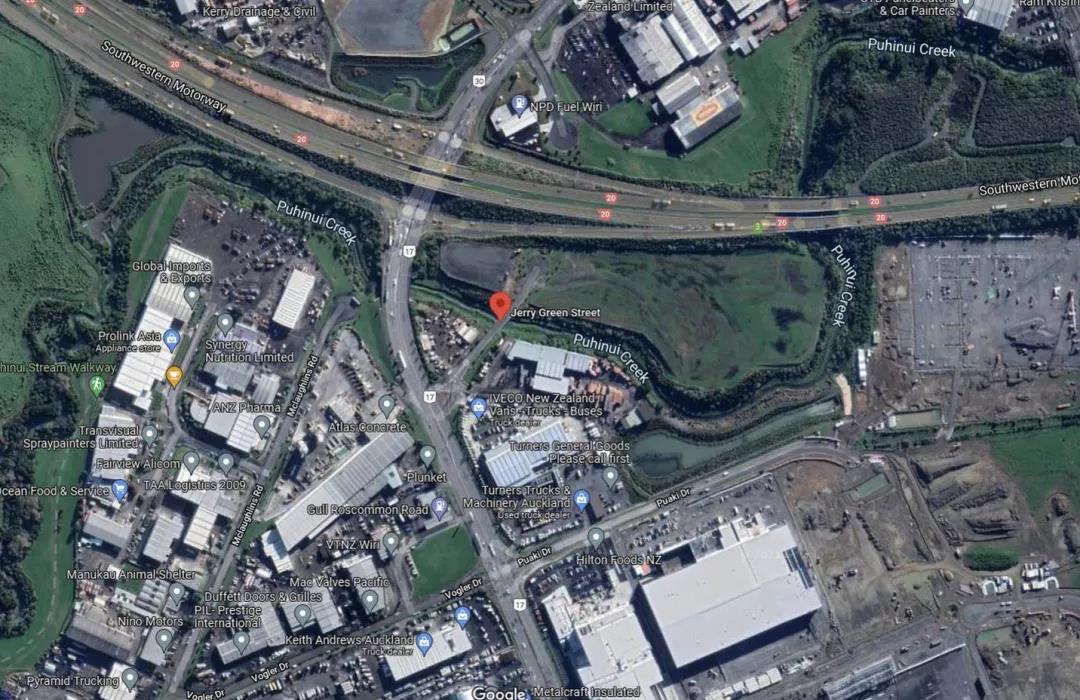
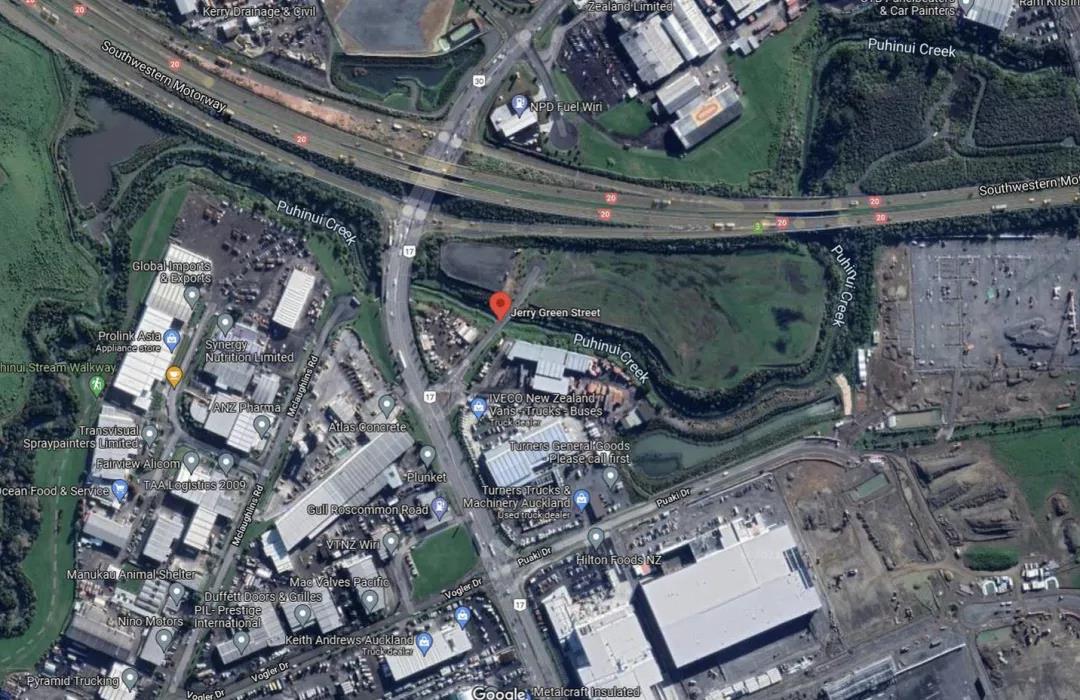
At the end of 9 Jerry Green St in Wiri, near the southbound lanes of State Highway 1
Image source: Google Maps
The site is near Roscommon Rd, spans Puhinui Creek and adjoins the southbound lanes of State Highway 1, offering very convenient transport access.
#3
An East Tamaki site priced at NZ$26,000,000, covering 2.3 hectares of land
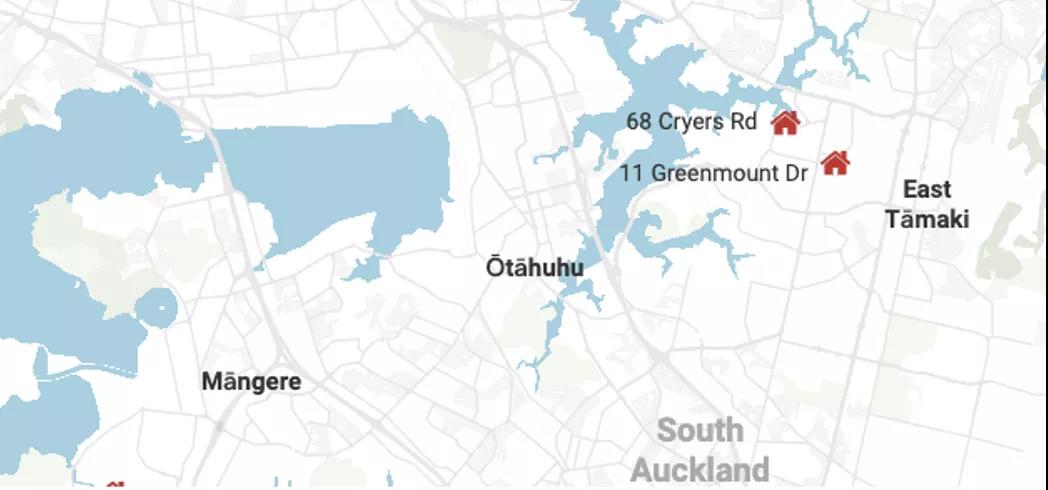
Located at 68 Cryer Road, in a central development area with highly active commercial activity. Fresher Foods currently operates from a 7000-square-metre building on the site.
#4
An East Tamaki site priced at NZ$18,200,000, covering 1.1 hectares of land
The site is at 11 Greenmount Dr, not far from Ti Rakau Dr, in an ideal commercial area keenly sought after for warehouses, logistics, storage and light manufacturing.
#5
In Māngere, priced at NZ$21,000,000, a 2.5-hectare site
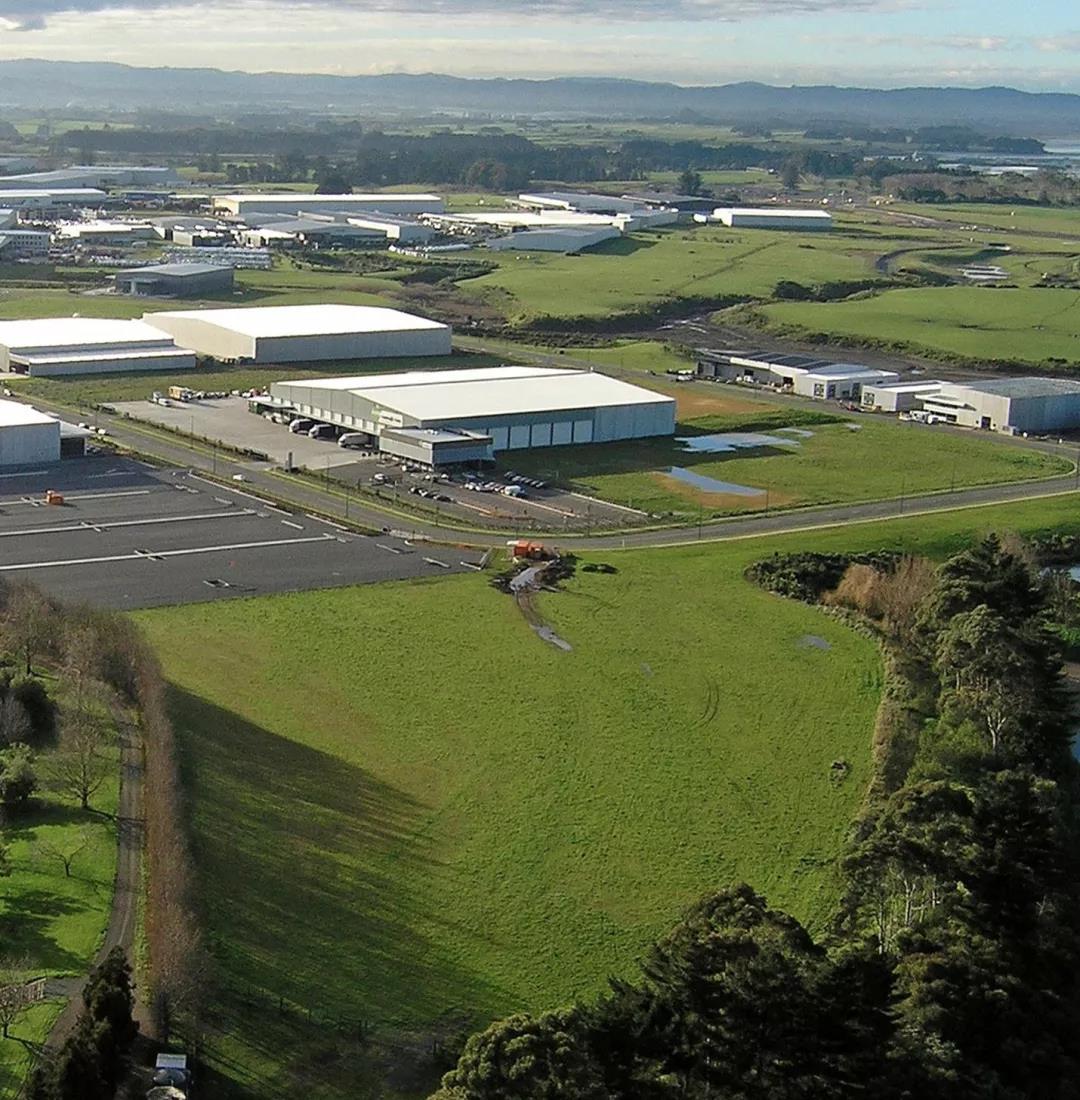
A photograph of 90 Pavilion Dr when it was listed a few years ago
The address is 90 Pavilion Dr, Māngere. It is on the edge of Villa Maria Estate, the greenfield development where Hart’s company recently bought 2.5 hectares for NZ$21,000,000, and which is set to become a NZ$500,000,000 industrial park. Sold as part of Villa Maria Estate, the site is zoned for light industry.
To explore New Zealand’s richest man’s land-buying spree in greater depth, we interviewed commercial property veterans James Law and Jenny Zhang:
James Law
Chief Executive Officer of
James Law Group
Jenny Zhang
Chief Operating Officer of
Macrae Property Brokers
Q1: As an experienced Auckland investor, what do you make of New Zealand’s richest man’s recent large-scale land purchases?
James: I’m not surprised at all. E-commerce has become widespread in recent years, with the pandemic adding to its increasingly rapid growth. Industrial property has been booming lately, mainly because e-commerce transaction volumes have soared. The pandemic has also made people accustomed to, and inclined towards, online shopping, increasing many businesses’ demand for industrial and warehousing property. Many major international brands, logistics companies and technology companies have entered the New Zealand market to establish factories and data centres. In East Tamaki, one of Auckland’s newest industrial hubs, this is normal commercial activity.
Jenny: All the land purchased by the country’s richest man is commercial development land! The pandemic prompted large numbers of people to return, greatly accelerating New Zealand’s residential property market. Commercial property prices, propelled by this market momentum, have shot up like a rocket, with returns far exceeding those of ordinary residential projects. Put simply, investing the same amount in commercial property could produce returns several times higher than investing in ordinary residential development.
Q2: Do you expect other investors to follow? Which Auckland areas currently have the hottest commercial property markets?
James: I expect many investors to follow in due course. This area looks likely to rise in the near term. Other industrial areas also offer investment potential, such as Westgate, Hobsonville and elsewhere. The industrial properties we recently marketed were all snapped up.
Jenny: Amid the pandemic-driven wave of returning residents, many investors have already contacted us to buy commercial land and factories in large quantities in and around Auckland. More than 95% of the commercial investors I deal with are European, and they began positioning themselves in commercial property long ago. Many Chinese business owners have only felt the urgent need to buy commercial property over the past year, after repeatedly struggling to rent suitable premises or facing rent increases from commercial landlords. More than 95% of these buyers are purchasing primarily for their own use. Popular areas attracting concentrated investment currently include Onehunga, Mt Wellington, Otahuhu and Penrose. Areas near the airport, such as Wiri, Manukau, Mangere and others, are newer commercial centres and represent the direction of future development. Of course, this is also the underlying motivation for New Zealand’s richest man’s substantial investment in this area.
Q3:Does this mean commercial and residential property prices in these areas will soar in future? Should the council make more land available for development?
James: Commercial property development in East Tamaki began more than a decade ago, and I’m very optimistic about its potential. We also believe the Government should release more land to ease the shortage.
Jenny: Commercial economic development will certainly stimulate the surrounding residential market. But I don’t think we will see the kind of price surge we saw before. Profit margins are limited, and with rising land, labour and building material costs, the return on investment is very poor. Put plainly, it feels like using an anti-aircraft gun to shoot a mosquito. Auckland currently has a severe shortage of commercial property because council planning imposes extremely strict requirements on commercial zoning. A range of factors must be considered, particularly environmental protection and disturbance to neighbours. These constrain the pace of commercial area development and indirectly create commercial property scarcity. This is an objective reality, and a problem that cannot be resolved in the short term of three to five years. Markets have always followed the economic principle that scarcity drives value, so industrial premises still have substantial room for price growth over the foreseeable next three to five years. I’m firmly optimistic about this sector and welcome Chinese investors interested in commercial property to get in touch. After all, the industry has many pitfalls and is considerably more complex than ordinary residential investment. I’m very happy to share practical insights into it.