
The big discussion: New Zealand faces severe shortages of building materials and skilled workers, will your development grind to a halt?
Stuff recently reported that building-material shortages and rapidly rising prices in New Zealand's property market have forced work to stall on many local construction sites, potentially putting some developments under way at serious risk.
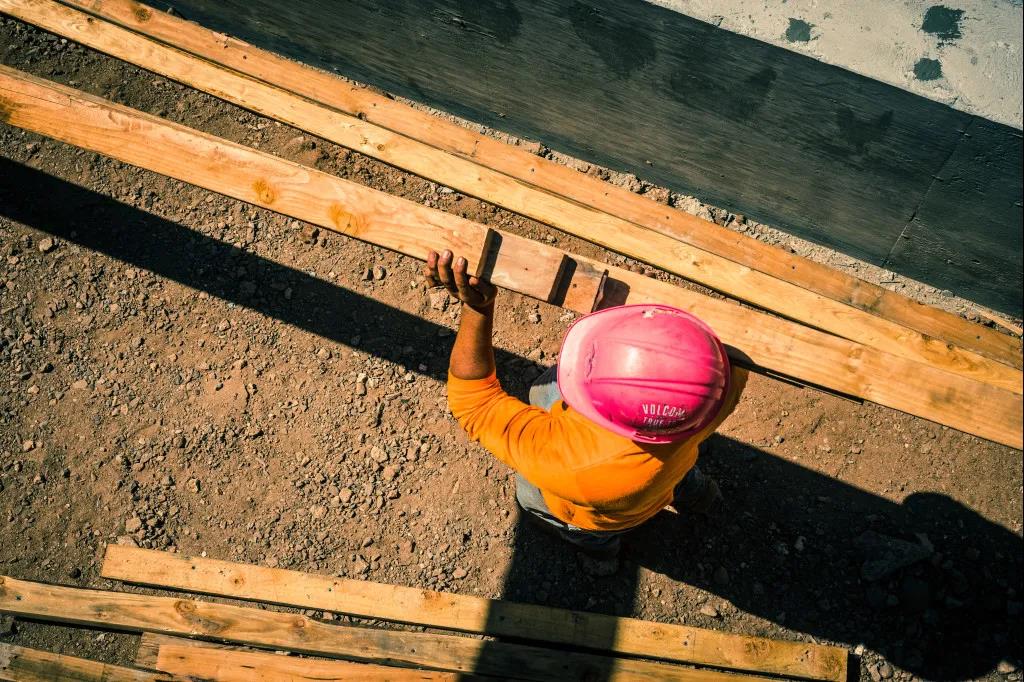
Stuff recently reported that building-material shortages and rapidly rising prices in New Zealand's property market have forced work to stall on many local construction sites, potentially putting some developments under way at serious risk. With the effects of the pandemic and strong housing demand, record residential construction is putting increasing pressure on supplies and prices of timber, steel, boards, roofing materials, paint and even nails nationwide. Many smaller developers anxiously waiting to buy materials complain that hundreds of orders have been cancelled, with suppliers now prioritising their major customers.
{ad}
Canterbury Master Builders Association president John Hamilton says the crisis ‘will not go away quickly’. He is calling for New Zealand to increase its production and supply capacity so there are enough materials to build the homes needed. He says the problems include too few sawmills producing building timber and infrastructure projects using most of the steel. ‘The Government wants us to build more houses, but we have not heard from them about how we are going to work through these problems. They seem to be focused only on Covid.’ Hamilton predicts a ‘knock-on effect’ on construction sites, including questions about what happens to unfinished homes and cancelled subcontracts. ‘The consequences could be truly devastating for the industry.’
Christchurch couple Warwick and Natalie Edwards broke ground on their own home in Tai Tapu in June, but now see no end in sight. Warwick Edwards says that after they ordered framing, the price rose by thousands of New Zealand dollars, and the order now appears to have been cancelled altogether. ‘At this stage, we have no timber. The soaring prices make us feel we are being held to ransom.’ Natalie Edwards says their contracted supplier now ‘will not even answer the phone’. ‘We have been unable to lock in contracts for all the main building materials we need. I think the suppliers have abandoned us.’
Construction management consultant Mike Blackburn says shortages of products and materials are ‘effectively across the board’. Global supply-chain problems and Auckland's lockdown have severely intensified local demand for building materials, he says. Blackburn estimates that anyone preparing to start a building project may not receive the keys to their new home until the middle of 2023. ‘Everyone is trying to build, but as material costs rise, supplies are becoming harder to obtain and purchase contracts are being repriced.’ ‘It covers almost every category of building product. For example, reinforcing mesh is needed on any project as a basic component of the foundations you pour on site. Shortages also include all timber products, frames and trusses, weatherboards, panels, insulation, steel, fence palings and even nails.’ He says major housebuilders appear to have secured supplies, while everyone else faces substantial delays or has to redesign projects. ‘Builders are unwilling to sign fixed-price contracts ... so nobody can guarantee how much a project will ultimately pay for building materials.’
Grant Close, owner of hardware and building-materials retailer PlaceMakers Riccarton, says they have had to cancel timber supply contracts for some customers' projects. ‘We do have some unhappy customers,’ he says. ‘We are in a very bad situation. New Zealand's construction market is running more than 30% above the country's manufacturing capacity.’ ‘We cannot ease the pressure because it is very difficult to source building materials overseas.’ Close says supplies may not improve until next year.
Mark Melbourne of Canterbury Frames and Trusses says they have halved production and lost 30 contracts. ‘We have had to push work from this year into next year. Lead times are now nine months, compared with the usual six to eight weeks.’ ‘Of course, we have ... turned away many customers, but if we cannot get timber, we simply cannot make something out of nothing.’ ‘New construction in Canterbury keeps growing. But it could soon grind to a halt.’ ‘We will see builders, plumbers, concreters and electricians with no work to do. These people will lose their jobs because once construction stops, they have to look elsewhere.’ Melbourne says his 12 employees have not been affected so far, ‘but if we do not have raw materials to make more building products, it will absolutely affect our staffing numbers’.
Canterbury Certified Builders Association president Richard Poff says today's ‘just-in-time’ system means manufacturers and suppliers no longer hold large inventories, so supplies have to be rationed and prices increased. ‘If you can build 100 identical houses a year, you will get priority. Companies with smaller workloads are the ones affected.’ He says shortages have spread across building-product sectors, including carpets, construction tape and taps.
If severe material shortages are a longstanding, widespread problem in construction, the shortage of skilled workers could be the final straw.
RNZ reports that Auckland's two largest infrastructure projects face possible cost increases and delays. Shayne Cunis, head of Watercare's 14.7-kilometre Central Interceptor wastewater project from Grey Lynn to Māngere, says: ‘There is a shortage of skilled workers across New Zealand's construction industry, making it a challenge to fill vacancies as we ramp up construction.’ Across the city, the City Rail Link (CRL) faces similar challenges. The NZ$4,400,000,000 rail tunnel project will need to employ around 2000 workers.
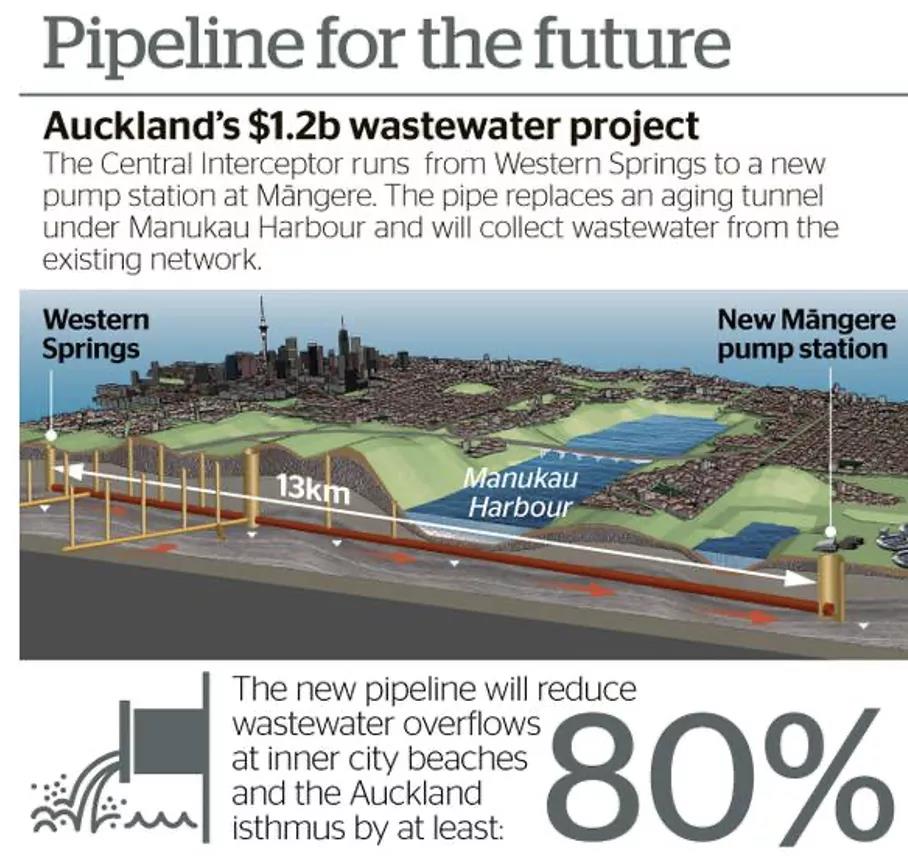
Image source: internet
Last year, 47,330 homes were consented nationwide, 25% more than the previous year and almost three times the number a decade earlier.
Meanwhile, news circulated on WeChat Moments this morning that Auckland Council would stop accepting requests for pre-application meetings from 8 November. Its open letter said an unprecedented volume of resource consent applications was placing enormous pressure on its current capacity to allocate resources, leaving it unable to provide an efficient pre-application service that met customer expectations. It expected to consider resuming the service only next year.
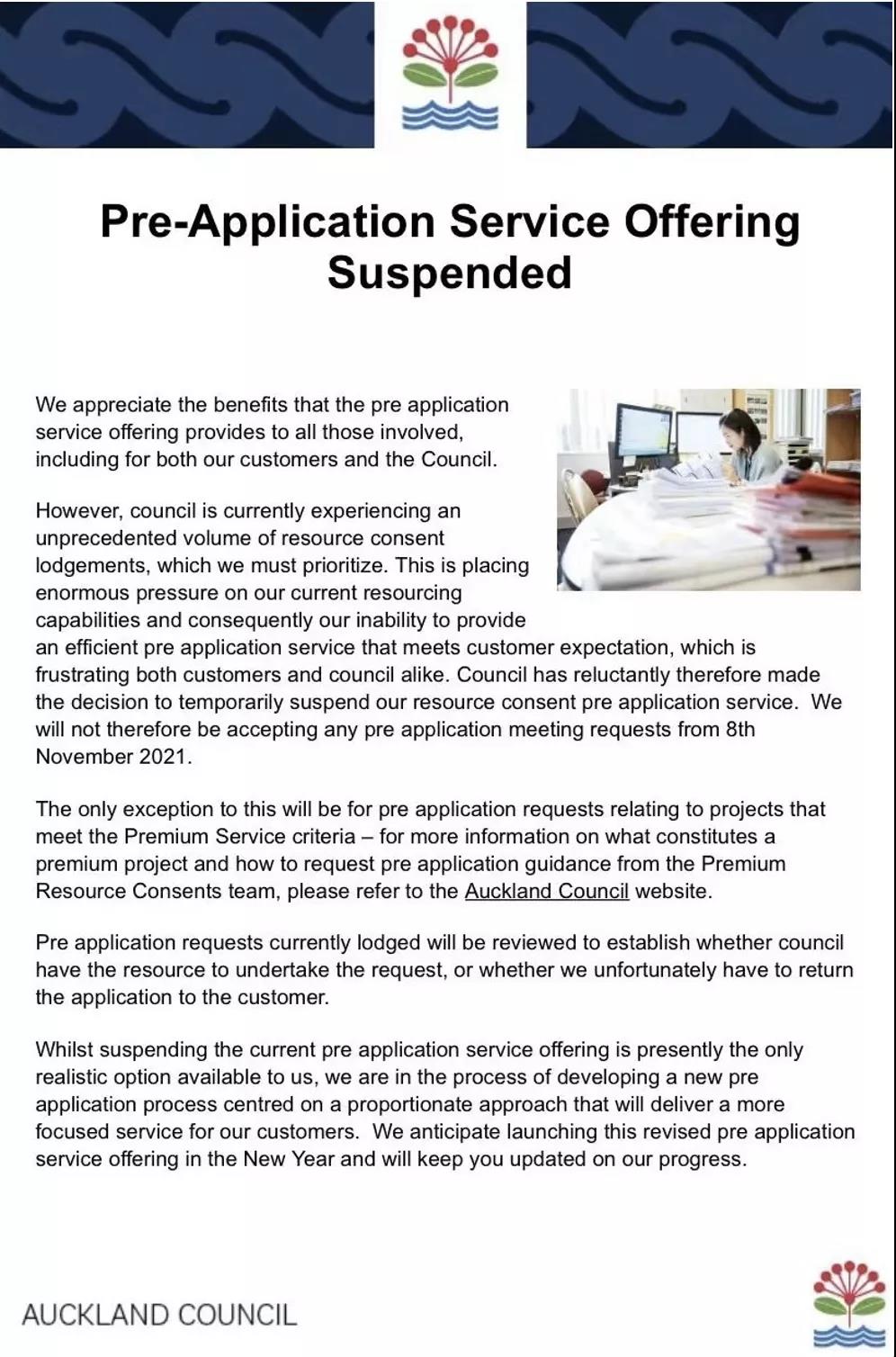
Image source: WeChat Moments
As soon as the news broke, people in construction began complaining: ‘It feels like everything is in chaos. Pre-application meetings disappear without warning, surveyors suddenly stop taking work, and suppliers' detailers resign at a moment's notice. Civil, structural, fire, acoustic and traffic engineers are all flat out. You are lucky if they answer the phone or reply to an email. But drawings and reports arrive at a snail's pace ...’
Food for thought: the Government has recently introduced a range of policies favourable to the property sector, and next year will bring housing demand from 165,000 new migrants. As we celebrate the prospect of greater demand for developers and builders, should we also consider whether the current turmoil in construction could affect the development project in front of us?