
Where should we put our wealth amid global stagflation?
The most significant economic effects of the global pandemic are the simultaneous blows to supply and demand, and uncertainty.
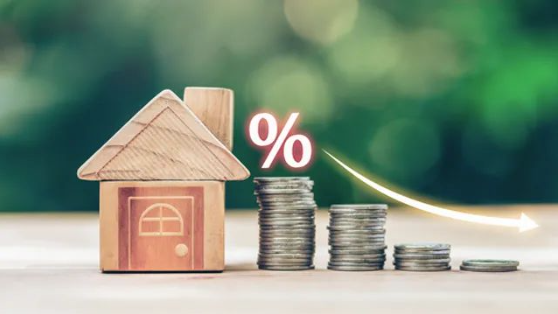
In 2022, downward economic pressure and high inflation coexist, with clear signs of stagflation and household wealth at risk of shrinking. How should investors allocate their assets so that their wealth not only holds its value during stagflation, but also achieves substantial growth? China International Capital Corporation notes that, during stagflation, real assets tend to outperform financial assets across global asset classes, with overall performance ranked as follows: gold/commodities > property > the CPI index > bonds > shares.
Property is a worthwhile option for investment in real assets in New Zealand. Amid the global pandemic, New Zealand's property market rose rather than fell, with Auckland becoming the city with the world's highest house price growth. However, direct property investment requires considerable effort in assessing projects and managing and maintaining properties afterwards. It also involves long investment periods and limited liquidity.
So, is there a form of real asset investment in New Zealand that can provide investors with consistent, stable returns and more flexible portfolios, while allowing investment terms and amounts to be adjusted to suit their finances?
{ad}
YIJU interviewed Onelend Capital head Bryan Tang, to explain the best investment options during “stagflation”.
Bryan Tang was previously a business manager at ASB and the only Chinese person among BNZ's branch managers and partners in its business and property finance divisions. He was also a member of the think tank advising on infrastructure funding and financing management at Auckland Council's Development Programme Office, participating in and approving more than 600 projects worth over NZ$1,000,000,000. Having grown alongside Auckland for more than 20 years, with 16 years of professional experience, Bryan has had the opportunity to become familiar with every corner of the city. From individual projects at the micro level to government development planning and resource allocation, he has identified the growth areas underpinning Auckland's future potential.
YIJU: What kinds of investment can provide a buffer during a global economic downturn?
Bryan:After years of quantitative easing, investors understand the importance of investing in assets. From traditional investment markets to emerging cryptocurrencies, there is a wide variety of assets, but all involve a word investors fear yet cannot avoid: risk. Take property investment again as an example. Traditionally, this has been one of the assets most favoured by Chinese investors. Besides stress-testing the purchase of an owner-occupied home, as discussed earlier, many people consider buying an investment property as a medium- to long-term investment. Before investing, however, they must assess themselves: what kind of property investment suits them best, or offers the greatest scope to add value using their own knowledge and experience?
I often discuss with friends and clients what makes a good investment property. The rule of thumb is to ask: if I were a tenant, would I want to live in this house? That gives a fairly straightforward answer. But if you take a longer view and want to add value to the investment property itself, there is much more to consider, including land area, location, the position of service connections, transport links and future development in the area. Taking this further leads to different types of property development investment: renovating, extending or redeveloping? Building standalone houses, townhouses, apartments or commercial premises? This becomes even more complex. You need to consider your development knowledge and experience, your professional team, development costs including materials and labour, financing costs and financing market trends, and, most importantly, market risk. Thorough preparation is needed on every front.
So when friends or clients ask me what projects they should invest in, I first ask them to consider their strengths and what resources they have within reach to support their investment. With thorough assessments in place, investments focused on housing, the surrounding environment and supporting amenities remain relatively sound and have a relatively high chance of success. They can also develop substantially over time, even becoming a career.
YIJU: Where do you see the growth areas in Auckland's future development?
Bryan: Auckland's future development remains very promising. As one of the world's most liveable cities, Auckland will inevitably see population growth, and it continues to attract highly skilled, high-net-worth people seeking a high quality of life and environment to become Aucklanders. This will bring both opportunities and challenges for Auckland and its people. Population growth benefits the business environment and urban prosperity, but also poses numerous challenges for housing supply, infrastructure upgrades and balancing development with the existing environment.
While working at Auckland Council's Development Programme Office, I also participated in discussions on Auckland's 2030 urban development plan (Auckland Future Plan , FTP). The Auckland Plan 2050 also reflects the council's vision for the city's future development. The plan projects that, by 2043, Auckland's population will grow by 720,000 over the coming 30 years, from its current 1,660,000 to 2,400,000. This means demand for an additional 313,000 homes and 263,000 new jobs. People's desire for liveable homes and surroundings, together with government investment in supporting facilities, will be a major force driving Auckland's economic development and its progress towards becoming a world supercity.
Housing supply is a top priority for every government and one of today's most hotly debated issues. Amid an unprecedented development drive, the government is using existing, arguably limited resources through its public housing redevelopment agency to consolidate surrounding land in areas with high proportions of public rental housing for coordinated planning and redevelopment. Examples include Northcote on the North Shore, Tamaki in the east, Mt Roskill and Oranga in central Auckland, and Mangere in the southwest. Beyond increasing planned housing supply, this involves coordinated planning across communities, ethnicities, age groups and income groups. Alongside infrastructure construction and upgrades to amenities, roadside planting, parks, recreational land and environmental protection are all essential considerations in planning each area's development.
Another factor worth considering is time: ‘When can I move into public rental housing?’ ‘When can I buy a home?’ ‘When will my neighbourhood have amenities such as drinking water pipes and bus stops?’ ‘When will new development make my neighbourhood's environment worse?’ All these questions involve timing. Recently, building material shortages caused by the global pandemic, together with rising interest rates, have sounded a warning for the entire property market. Investment requires even greater caution in this environment. For example, when investing or borrowing to buy a home, you should look beyond your current ability to repay and stress-test your finances through a cycle of rising mortgage interest rates. When assessing new homes, take a broader view of surrounding development and prospects for amenities. Before starting a new development, thoroughly assess financing cost trends, materials management, staffing and development plans.
YIJU: What advice do you have for investors across New Zealand?
Bryan:Leave specialist matters to specialists. In recent years, I have met many investors, from local clients preparing to invest in property for the first time to businesses venturing out from China to invest in New Zealand. They have encountered many of the challenges mentioned earlier to varying degrees, without professionals to solve their problems and guide them. This gave me the idea of establishing a platform providing financial services and asset management: a one-stop platform with a professional risk-rating system and management team to support investors, helping them build fulfilling working lives and live comfortably in liveable New Zealand. That was the reason for founding Onelend Capital and remains its original purpose.
As one of the New Zealand asset management companies that first recognised the market opportunity and entered the non-bank financial sector, Onelend Capital has devoted itself to building an investment and financing platform focused on New Zealand property. Its investments cover land loans, construction loans, business loans and financing for quality projects. It aims to provide high-net-worth investors with safe, convenient, high-quality investment opportunities while offering flexible financing solutions for quality property projects, seeking a mutually beneficial outcome.
In the near future, Onelend Capital will offer investors a diverse range of projects to match their risk preferences, return requirements and investment terms. Through its positive company culture and rigorous processes, the Onelend team will also ensure that the company grows steadily within a sound corporate governance framework.
We hope the Onelend platform can offer you more investment choices.