
Beyond an unprecedented market boom, what have two pandemic years taught New Zealand investors?
Two full years have passed since New Zealand detected its first coronavirus case on 28 February 2020. During those surreal years, the country’s housing market also experienced an unprecedented boom.

Two full years have passed since New Zealand detected its first coronavirus case on 28 February 2020. During those surreal years, the country’s housing market also experienced an unprecedented boom. Interestingly, initial predictions of sharply rising unemployment and steeply falling house prices in the face of the pandemic were disproved by events. In fact, after the first four or five months of panic in the property market, a series of policies supporting the real economy indirectly fuelled property growth. These included a lower Official Cash Rate, quantitative easing, wage subsidies and the removal of loan-to-value ratio restrictions, or LVRs. Data shows that over the two years since August 2020, New Zealand’s national average house price surged 41.6%, an increase of NZ$307,245.
{ad}
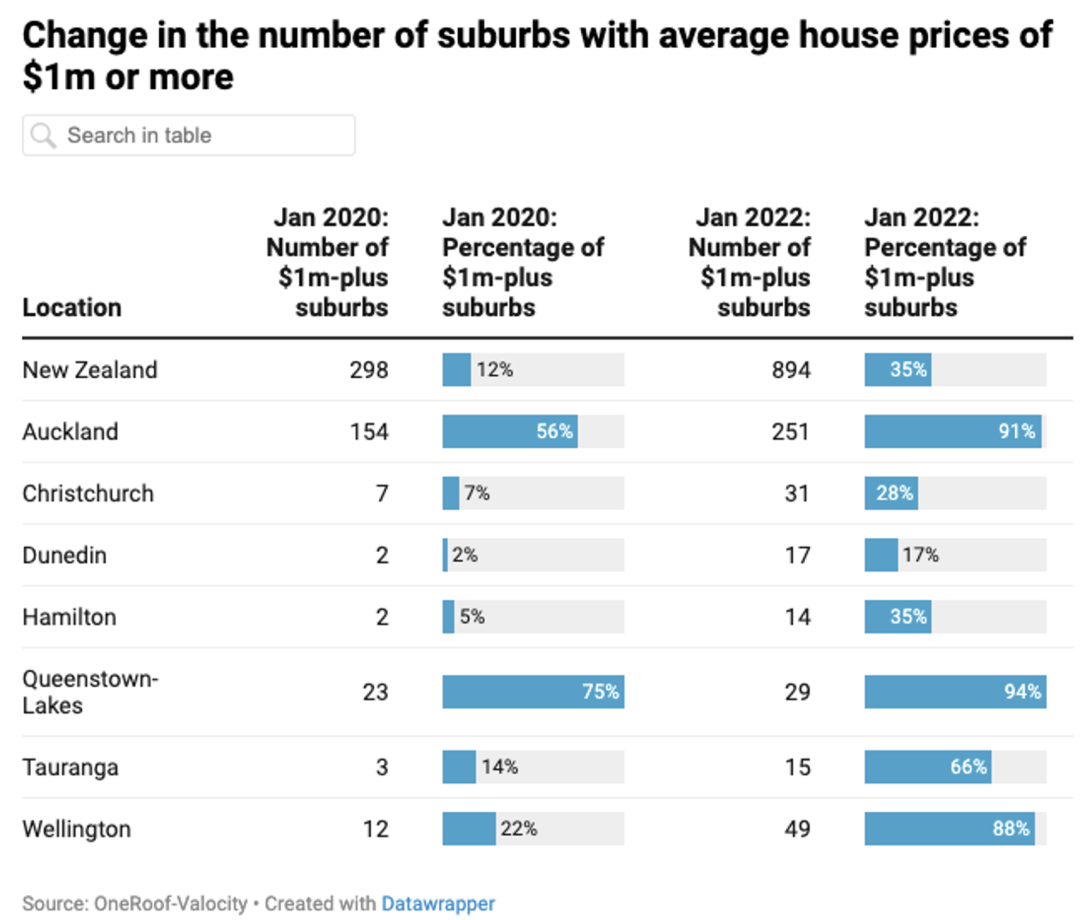
A recently released OneRoof property report showed that, among 646 suburbs in cities including Auckland, Christchurch, Dunedin, Hamilton, Queenstown, Tauranga and Wellington, only 203 had average house prices at or above NZ$1,000,000 in January 2020. That number doubled in just two years, with property values now exceeding NZ$1,000,000 in 406 suburbs across the seven main cities. Such rapid growth has dealt first-home buyers an especially harsh and heavy blow.
OneRoof editor Owen Vaughan said the research showed how quickly urban house prices had risen nationwide and how severely this had worsened the difficulty of buying a home. Since the pandemic began, first-home buyers and countless other New Zealanders had found home ownership increasingly unaffordable. Data shows national home ownership rates have declined steadily over the past 30 years. Valocity head of research Wayne Shum said the unprecedented pandemic housing boom had placed greater pressure on buyers. Valocity data showed that between January 2020 and January 2022, the national average property value jumped from NZ$760,000 to NZ$1,100,000, a rise of 45%. In some cities, prices rose by more than 50%. Even areas where house prices had historically grown slowly, such as Dunedin, recorded strong growth during the pandemic.
Shum believed that before Covid, New Zealand’s property market would have needed almost five years to achieve the value growth seen over the past two years. Some regions, such as Canterbury and the West Coast, would have needed more than a decade to match the recent gains. Nationwide, across urban and suburban areas, this meant the number of suburbs with house prices above NZ$1,000,000 had risen from 298 two years earlier to 894 now. In Auckland, New Zealand’s largest city, soaring prices were an even more serious problem, with the booming market leaving first-home buyers fewer options. In January 2020, 123 suburbs, or around 43%, had average house prices below NZ$1,000,000. Now only 26, or around 9%, had averages below NZ$1,000,000. Meanwhile, the number of suburbs above NZ$1,500,000 surged from 57 to 149. “More concerning are the price changes in South Auckland, where residents have lower incomes and home ownership is very low,” Vaughan said. In January 2020, South Auckland had 10 suburbs with average property values below NZ$700,000. By 2022, the cheapest suburb had an average value of NZ$738,000, while most areas were approaching NZ$1,000,000. As the chart below shows, Wellington’s first-home buyers could be said to have been hit hardest by rising prices, while Dunedin’s were least affected.
New Zealand’s rapid house price growth has now slowed sharply. With borrowing constrained by affordability, mortgage interest rates rising and credit supply tightening, prices in some regions are very likely to fall outright in the coming months. In other words, the housing market is rapidly shifting from last year’s seller’s market to a buyer’s market. As we stand at this historic turning point, should we revisit the experiences and lessons of the pandemic era to better prepare for the post-pandemic period?
Property research company CoreLogic recently released its latest market research. Examining changes in property values by region and property type, it identified five key issues, or lessons. Take a look and see whether they match your own views.
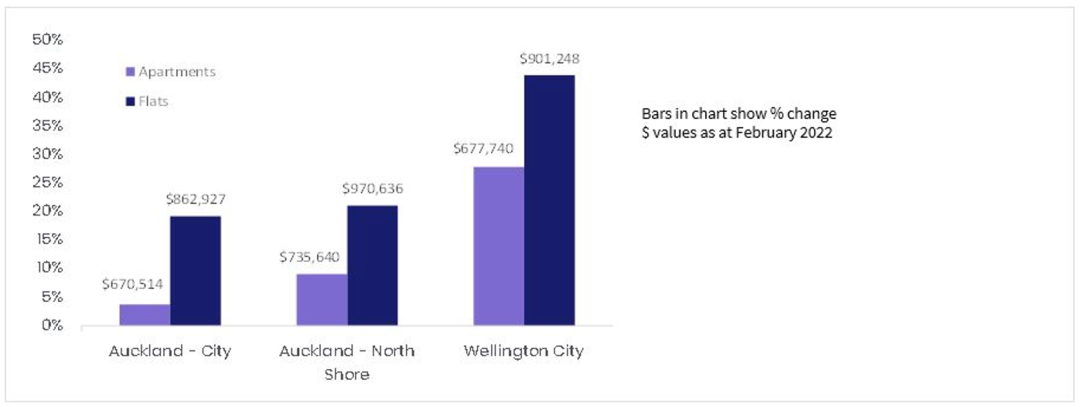
1: Apartments tend to lag behind other property types. Their value growth falls well short of standalone houses, townhouses and terraced homes during an upswing, while their losses are greater during a downturn.
Source: CoreLogic
In fact, as the chart above shows, apartments in central Auckland and on the North Shore remained relatively subdued, with median values rising by just 5–10% over the past two years. This may reflect the considerable pressure caused by the absence of international students and the short-stay accommodation market, with no tourists. All other property types in central Auckland and on the North Shore recorded substantial growth.
2: For many owner-occupiers, a property boom is not necessarily always a “good” thing, particularly for those wanting a larger home. Over the past two years, for example, many would-be movers were stuck where they were, either because there were few suitable homes available due to low listings, or because the funding gap for a higher-value property was too large. Prices for their next home were rising so quickly that they could easily outstrip buyers’ purchasing power.
3: Credit availability and borrowing costs have a greater short-term influence on the market than other “fundamentals”, such as population growth and changes in property listings. Indeed, property values still soared over the past year or two despite no net migration and a strong supply of new listings. Why? Because bank interest rates were low and mortgages relatively easy to obtain, particularly while LVR restrictions were temporarily removed between April 2020 and March 2021.
4: Low lending rates have a dual effect on the housing market: they make borrowing cheaper while reducing the incentive to keep cash in the bank. In the post-pandemic era, money flowing out of term deposits and into property has again highlighted the need for more “trustworthy” investment options.
5: Over time, measures to improve housing affordability help indicate where the market currently stands, both relative to history and when comparing regions. Unaffordability is clearly a powerful brake on price growth. But these measures do not necessarily tell us that an upswing will end when the house-price-to-income ratio reaches X or the time needed to save a deposit reaches Y. Nor do we know how the market will adjust back to a so-called “normal” state.
As property investors, we cannot tell when the pandemic’s effects on the property market will end. But we may be able to draw insights from market changes over the past two years. With that in mind, YIJU spoke again with experienced Auckland investor Liang Lixing for his exclusive commentary.
Q: As an experienced property investor, what insights have the past two pandemic years given you?
Lixing: When the market undergoes unprecedented change, I personally believe we should not blindly follow so-called experts and commentators online or in newspapers. We always need to think for ourselves and understand the essence of what is happening, assessing the effects of real supply and demand in the property market to guide our next investment.
Q: How can investors avoid putting themselves in a dangerous position when the market is uncertain?
Lixing: Personally, I do not advocate excessive leverage. Always ensure your income exceeds your expenses. As mortgage interest rates reached historic lows because of the pandemic, property demand also grew at an unprecedented rate. But that does not mean buying an investment property is right for everyone. Even when the market is strong, we need to prepare for trouble. How will we repay our loans if interest rates return to the levels of a few years ago? At current house prices, it is already difficult for rental income to cover property costs, quite apart from the various other problems landlords face.
Q: Do you see the future property market, shaped by the pandemic, as an opportunity or a challenge for you?
Lixing: For me, it is certainly an opportunity, because more properties will be offered for sale in the next phase of the market. Only a few months have passed since the end of last year, but the property market has already changed fundamentally. In the coming buyer’s market, buyers with sufficient funds or cash will have a good chance of finding bargains.
What do YIJU readers think of the experiences and lessons gained over the past two years? How will you plan your next investment moves? Leave a comment at the end of the article and join our discussion.