
Could more mortgagee properties be heading to auction? Are they bargains or traps for investors?
A Stuff news story attracted considerable attention on social media last night: creditors had forced Sunnynook Central, a development of 15 townhouses in Totara Vale on Auckland’s North Shore, onto the auction market.
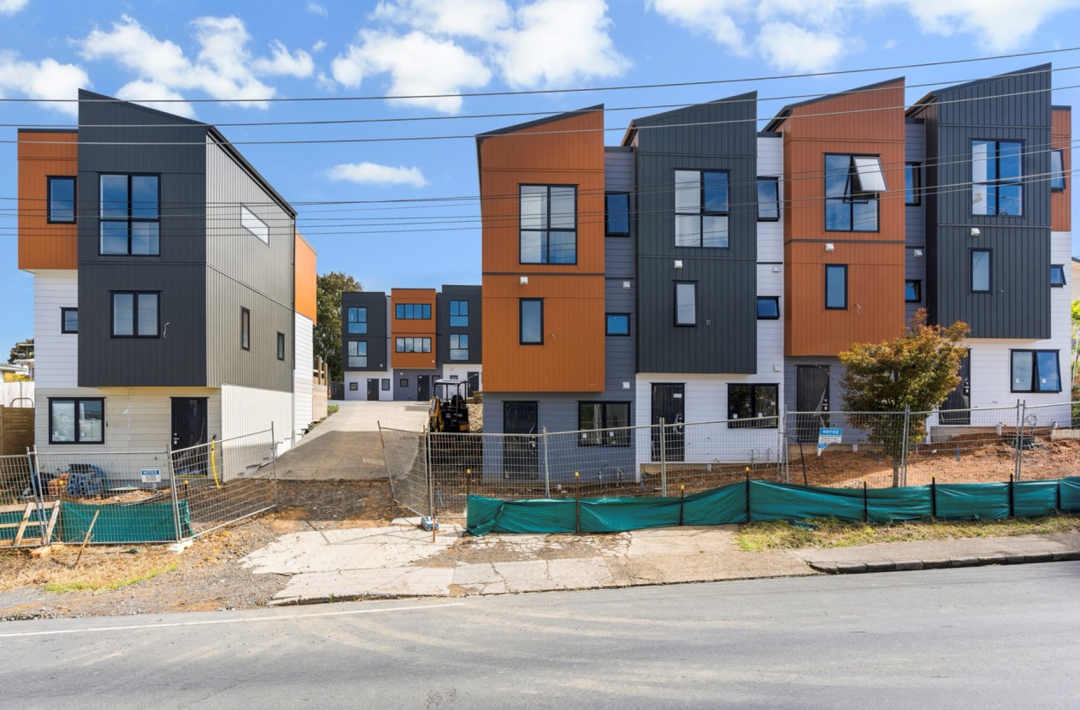
The Trade Me auction listing said a new developer was being sought to complete the project. Reportedly, 10 of the 15 townhouses had already sold. Existing buyers were understandably shocked to discover, without prior warning, that the properties they had purchased were being advertised for auction.
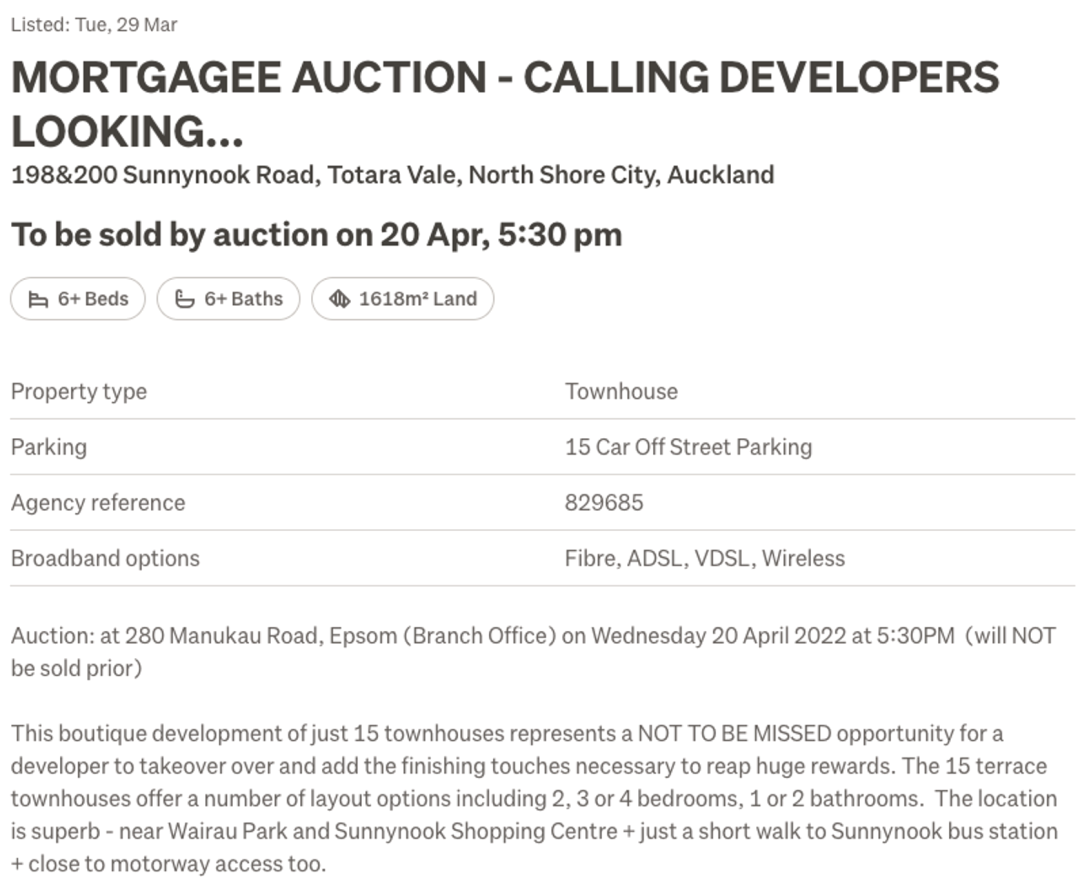
From the property information and images on the Trade Me website at https://www.trademe.co.nz/a/property/residential/sale/listing/3532224423?bof=vOdtZYG0, YIJU’s editorial team learned that the unfinished townhouse development would go to mortgagee auction on 20 April. Barfoot and Thompson salesperson George Fong said a creditor of the development had initiated the mortgagee sale after the developer was unable to repay its debt. The developer, Sunnynook Central LP, had made contact through its lawyer.
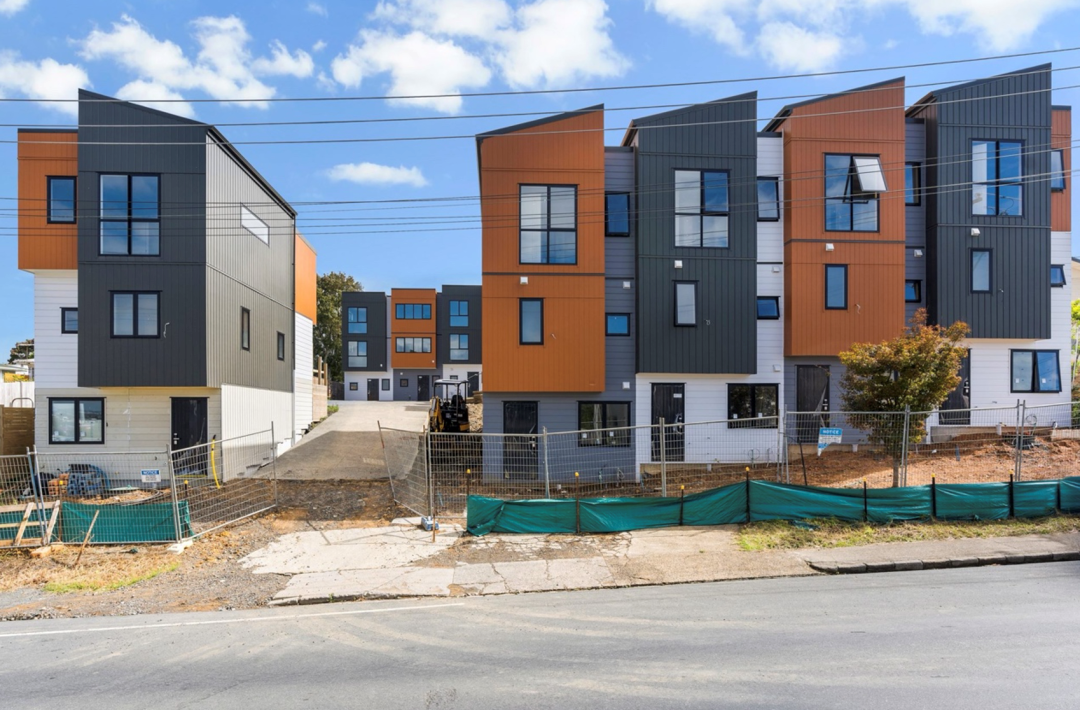
The unfinished Sunnynook Central townhouse development
Fong told the media that since the listing went live yesterday, he had received a call from a buyer in the development asking what had happened, while other interested buyers had also begun making enquiries. The 15 townhouses include two-, three- and four-bedroom layouts, with 10 recorded as sold. According to Stuff, the project’s previous salesperson, Jeremy Mi, said they did not know how many properties had sold or what had happened to the development. Everyone was asking the same questions today… Asked whether buyers could recover their deposits, he said he did not know either. “I’ve tried contacting the developer and haven’t had a response, so I can’t tell you anything.”
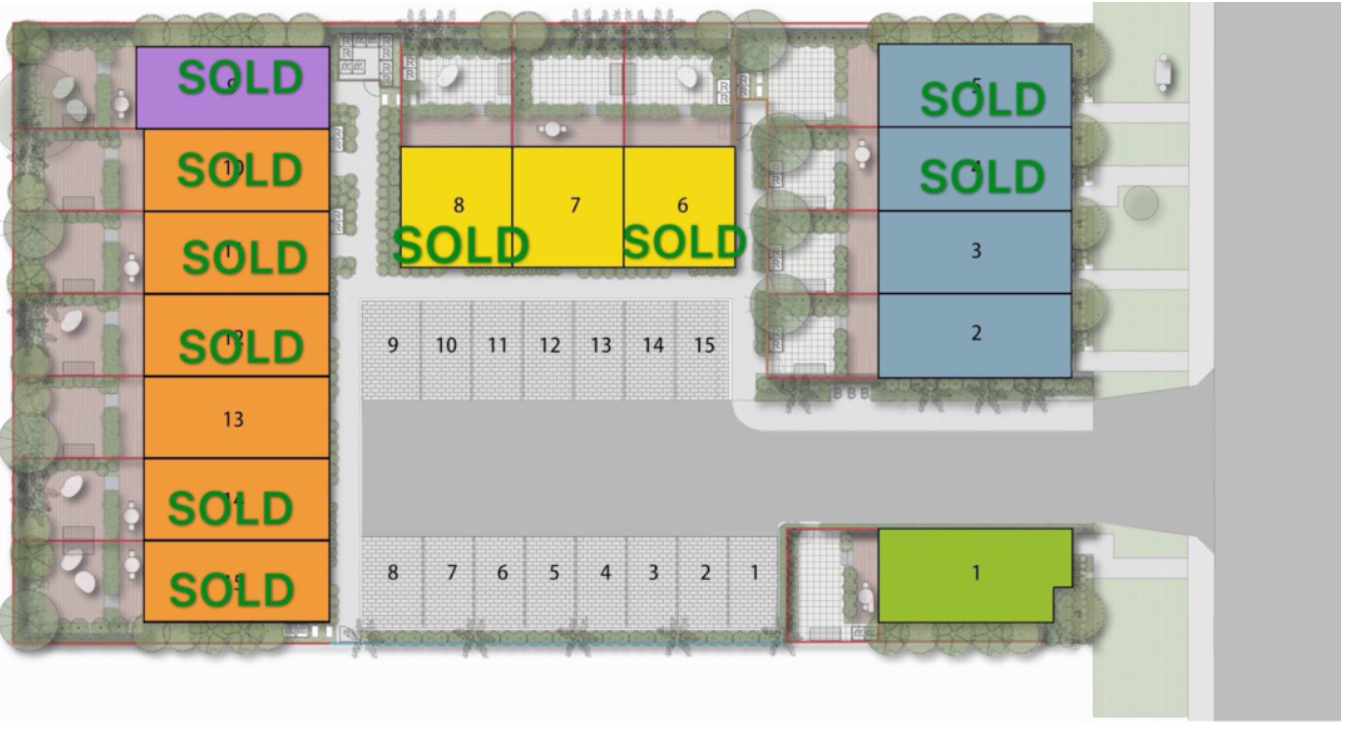
Barfoot and Thompson Sales status for the development as shown on the website
More mortgagee properties expected to come to market
Stuff then interviewed Auckland property developer David Whitburn, who offered his personal views as a former president of the Auckland Property Investors’ Association:
He expected more developments could face mortgagee sales as rising costs, building material delays and tighter lending pushed prices down. Developers who thought selling would be easy could find themselves in a difficult position. He even suspected that Sunnynook Central’s problems might have arisen from Chinese lenders withdrawing funding during development. The developer may have paid a high price for the land at the peak of the previous property cycle and now be struggling to recover its costs. Rising building material costs, loan-to-value ratio restrictions and tighter rules under the new Credit Contracts and Consumer Finance Act had also made selling more difficult. Title records show Sunnynook Central bought the site in mid-2018. Whitburn said mortgagee sales had been rare recently, but he expected more in future. “I think some will come from builders doing what are known as ‘spec homes’—homes built without a buyer lined up, or outside a building contract, rather than being built on someone’s behalf. They have taken substantial risks buying land and building, hoping to sell for a large profit. But there seem to be difficulties in every aspect of construction at present. Those dreams are being pushed further away, and unfortunately they still have to keep paying high financing costs.”
Next, YIJU explains some essentials for buying a mortgagee property: what is a mortgagee property? Which ones might offer a bargain? What pitfalls might buyers encounter? And how can risks be effectively avoided during the purchase?
{ad}
What is a mortgagee property?
A mortgagee property is a home subject to a court-enforced auction. When a mortgage debtor cannot fulfil the mortgage contract or repay the debt, the debtor can apply to the court through judicial proceedings for enforcement, with a home in the debtor’s name auctioned to satisfy the debt from the proceeds. A home auctioned through this process is known as a mortgagee property. The most common situation is a bank or other financial institution exercising its legal rights to auction a mortgaged home and recover its money because the borrower cannot repay the loan.
Which mortgagee properties might offer a bargain?
Discounted prices are currently the biggest attraction in the mortgagee property market. Prices are generally around 10% below market value, and some properties offer even larger discounts after repeatedly failing to sell at auction. Others are attractive because of their location. Sunnynook Central, for example, is in a well-located, thriving residential area on the North Shore with good schools. The project is largely complete, and the quality of these brand-new homes awaiting settlement should not be poor. If the eventual auction price is also low, the buyer could secure a real bargain.
What pitfalls might buyers encounter when purchasing a mortgagee property?
A heavily discounted home inevitably comes with purchasing risks. In this case, ten buyers have already signed purchase agreements and paid 10% deposits, while the previous developer also has a property sales contract with the former sales company. We do not yet know whether a new developer will honour the existing sale and purchase agreements. Auckland house prices have, after all, risen sharply over the past few years. Such complex debt relationships could leave a new buyer spending considerable time and money without being able to complete settlement normally. We also know this auction was initiated by one creditor. Apart from the first-ranking creditor, usually a bank, there may be second-, third- or further-ranking creditors. If the sale price is insufficient to repay all debts, your bank may only consider approving your new loan once all creditors have agreed on partial repayment and the removal of caveats.
How can you effectively avoid risks when buying a mortgagee property?
YIJU recently interviewed Joy Yuan, a principal at law firm Turner Hopkins, about this issue. She believed mortgagee purchases carried substantial risks, with disputes potentially costing considerable time and money. Without experience or a sufficient understanding of the debts involved, she strongly advised against buying such properties directly at auction. Among the cases her firm had handled were some extreme examples: on settlement day, everything that could be removed from an auctioned home had been taken by the mortgagor and creditors, leaving only a “shell”. In another case, an angry homeowner left two truckloads of rubbish at the door when moving out.
So what exactly do you need to know, and how do you find out? First, Joy strongly recommended obtaining an unsigned sale and purchase agreement before buying a mortgagee property. Ask your lawyer to explain the sale process in detail, identify the risks throughout and establish the specific circumstances of every creditor, debtor and other interested party. Second, investigate the property thoroughly, including whether your bank is willing to lend and what documents it requires, such as a building inspection report and valuation. Sunnynook Central is more complicated because the project is unfinished, and it remains unclear how much construction time and material are needed to complete it and obtain a CCC. Third, be prepared for the possibility that bank finance may be unavailable and settlement may be delayed for a long time. Things may not be as bad as imagined, but you should still prepare for the worst—or you could be the next to face liquidation.
Whether you are new to property transactions or experienced, you should engage a professional lawyer before buying this type of property. Have your lawyer review every clause carefully and explain every identified risk in writing, ensuring you understand each cost you will incur. This is extremely important! If you have friends working in New Zealand real estate, you can also ask them for information and advice.
YIJU’s editorial team collected a number of comments from friends about the Sunnynook Central mortgagee sale:
“The project isn’t finished and hasn’t received a CCC. How does the next buyer plan to proceed? Sort out the accounts first, or find someone else to take over the work? I don’t think taking it on like this is a good idea!”
“To snap up this bargain, you need some knowledge—and plenty of financial firepower!”
“If it were such a great bargain, it wouldn’t need a mortgagee auction. The truth always lies beneath the surface!”
“Just from the picture, I can see the power pole is too close to the entrance. I suspect the designer never visited the site and drew it with their eyes closed. But putting power lines underground is expensive and takes a long time. I suspect that’s what blew the budget.”
“There’ll probably be more mortgagee properties in future…”
If these views do not reflect what you think, leave a comment at the end of this article and join our discussion!
Disclaimer: The views above do not represent YIJU’s position. YIJU accepts no legal liability.