
As a landlord or tenant, do you think current rents are reasonable?
According to Trade Me's latest Rental Price Index, the national median weekly rent in March rose 7% year on year to NZ$575. This was almost on a par with New Zealand's annual inflation rate of 6.9%, a 30-year high.

According to Trade Me's latest Rental Price Index, the national median weekly rent in March rose 7% year on year to NZ$575. This was almost on a par with New Zealand's annual inflation rate of 6.9%, a 30-year high. Trade Me Property Sales Director Gavin Lloyed said the increase was certainly bad news for tenants, who were already feeling the effects of inflation. He said plainly that being a tenant was difficult at present, as New Zealanders were having to pay more for everyday living expenses, including rent.
Here is how rents have risen across the regions. In Bay of Plenty, the median weekly rent increased 9% year on year to a record NZ$600, while Manawatū/Wanganui's median weekly rent reached the NZ$500 bracket for the first time, representing annual growth of 14%. Meanwhile, Waikato's median weekly rent in March reached NZ$520, up 7% year on year, while Taranaki recorded the largest increase, rising 18% to NZ$530. Porirua remained the most expensive area, with a median weekly rent of NZ$670.
In Auckland, New Zealand's largest city, the median weekly rent in March rose 3% year on year to NZ$610, matching the record high set in January. Across the city's areas, central Auckland rents increased 5% to a median of NZ$590, per week. The North Shore, Rodney and Papakura were the most expensive areas at NZ$650.
{ad}
Rental property supply falls
The national supply of rental properties fell 6% in March compared with the same month last year, which helps explain an important factor behind rising rents. Figures show that most New Zealand regions had fewer rental listings in March than a year earlier. The largest falls were in Nelson/Tasman, down 33%, Canterbury, down 33%, and Otago, down 22%. Wellington and Auckland moved in the opposite direction, with rental supply rising 7% and 2% respectively. There were also somewhat fewer prospective tenants this March than a year earlier, with national rental demand down 7% year on year.
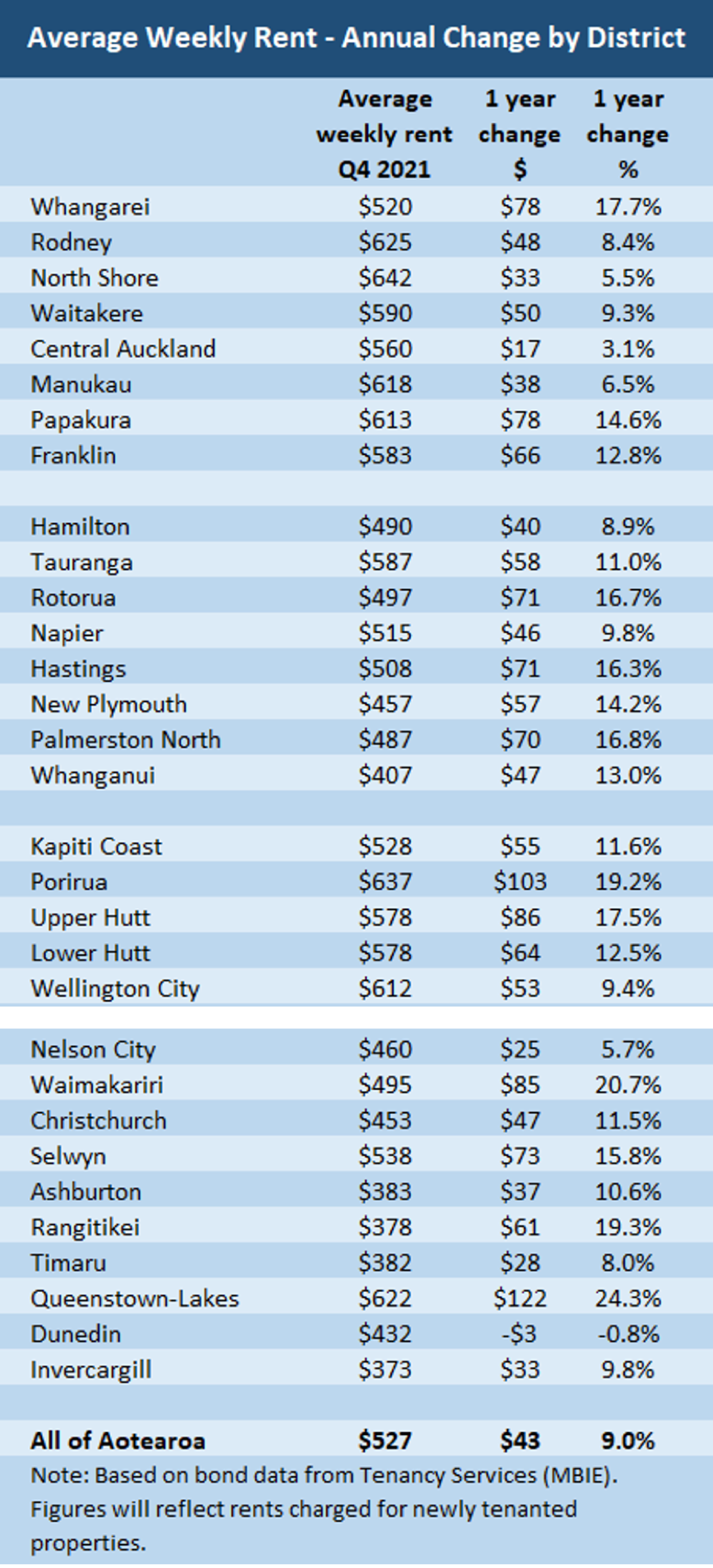
Data source: interest.co.nz
In fact, rents have been rising across the vast majority of New Zealand regions in recent years. The chart above shows average rents in the final quarter of last year across all 31 cities and districts monitored by interest.co.nz, along with their changes over the preceding 12 months. It clearly shows that rents in 19 of New Zealand's 31 areas recorded double-digit percentage growth last year.
Should rents rise?
Renters United spokesperson Geordie Rogers said the figures showed annual rent increases were far outstripping wage growth. He believed rising rents were making housing less affordable and forcing people out of their homes. The government needed to recognise that the market was being abused, with people who had spare cash to buy rental properties charging excessive rents to boost their incomes. As long as the government continued to prioritise landlords' profits over tenants' wellbeing, the situation would not change and rents would keep rising.
Property Investors' Federation executive officer Sharon Cullwick, however, said continued rent rises were unsurprising given landlords' increasing costs. These included meeting Healthy Homes Standards, tax changes preventing interest costs from being deducted from rental income for tax purposes, and higher maintenance, insurance and council rates costs. Cullwick believed the restriction allowing rents to be increased only once a year, together with the threat of rent caps, had contributed to rent increases across the market.
The government's stance on rents “out of control” and its response
The Green Party was the first political party to voice dissatisfaction with continuing rent increases. As early as mid-2021, it proposed freezing rents. Co-leaders James Shaw and Marama Davidson argued that a temporary freeze would be beneficial, as it could encourage some landlords to sell and make rents more affordable. They called on the governing party to freeze rents immediately, then limit increases in line with inflation or wage growth. The party also wanted legislation preventing landlords from imposing large rent increases between tenancies. Davidson said the government should focus on building more homes, including working with iwi and property companies, to gain greater control over rents. In response, Prime Minister Jacinda Ardern and Housing Minister Megan Woods both explicitly ruled out introducing rent controls. Landlords and some economists also warned that rent controls could backfire by reducing the supply of rental homes.