
Why did the Reserve Bank choose an OCR rise of 50 basis points today, rather than 25?
This afternoon, the Reserve Bank of New Zealand (RBNZ) officially announced an OCR increase of 50 basis points to 1.5%. Before the announcement, economists had widely debated whether the Reserve Bank should raise the official cash rate by 25 or 50 basis points at today’s review, without reaching a clear consensus. But even before today’s decision, one thing was beyond doubt: either outcome would leave banks’ fixed mortgage rates on their continuing upward path.

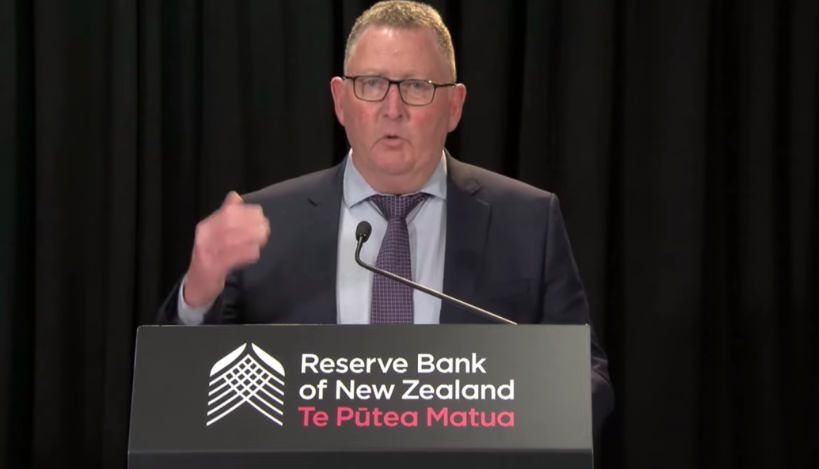
Reserve Bank of New Zealand Governor Adrian Orr
This afternoon, the Reserve Bank of New Zealand (RBNZ) officially announced an OCR increase of 50 basis points to 1.5%. Before the announcement, economists had widely debated whether the Reserve Bank should raise the official cash rate by 25 or 50 basis points at today’s review, without reaching a clear consensus. But even before today’s decision, one thing was beyond doubt: either outcome would leave banks’ fixed mortgage rates on their continuing upward path.
Before analysing why the Reserve Bank opted for a sharp 50-basis-point increase in one move, YIJU will review the two differing views on the size of today’s OCR rise:
View 1: Painful rate rises now are needed to prevent inflation getting out of control: +50 basis points (to 1.50%)
{ad}
When the Reserve Bank of New Zealand last reviewed its monetary policy settings on 23 February, its commentary paved the way for the next OCR increase to exceed the usual 25 basis points. At that point, however, Russia had not yet attacked Ukraine. While the war has created enormous uncertainty and raised concerns about global trade prospects, it is also pushing up fuel costs, disrupting supply chains and intensifying inflation. Aggressive OCR increases cannot curb inflation caused by these supply-side cost pressures. Nevertheless, with inflation well above the Reserve Bank’s 1%–3% target range, currently approaching 6%, there is also a case for decisive action. This is the argument for accepting pain upfront to prevent inflation getting out of control. ANZ chief economist Sharon Zollner believes the Reserve Bank needs to raise the OCR by 50 basis points today, from 1% to 1.5%, then raise it again at the next review in May to ease the pressure from excessively high inflation.
View 2: A cautious increase of +25 basis points (to 1.25%) gives the market sufficient time to prepare and reduces recession risks
BNZ head of research Stephen Toplis expects the Reserve Bank of New Zealand to raise rates by 25 basis points on Wednesday, followed by 50 basis points in May. He notes that the situation in Ukraine has changed since the Reserve Bank’s last monetary policy review. More importantly, higher mortgage rates, the “cost-of-living crisis” and falling house prices have already weakened consumer confidence. If the Reserve Bank raises rates by 50 basis points in April, markets will undoubtedly price in a further 50-basis-point rise in May, potentially pushing the expected terminal rate to 4.0%. A 25-basis-point increase would largely keep the mortgage rate curve where the Reserve Bank wants it, allowing it to gain public support for stronger rate action once uncertainty eases. It would also reduce the risk of rapidly tipping the economy into recession if the adverse effects of the war and Omicron multiply.
ASB economists also favour a 25-basis-point increase. In ASB’s latest Economic Weekly, senior economist Mike Jones said the sharp rise in wholesale rates last week had added upward pressure. The Reserve Bank’s decision was more a question of when than how much. Meanwhile, in Kiwibank’s latest First View, chief economist Jarrod Kerr, senior economist Jeremy Couchman and economist Mary Jo Vergara jointly forecast a 25-basis-point OCR increase and a sharp financial market reaction. With a 25-basis-point rise, they hoped to see wholesale, rather than retail, rates fall by 10–20 basis points. A 50-basis-point increase this time would further fuel the relentless upward push in rates. This would be a particularly dangerous signal for the housing market, which has risen 40% in less than two years. Such a decision would likely be seen as a precursor to a 50-basis-point increase in May, with further increases announced in July and August.
The Reserve Bank of New Zealand’s explanation for raising rates by +50 basis points
The Reserve Bank’s determination to deliver a substantial 50-basis-point increase shows its intention to continue tightening monetary policy as the best way to maintain price stability while supporting sustained maximum employment. New Zealand’s Monetary Policy Committee unanimously agreed that the OCR needed to move promptly to reduce the risk of rising inflation expectations. With the global economy facing considerable uncertainty, larger rate increases help provide greater flexibility for future macroeconomic policy adjustments. The Reserve Bank identified the slowing global recovery and uncertainty from the continuing effects of COVID-19 as key reasons for tightening monetary and financial market policy this year. In addition, the Russia–Ukraine war has significantly worsened global supply chain disruptions, while surging international commodity and energy prices pose greater challenges for New Zealand’s economy.
Global economic uncertainty and worsening inflation are steadily eroding public confidence in the recovery. Meanwhile, rising New Zealand mortgage rates have reduced demand for bank home loans and driven house prices down. Yet capacity constraints remain, and labour shortages are also affecting the recovery of New Zealand’s business sector. The immediate priority remains bringing high price inflation under control.