
Will the Reserve Bank raise the OCR by another 50 basis points this month? Will banks' mortgage rates begin another surge?
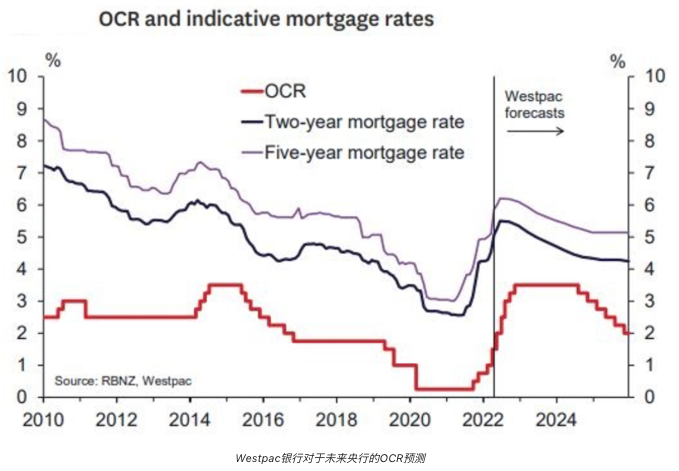
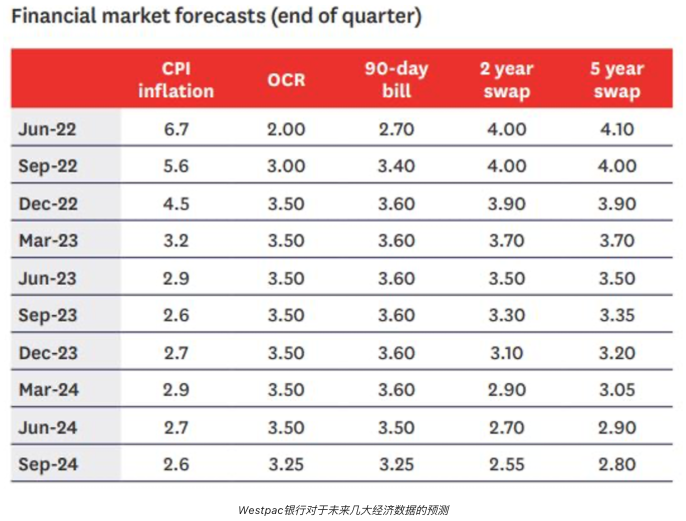
Westpac New Zealand chief economist Michael Gordon recently forecast that the Official Cash Rate (OCR) would reach 3.5% by the end of this year. As recently as early October last year, the OCR was still 0.25%; it has now surged to 1.50%

Major banks' forecasts for OCR movements
Westpac New Zealand chief economist Michael Gordon recently forecast that the Official Cash Rate (OCR) would reach 3.5% by the end of this year. As recently as early October last year, the OCR was still 0.25%; it has now surged to 1.50%. He believes the Reserve Bank, which sets monetary policy, faces its greatest challenge from inflationary pressure since February 1990.
{ad}
He said: "Inflation has risen to its highest level in decades. In the year to March, the inflation rate surged to 6.9%, from 1.5% a year earlier. More importantly, relentless price rises are shaking people's confidence that inflation will remain stable over the medium term."
It may now be time for mortgage holders to prepare for greater repayment pressure. The Reserve Bank is expected to raise the Official Cash Rate when it releases its next Monetary Policy Statement on 25 May, six days after the Government delivers its Budget. This may be only the beginning: four further monetary policy announcements are scheduled this year, on 13 July, 17 August, 5 October and 23 November. That could mean four further rate increases beyond the rise expected this month.
Michael Gordon said plainly: "We acknowledge that four consecutive rate increases are almost unprecedented in the inflation-targeting era. We have had to raise our forecast for the OCR peak in this cycle from 3.0% to 3.5%. We expect it to reach that level by the end of this year, with a further increase at each of the October and November reviews, both of 25 basis points. Our forecast is similar to the peak in the Reserve Bank's latest projections, 3.4%, but remains somewhat below financial market pricing, which has at times implied a peak well above 4%."
Meanwhile, BNZ economists noted that New Zealand swap rates fell by 25 to 35 basis points last week. They believe financial markets have begun questioning the need for the Reserve Bank's aggressive rate increases, given growing uncertainty about the global economic outlook and mounting pressure from a further sharp slowdown in New Zealand's housing market.
BNZ economists said: "The market is pricing the Reserve Bank's terminal rate at around 3.75%, well below 4.25% a week ago, but still well above our forecast OCR peak of 3% later this year. We believe there is room for New Zealand interest rates to ease further if the Reserve Bank does not validate the market's elevated OCR expectations in next week's Monetary Policy Statement, and if global interest rates stabilise."
Like Westpac, ANZ economists expect the OCR to peak at 3.50% early next year. ASB economists take a different view, forecasting a peak of 3.25%. Kiwibank chief economist Jarrod Kerr predicts the OCR will rise by 50 basis points this month and peak at 3% in November.
ASB economists warn mortgage holders to prepare for the impact. Around 60% of mortgages will come off their current fixed rates in the next 12 months. When homeowners refix, they will face higher interest payments.
In the bank's latest report, Westpac economists said mortgage rates were unlikely to rise substantially against the backdrop of the expected OCR increases, perhaps suggesting that fixing for a longer term (3-5 years) offers little interest-rate advantage. By contrast, homeowners with one-year mortgages may benefit on interest costs: if mortgage rates rise only slightly or fall in future, this term could deliver lower average borrowing costs over the coming years.
Changes in New Zealand's housing market
In their latest economic report, Kiwibank economists said house prices were paying the price for last year's excessive borrowing. They noted that New Zealand's median house sale price had fallen by NZ$50,000 over the past 6 months. The main sources of downward pressure on prices are widely considered to be "tighter credit conditions", rising costs for investors and a surge in new construction. They believe the current market "correction" could be short and sharp.
ANZ economists expect house prices to fall by 10% in 2022. This is good news for those outside the property market hoping to enter, but particularly bad news for first-home buyers looking to buy soon: they are more likely to take on substantial debt, face rising mortgage rates and watch their equity disappear. Nobody wants to buy at the peak, and buyer interest is unlikely to recover until prices appear to have bottomed out. One notable figure is the 30% year-on-year decline in property sales in April.
Westpac economists have revised their house price forecasts. They now expect prices to fall by 10% this year and a further 5% next year before beginning to recover. ASB economists forecast an overall decline of 12%. Although this would return prices to early 2021 levels, they would still be 27% higher than at the start of the pandemic.
Keeping property ownership financially secure
Cash flow plays a crucial role in making property investment sustainable. Buyers' ability to repay mortgages depends on their employment and income. Homeowners need income to pay their mortgages, and tenants need income to pay rent to landlords. Like other banks, Westpac noted in its latest economic analysis that New Zealand's labour market remained strong. In the three months to the end of March, unemployment was at the exceptionally low level of 3.2%. Although wages are clearly rising, they have not kept pace with the rapidly increasing cost of living. This could be a good time to change jobs, seek promotion or secure a pay rise.
Disclaimer: The views above do not represent YIJU's position and are provided for reference only.