
What if your off-the-plan developer goes bust before completion? A lawyer explains what buyers can do
When a developer declares insolvency, buyers still have several important matters to consider.

A recent New Zealand Herald report about a developer entering receivership after filing for insolvency has sparked considerable discussion in the construction industry. The developer has 122 properties across four projects on Ormiston Rd in Auckland's Flat Bush. Calibre Partners receiver Neale Jackson said that, on the large site at 397 Ormiston Rd, 79 apartments out of 105 homes are under construction, while 26 townhouses are largely complete. There are also 17 undeveloped sections. The receivers are assessing the overall state of the development.
The four affected developments are Maison D'Ormiston, Ormiston Stage 2, Mission Heights and Ormiston Heights, located at 370 and 397 Ormiston Rd. One buyer said her dream home had become a nightmare. Another said his home had remained under construction without being completed since he paid a deposit in February 2020. The website of DDL Homes, whose company name stands for Delivery Dreams Limited, shows that all 26 three-bedroom townhouses at Maison D'Ormiston have sold. Buyers said the 79 apartments being built nearby were still under construction. Another buyer said her sunset date was 22 July this year, which she understood to mean the home had to be completed and handed over to her by then. A first-home buyer, she had saved hard, received some family help and bought the property with her partner.
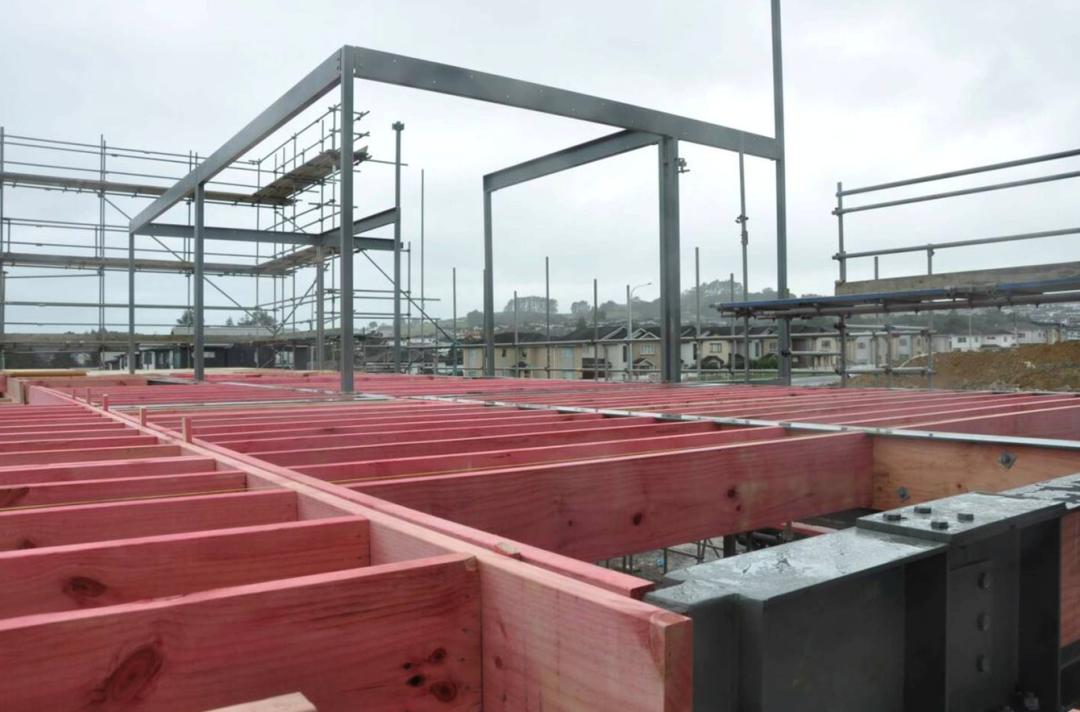
The unfinished Maison D'Ormiston development of 79 apartments
Last Sunday, the Companies Office issued a notice saying Jared Booth and Tony Maginness, voluntary administrators from Baker Tilly Staples Rodway Auckland, had been appointed administrators of two companies by an unnamed creditor claiming NZ$239,000.
{ad}
When an off-the-plan developer goes bust before your home is finished, Should buyers be worried?
Nick Kearney, head of property law at Auckland law firm Davenports, said receivership was preferable to liquidation for a property developer. Liquidation means the company will be wound up, whereas receivership at least offers a chance for it to continue. Worried buyers who have unwittingly become victims of a developer's insolvency still have options. Nick said each buyer's financial circumstances would differ, and each purchase agreement might also be slightly different, so there could be no one-size-fits-all approach. However, buyers still have several important matters to consider when a developer declares insolvency.
He advised buyers to “check your contract and talk it through thoroughly with your lawyer”, saying sunset clauses could become important. However, there is little buyers can do at this stage because all the properties are now under the receivers' control. Fortunately, off-the-plan buyers' deposits are currently safe: unless settlement has occurred, receivers or creditors cannot take them. The deposit may be held by a stakeholder, but the receivers cannot deal with it without both the buyer's and seller's agreement. The worst outcome could be that buyers do not ultimately receive their properties, or are asked to pay more because construction costs have risen.
When speaking with their lawyers, buyers can discuss matters such as whether they can cancel under a sunset clause. They can also seek advice on whether they are entitled to lodge a caveat against the property's title. The contract may contain a clause preventing buyers from challenging the title. Legal costs are another significant consideration: buyers could spend about NZ$2000 on legal advice about this issue.
What should buyers do?
Kearney said buyers should keep proceeding as though the development were continuing, even if a third party had taken it over. The contract might also contain a termination clause covering the developer entering receivership or insolvency. However, the tricky legal issue here is that the developer itself has not entered receivership; an associated party has. Buyers may wish to exercise their rights under a sunset clause, but its wording may not give them a right to cancel. These are precisely the reasons buyers need legal advice, and why the contract and any variations become so important. Crucially, wrongful termination could allow the seller to argue that the deposit is now forfeited because the buyer has breached the agreement. Buyers who want to protect their deposits need to obtain advice and choose very carefully.
The difference between liquidation and receivership
The statutory receivership process differs from liquidation. A receiver is essentially an agent of the company in receivership and owes duties to the company, the security holder who appointed them and secured creditors. The insolvency practitioner will focus on selling the development as a going concern or completing it, resolving purchase matters and collecting sales proceeds to repay the existing debt owed to the secured creditor who appointed them. Receivers have the powers set out in section 14 of the Receiverships Act, together with any relevant powers conferred by the security agreement.
Risks buyers may face
The risk for off-the-plan buyers is that delays will increase the construction costs faced by a new builder completing the development, potentially requiring a corresponding increase in purchase prices. The receivers may sell the development for an amount that repays the secured party's debt, without the purchaser being required to honour the existing agreements. Home buyers may therefore be forced to choose between buying at a higher price or cancelling their purchase agreements and having their deposits refunded. One advantage for buyers is that, in the current market, developers are struggling to find buyers and secure construction funding. The next purchaser of this large development is therefore likely to want to retain most of the more than 100 off-the-plan buyers. Those buyers signed contracts two years ago for about $675,000, but with Auckland property values rising by more than 20% a year, their homes could be worth close to NZ$900,000 once completed.