
Auckland's median house price unexpectedly rises in June! Sales fall sharply to their lowest level since 2010
Auckland's median house price in June defied expectations, rising 2% from May rather than falling.

Auckland's median house price in June defied expectations, rising 2% from May rather than falling.
Barfoot & Thompson managing director Peter Thompson said: "This modest increase took everyone by surprise."
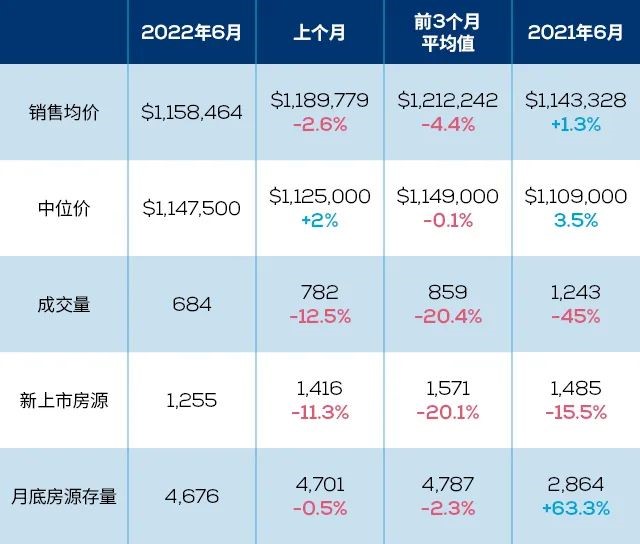
6 month's median price was $1,147,500, ending three consecutive months of declines in the median price, and was 3.5% higher than in June last year.
The average sale price was $1,158,400, down 2.6% from May but 1.3% higher than in June last year.
The increase in the median price is more likely to reflect statistical variation in month-to-month comparisons than to signal that prices have reached their low point.
6 month's sales showed no significant change in the number of homes sold across the various price brackets; sales in the $2,000,000、$3,000,000 and lower price brackets remained unchanged.
This suggests that prices are not falling across the board but adjusting gradually, as owners recognise that they need some flexibility in their price expectations to secure a sale.
{ad}
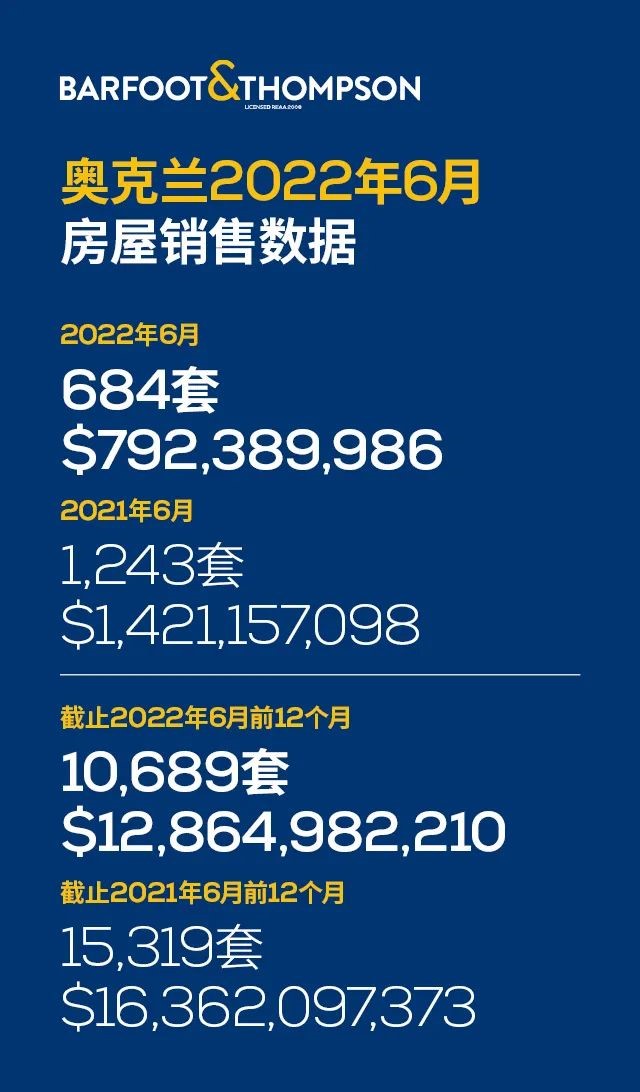
6 month's significant decline was in the number of homes sold, at 684 properties, down 12.5% from May and 45% from the same month last year.
6 month's sales were the lowest since the year 2010, month 6, when the market was recovering from what economists called a ‘technical recession’, with recovery under way。
As happened in 2010, the greatest impact has been on the number of homes sold。
Some owners are choosing to withdraw their properties from the market rather than accept current offers.
This effect can be seen in the stock of listings at the end of the month.
Although we listed 1255 new properties in June, more than twice the number sold, month-end stock fell 0.5% from the previous month to 4676 properties.
Sales in the rural and lifestyle property markets north and south of Auckland followed the usual mid-year pattern, with a total value of more than $74,000,000, down 14% from May but 7% higher than in June last year.
With a consensus that house prices are falling and will continue to fall until the middle of 2023, many people cannot help asking: is now still a good time to sell or buy a home?
My answer is yes! Trying to pick the highs and lows of the housing cycle is an impossible task, and experience shows that very few people can predict them accurately.
For most people, buying a home is a long-term commitment. The data shows that if you own a property for seven years or longer, its value will be well above what you paid for it.
It is natural to want to see your property increase in value, but the real value of home ownership comes from the stability, certainty and sense of belonging that having a place of your own provides.
Although independent New Zealand economist Tony Alexander believes the price decline is only just past its halfway point, he says that if he were a first-home buyer, he would be actively viewing properties in the current market.
He makes a compelling argument.
He says prices are currently 7.5% below their peak at the end of 2021, and he expects a further decline of 7.5% by the middle of 2023.
Our median price is currently 7.3% below its peak late last year, consistent with Tony's assessment. Auckland's median price is now around NZ$1,150,000.
Assuming a further fall of 7.5% by the middle of 2023, the median price would be around NZ$1,055,000, roughly the same as in April last year. Put another way, even if prices fell by 15%, the effect on anyone who bought before April last year would be minimal.
Data dating back to the 1950s shows that Auckland's average house price rose in 63 of 71 years, regardless of economic conditions.
The years without increases were 1963, 1971, 1991, 1992, 1999, 2009, 2010 and 2011.
Past results do not guarantee future performance, but they help us assess what might happen.
The last time Auckland house prices fell, during the downturn from 2009 to 2011, the biggest effect on the property market was a contraction in sales volumes. Sales fell 40% in the first year before recovering somewhat in subsequent years. By 2011, sales were around 15% below 2008 levels, and it was not until 2012 that the market shook off the effects and moved forward.