
Buyers, take note! Watch for these quiet changes in the subdued property market...
The latest figures from the Reserve Bank of New Zealand and the Real Estate Institute of New Zealand (REINZ) suggest that first-home buyers remain enthusiastic about buying their first property, despite a sharp fall in property sales during the current downturn, steadily rising mortgage rates and a substantial decline in lending by commercial banks.

Changes in first-home buyers' market share
The latest figures from the Reserve Bank of New Zealand and the Real Estate Institute of New Zealand (REINZ) suggest that first-home buyers remain enthusiastic about buying their first property, despite a sharp fall in property sales during the current downturn, steadily rising mortgage rates and a substantial decline in lending by commercial banks.
A recent property sales report released by REINZ shows that residential sales in June this year fell 38% compared with the same period last year, while the number of mortgage applications approved for first-home buyers also fell 38%. This contrasts sharply with the booming market a year earlier, when exceptionally low mortgage rates and cheap borrowing fuelled a speculative property buying frenzy. Comparing this year's June figures with June 2019, property sales in June this year were down 24%, while the number of mortgages approved for first-home buyers fell just 15%. This suggests that first-home buyers' current enthusiasm for purchasing property is closer to pre-pandemic levels.
Based on new mortgage approvals by commercial banks and monthly property sales data, interest.co.nz estimates that first-home buyers accounted for almost 40% of all residential property sales in June this year. This was the fourth consecutive month in which their share of sales increased. Before November 2016, first-home buyers' market share had remained below 30%. These figures clearly indicate that first-home buyers are neither paying less for their homes nor applying for smaller mortgages.
The figures show that the average price paid by first-home buyers peaked at NZ$761,000 in May this year before falling to NZ$736,000 in June. Their average mortgage peaked at NZ$595,000 in May before easing to NZ$588,000 in June. Notably, both figures were still the fourth-highest on record. Despite the Reserve Bank's loan-to-value ratio restrictions, more than 25% of first-home buyers approved for mortgages in June had deposits of less than 20%.
{ad}
So what does this mean?
Although first-home buyers have been affected by rising interest rates and tighter lending conditions, the impact has been less severe than for other types of buyers. This explains their growing share of the property market. In other words, first-home buyers have a stronger desire to buy than any other buyer group, reflecting what we commonly call essential housing demand. Investors may be more inclined to postpone purchases when market conditions are difficult. The figures also show that, despite falling house prices across much of New Zealand, first-home buyers are not spending less on their homes. They appear to be following the principle of borrowing as much as possible to buy.
Buyers shift from off-the-plan properties to completed homes
Another current market trend is wavering enthusiasm for buying off the plans, with more buyers choosing completed properties. David Findlay, who owns and manages Harcourts' St Heliers and Mt Albert branches, says developers are finding it increasingly difficult to sell properties that are a year or more from completion. He points to the contrasting situations of two developments on Triangle Road in Massey, both near Westgate shopping centre in West Auckland. One development comprises 7 two-bedroom townhouses and is still 12 months from completion. Despite asking prices of just NZ$779,000, buyers have been hard to find. Meanwhile, a completed development on the same stretch of road sold out within four weeks, despite asking prices as high as NZ$870,000 per home.
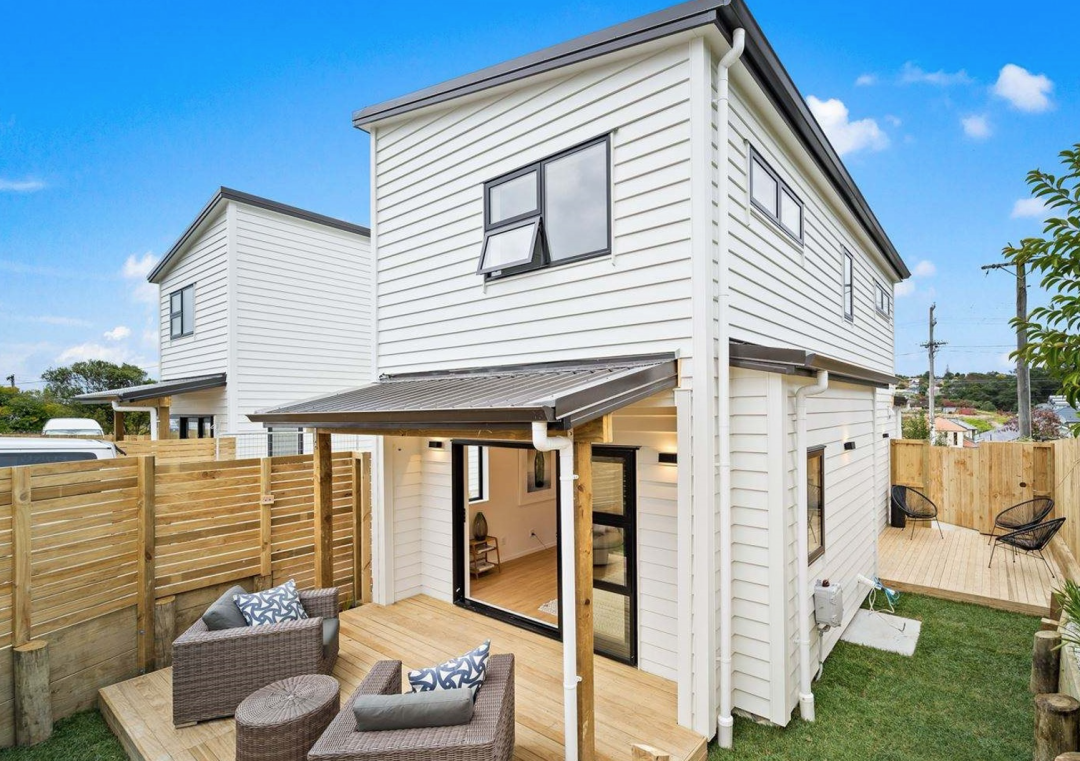
In West Auckland's Massey , on Triangle Road,
a new townhouse development quickly found buyers
Findlay says buyers do not want to wait that long, even though the off-the-plan homes are NZ$100,000 cheaper than the completed properties. Buyers are alarmed by falling prices, he says, and worry that they could end up paying more for a property still 12 months from completion. Ordinary investors and owner-occupiers generally want their property values to hold steady, while speculators hope for continuing price rises. Findlay estimates that around 1/3 of developers are currently working to get their projects off the ground, but many are still struggling with presales. This means that only about half of the projects represented by the record number of building consent applications councils are receiving may ultimately be built.
Changes in developers' marketing strategies
Harcourts agents Aman Gulia and Joe Steel note that many developers are trying to release new homes in small batches. They aim to create a sense of urgency by announcing large developments, then releasing only a very limited number of homes for sale. Findlay cites a new project on Lawson Creek Street in Massey: after announcing that 35 homes were nearing completion, it sold 15 within a week, each for just under NZ$900,000. He believes developers want buyers to perceive a shortage of available homes in a project rather than an oversupply. He says enquiries from prospective buyers kept coming after just 20 homes were released to the market.
Property lawyer Aasha Foley of IC Law says she has dealt with many lawyers representing off-the-plan buyers. Many buyers dislike signing off-the-plan sale and purchase agreements with distant settlement dates because they worry about the uncertainties that can arise over a long period. She says this also affects some individual buyers choosing house-and-land packages, as their builders can no longer provide the fixed-price building contracts banks require for lending. Lawyers are most concerned about sale and purchase agreements becoming unconditional. She also sees bank delays as a major challenge. Banks sometimes cannot meet the 10-working-day deadline specified in a purchase agreement for buyers to obtain approval. This does not mean the bank has declined the loan; it often simply needs longer to complete its assessment.
Scarce properties prove an exception
Pete Evans, Colliers' national director of residential development and project marketing, says finance is no problem when buyers secure scarce, irreplaceable properties at the premium end of the market. Evans cites the company's strongly selling Domain Collection, a design-led development of 69 ultra-luxury apartments by renowned architectural firm WARREN AND MAHONEY, with the most expensive apartment priced at NZ$8,500,000. Located between Parnell and Newmarket, directly opposite Auckland Domain, the development has prices starting at NZ$1,500,000. According to Evans, the strongest sales have been for apartments priced above NZ$3,000,000.
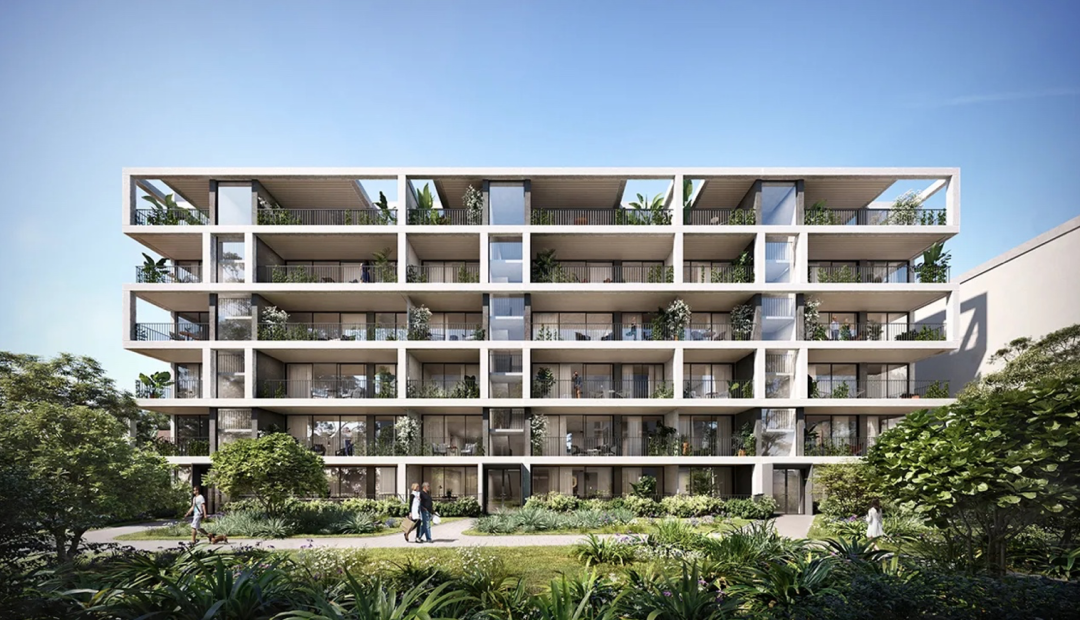
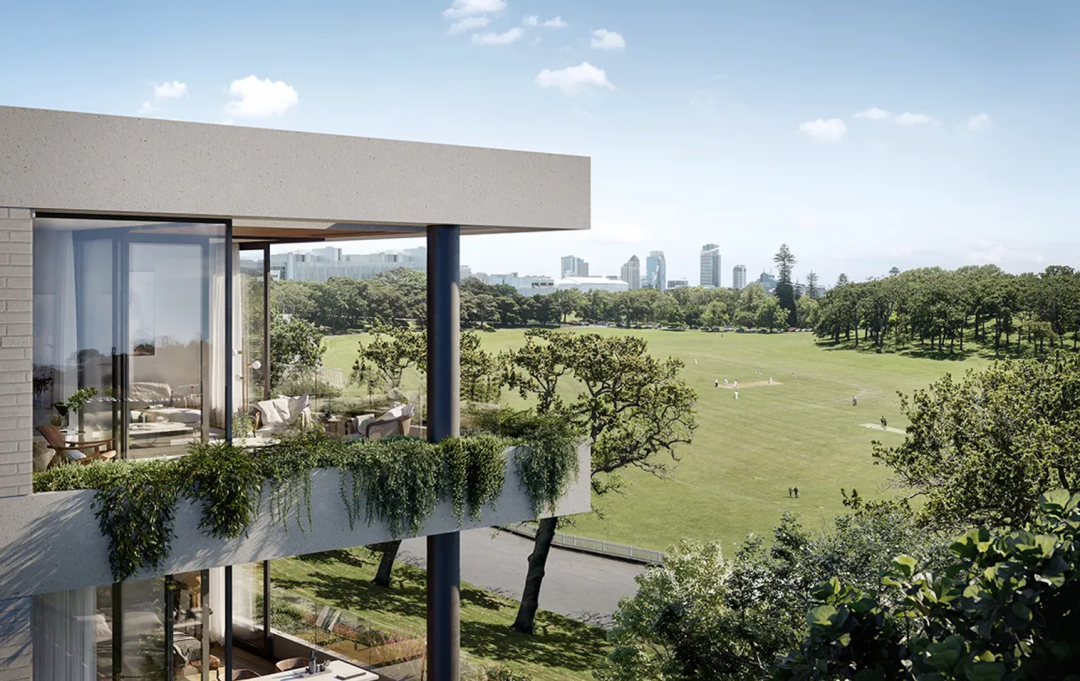
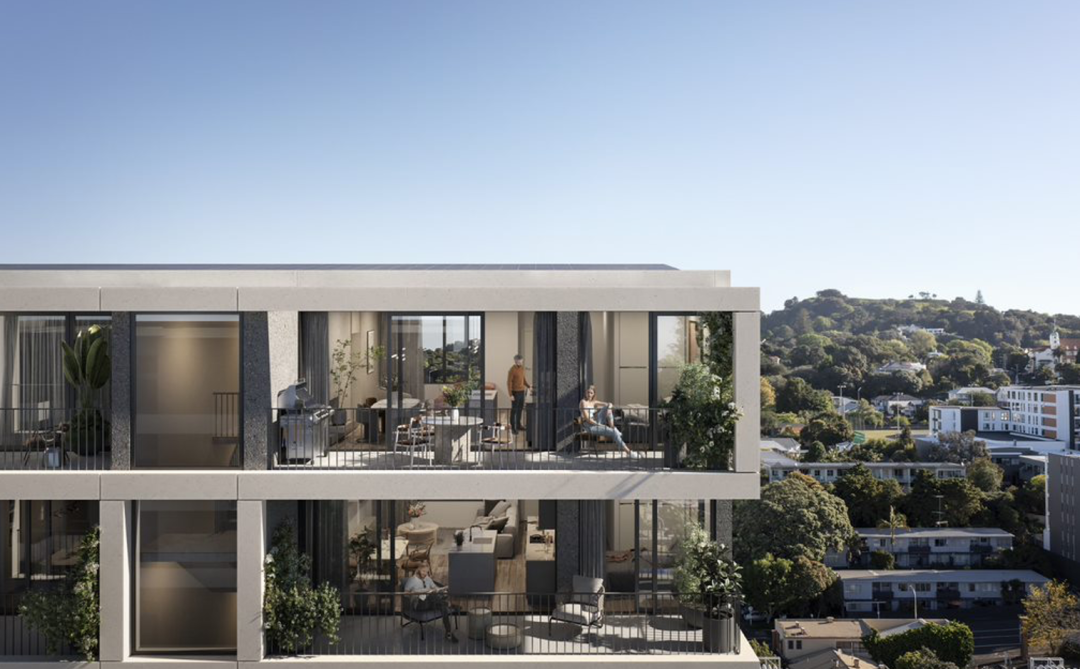
Buyers of premium properties, such as Domain Collection, prefer longer settlement periods so they can sell their existing homes in a better market
Evans believes the development is expected to settle by the end of 2024, which could be good news for premium buyers. With inflation and mortgage rates currently at their peak, Evans believes the market will return to a stable period in two years. By 2024, buyers of these apartments will also be able to sell their existing properties in a better market than today's.