
Revealed: how do these two local men born in the 90s own multiple investment properties at such a young age?
We hope his story will inspire the many young first-home buyers still working towards a deposit and help them realise their home ownership dreams sooner.

At 26, many young New Zealanders may still be enjoying working holidays overseas or saving a deposit for their first home. Yet Jonathan Brownlee, the subject of today’s story, has only just turned 26 this year and already owns properties worth more than NZ$20,000,000… We hope his story will inspire the many young first-home buyers still working towards a deposit and help them realise their home ownership dreams sooner.

Young property investor Jonathan Brownlee
How he realised his investment dream
Let us first turn the clock back to 2015, when, at just 18, he bought his first property in Hamilton for NZ$413,750 with financial help from his parents. He then continued buying numerous properties using bank mortgages. Last week, just before his 26th birthday, Brownlee bought an entire block of 8 units in one go, bringing his property holdings to a remarkable 51.
After deducting NZ$11,000,000 in bank loans from the total value of his assets, his net equity now stands at NZ$9,000,000. In other words, if he sold all his properties tomorrow and repaid his bank debt, he could cash out NZ$9,000,000. He also receives around NZ$1,000,000 in gross rental income. Such wealth is undeniably a lifetime ambition for many New Zealanders, but this young man appears far from ready to stop investing in property.
Jonathan Brownlee sees rising mortgage rates and falling house prices as an opportunity to buy property rather than bad news. He says now may be a good time to secure a home he wants more easily, as there are fewer buyers and less competition. He hopes his story will give other buyers in the current market greater confidence.
At the same time, he has criticised and blamed investors buying large amounts of property for disrupting the market and pushing up prices. According to Real Estate Institute of New Zealand data, Auckland ranks among the world’s least affordable cities for housing. During the COVID pandemic, Auckland house prices surged by more than 30%, reaching a record median sale price of NZ$1,300,000 in November 2021. Although prices have fallen over the past six months, rising interest rates and tougher bank lending requirements have further deterred buyers hoping to enter the market.
{ad}
What is his investment secret?
Asked about his investment secret, he says it is finding opportunities outside Auckland, including in his hometown of Hamilton. So how did he secure enough mortgage lending? While still at school, he began earning money for a deposit by importing goods through China’s Alibaba website and reselling them locally on Trade Me. If he fell short, his parents would lend him the remaining purchase funds and guarantee his bank loan, helping him secure finance. Meanwhile, when he had his properties valued every six months, he found their market values had risen significantly. He then used that increased equity to apply for bank lending to buy another property.
He continued repeating the strategy of buying “below market value”, renovating, obtaining a new valuation and borrowing against the “higher value”. Within just three years, by the age of 21, he owned 11 properties. His holdings reportedly span New Zealand, including Auckland, Wellington, Hamilton, Hastings, Dunedin, Masterton, Whanganui and Invercargill. As both his parents are accountants, they provided considerable financial guidance and assistance during his early years of property investment. Encouragingly, he says he has now repaid all their loans with interest. He feels no shame about receiving help to buy property and advises others to seek support from anyone who may be able to help.
For example, five years ago, he paid NZ$90,000 for his third house, in Masterton, while his Dunedin house cost as little as NZ$65,000. Many Aucklanders might ask why anyone would buy a low-value property needing renovation in those areas. In his view, buying an affordable property below market value, renovating it and having it revalued makes it easy to obtain more bank lending. Investors who buy several such properties can then sell them to purchase a better home in Auckland. It is an effective way to work towards buying in Auckland by repeatedly purchasing affordable properties and benefiting from their increased value.
His future investment plans
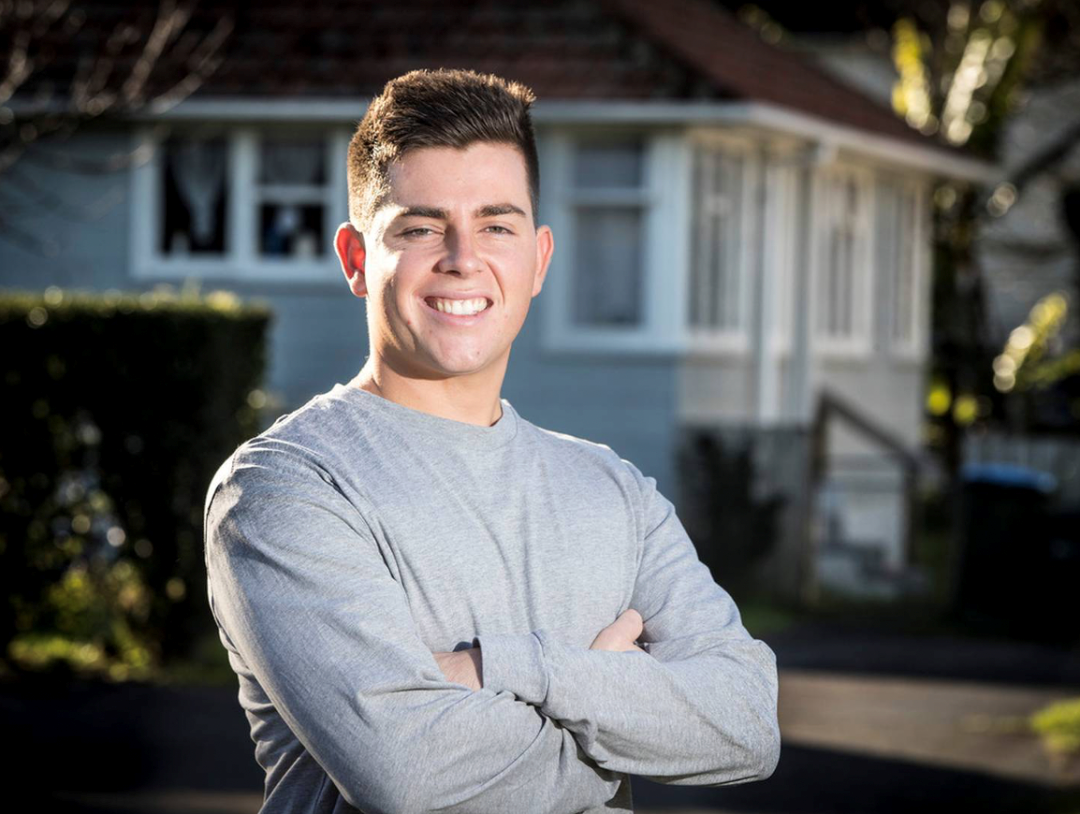
He is now turning his investment attention to Australia
Brownlee says he has begun looking towards Australia and has identified opportunities in Cairns, Townsville and northern Queensland. In these tropical areas, with populations of only a few hundred thousand, he can easily buy a one- or two-bedroom property for NZ$150,000. First-home buyers can also obtain a bank mortgage with a deposit as low as 5%, and New Zealanders may qualify for Australian Government first-home buyer grants. This means New Zealanders could potentially buy a home for an upfront cost of just NZ$15,000, including legal and other fees.

Brownlee says that over his years of property investing, he has received extensive advice from successful property investors on YouTube, including Australian investor Rich Birch, who owns more than 200 properties. He also attended a mentoring course Birch held in Sydney and has benefited greatly from this advice. Overall, Brownlee attributes 60% of his success to skilfully structuring his finances and bank mortgages, and the other 40% to his ability to identify properties with potential. For example, by restructuring his mortgage portfolio before stricter loan-to-value ratio (LVR) restrictions took effect, he secured an additional NZ$3,000,000 in bank lending. Asked how to find suitable properties, he explains that this means identifying properties “below market value” and generating higher investment returns by renovating them or raising rents to market levels.

Being a socially responsible property investor
Asked why he needs so many houses and what benefit this brings to society, he says New Zealanders actually need more rental homes. He distinguishes himself from speculators and property developers by planning to retain all his rentals rather than sell them when prices are high. Across his 51 properties, he has completed as many as 20 major renovations, personally taking part in 15 of them. He believes these homes must be repaired and maintained before tenants move in. If he sold these rental properties, he says, growing numbers of renters would be unable to find somewhere to live. He has also established a company called Get Property, helping buyers with similar goals find the types of properties they want.
The importance of mortgage advisers
Similarly, New Zealand mainstream media recently reported on another young property investor, Alexander McAlpine. Although only 31 this year, he already owns several investment properties in South Auckland and Rotorua, and enjoys helping more investors enter the property market. McAlpine, who works for a mortgage finance company, was named mortgage adviser of the year in this year’s NZ Adviser awards. To receive the honour, he reportedly needed to have helped his clients secure at least NZ$50,000,000 in total home lending over the past year.

Alexander McAlpine Named best mortgage adviser for 2022 by NZ Adviser
These two examples clearly show that Jonathan Brownlee received considerable help and investment advice from his accountant parents early in his property investment journey, while Alexander McAlpine is himself an accomplished mortgage adviser. This demonstrates the crucial role sound guidance from financial advisers plays in property investment. In last week’s YIJU New Zealand article dated 11 August, advisers from the highly regarded local Jiayuan mortgage finance team offered plenty of advice for first-home buyers. Our editorial team has summarised the main points below:
- Always be prepared and understand your repayment capacity. This includes establishing how much you can borrow before you start house hunting.
- 2. Ensure the spending activity on your accounts is reasonable.
- 3. Keep your spending in order. Avoid unnecessary spending for three months. Do not use instalment payment services such as Afterpay.
- 4. Increase your income as much as possible. Banks also place importance on the size of your savings and your ability to repay the loan.
- 5. Find an experienced mortgage adviser and give them an accurate picture of your finances so they can help you obtain the best lending advice.