
Is now the best time for first-home buyers to purchase? Let the data reveal the answer
A leading property industry organisation recently said the housing market is at a historic 'turning point' for first-home buyers, as mortgage rates stabilise after successive increases and house prices continue to fall.

A leading property industry organisation recently said the housing market is at a historic 'turning point' for first-home buyers, as mortgage rates stabilise after successive increases and house prices continue to fall.{ad}
In its latest Home Loan Affordability Report, the Real Estate Institute of New Zealand (REINZ) uses a benchmark sale price below 3/4 of the market: 75% of properties sold during the month were above this price and 25% were below it. This benchmark reached a high of NZ$670,000 in November last year. By July this year, it had fallen to NZ$606,000, a decline of NZ$64,000, or 9.6%.
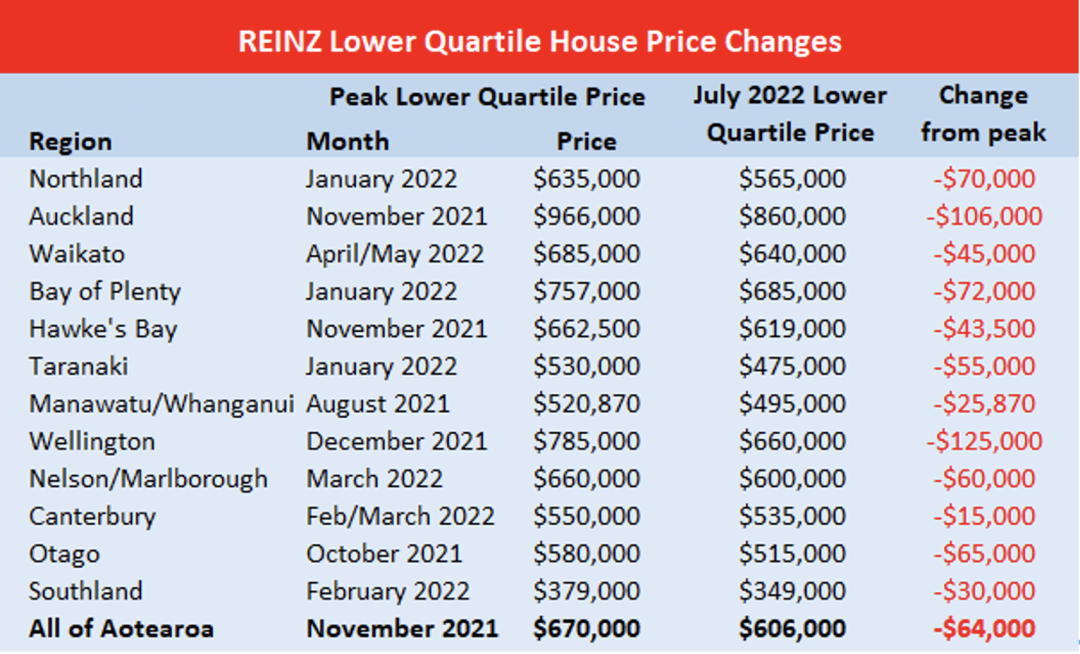
Regional changes in benchmark property sale prices below 3/4 of the market
The table above shows how far benchmark property sale prices below 3/4 of the market have fallen from their peaks across New Zealand. Wellington recorded the largest decline, at NZ$125,000, followed by Auckland at NZ$1,060,000. These were the only two regions with falls exceeding NZ$100,000. At the other end, Canterbury recorded the smallest decline, at NZ$15,000, followed by Manawatu/Whanganui at NZ$25,870 and Southland at NZ$30,000, making these the three regions with the smallest falls. In theory, lower house prices should make home ownership more achievable for first-home buyers, as they need smaller deposits, take on less mortgage debt and face less repayment pressure. But is that what is actually happening? Let's look further.
Pressure on first-home buyers is rising rather than easing
Using a 20% deposit as an example, the deposit required at the national benchmark sale price below 3/4 of the market has fallen from a peak of NZ$134,000 in November last year to NZ$121,200 in July this year, a reduction of NZ$12,800. Meanwhile, the corresponding 80% mortgage has fallen from NZ$536,000 to NZ$484,800, a reduction of NZ$51,200.
In Auckland, New Zealand's most expensive housing market, the 20% deposit required at the benchmark sale price below 3/4 of the market fell from a peak of NZ$193,200 in November last year to NZ$172,000 in July this year, a reduction of NZ$21,200. Meanwhile, the corresponding 80% mortgage fell from NZ$772,800 to NZ$6,880,000,000, a reduction of NZ$84,800.
We would normally expect a smaller loan to mean lower repayments. However, with mortgage rates rising rapidly over this period, actual mortgage repayments at the benchmark sale price below 3/4 of the market have increased despite falling house prices. As the chart below shows, two-year fixed mortgage rates bottomed out in April 2021 at just above 2%. They have since rebounded to around 5.44%, a level last seen around 2014–2015. This has put considerable pressure on first-home buyers entering the property market.
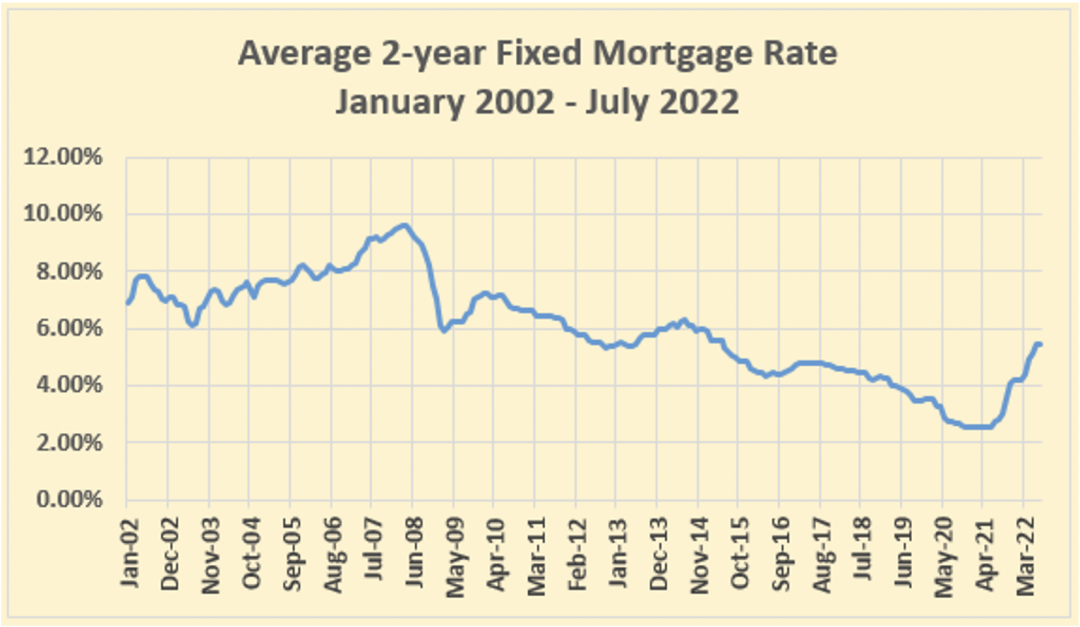
2002~2022 Changes in two-year fixed mortgage rates
The Home Loan Affordability Report shows that when house prices peaked in November last year, an 80% mortgage at the national benchmark sale price below 3/4 of the market amounted to NZ$536,000, with weekly repayments of about NZ$596. By July this year, house prices had fallen considerably, and the 80% mortgage required to buy at the national benchmark sale price below 3/4 of the market had decreased to NZ$484,800. Yet these buyers' repayment burden appears to have risen rather than eased. Although their loan was NZ$51,200 smaller, weekly repayments rose by NZ$35 to NZ$631. This is the result of continually rising mortgage rates.
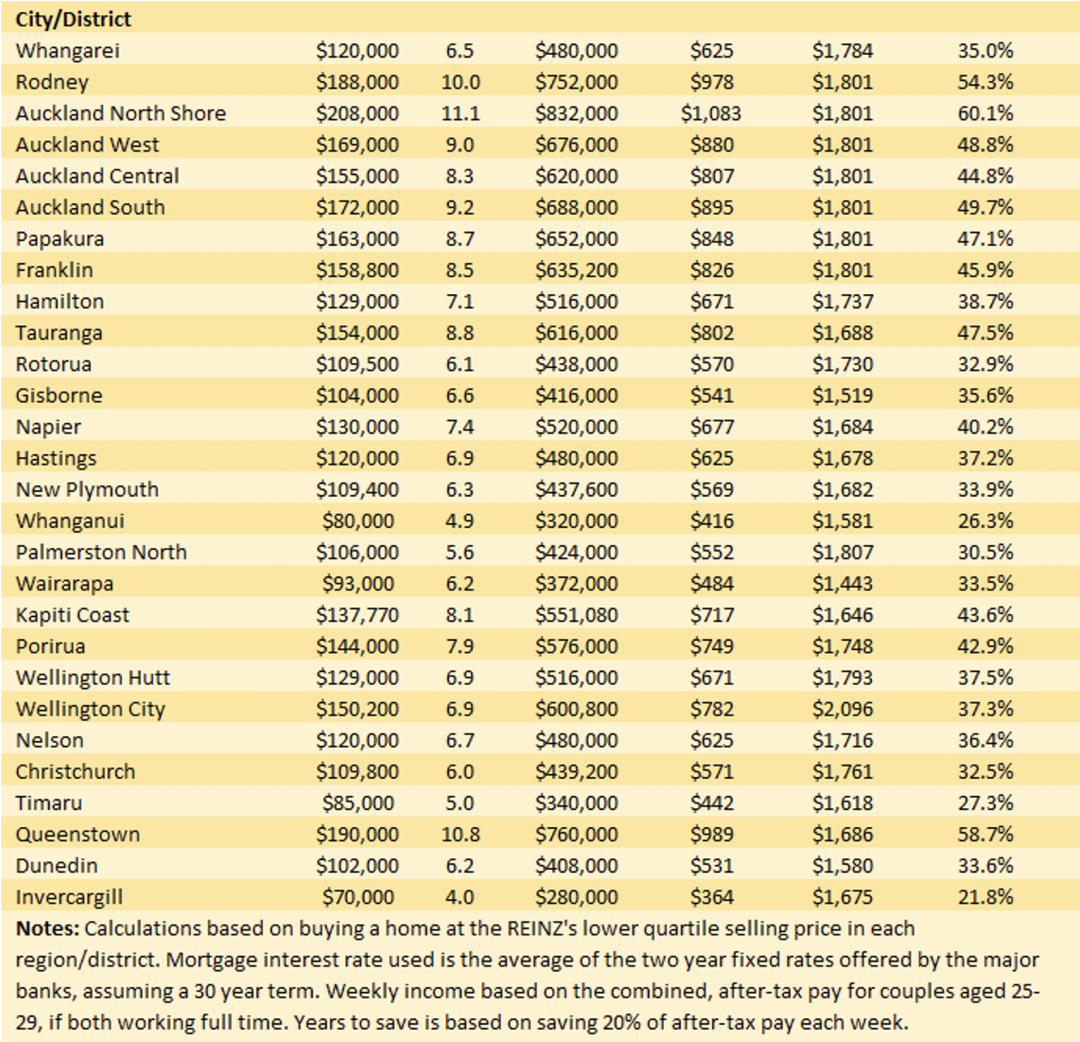
2022 year, 7 month, with a 20% deposit: affordability data for buyers at the lower end of the market across New Zealand's regions
Essentially, during this period of rising interest rates, buyers at the lower end of the market have benefited from smaller deposits and mortgages as house prices fall, but they face increasing mortgage repayment costs, which also constrain their purchasing power. This means all the benefits first-home buyers gain from falling house prices are being swallowed up by higher mortgage rates.
7 month's turning point
The market reached a turning point in July. Although mortgage rates rose steadily from late last year through to June this year, they barely changed in July. Meanwhile, the benchmark sale price below 3/4 of the market continued falling, from NZ$630,000 in June to NZ$606,000 in July, a decline of NZ$24,000 in a single month. Experts predict that if this trend continues, first-home buyers will benefit from smaller deposits, smaller mortgages and lower repayments.
But will the market really develop this way?
The chart of two-year fixed mortgage rates offered by major banks from January 2022 to July 2022 shows that, although rates have risen since the middle of last year as dramatically as they fell after the global financial crisis in 2008, current rates remain within a normal range. This means that if interest rates remain stable at their current levels, only continued house price falls will significantly improve affordability for first-home buyers.