
As mortgage rates break through 5, do homebuyers still dare to buy? Answer these four questions to find out!
Today, ASB became the second major bank to raise its fixed mortgage rates, following Westpac last week. ASB raised its 1-year and 18-month fixed rates to 5.15% (+0.16) and 5.35% (+0.06) respectively, matching Westpac's rates for those terms. All fixed-term mortgage rates at both banks have now passed the 5% threshold, something last seen before June 2015. Observers say that although the increases at both banks are modest, they signal a gradual upward trend in mortgage rates.

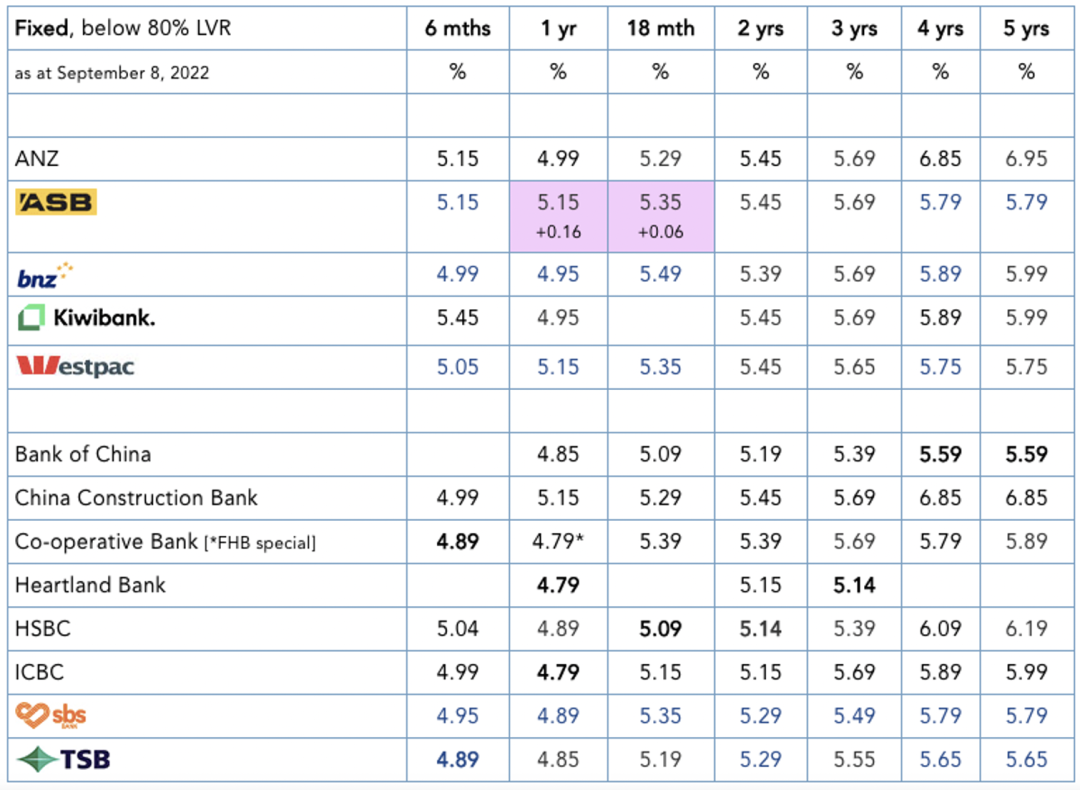
New Zealand banks' fixed mortgage rates as at 9/8 (month/day)
Today, ASB became the second major bank to raise its fixed mortgage rates, following Westpac last week. ASB raised its 1-year and 18-month fixed rates to 5.15% (+0.16) and 5.35% (+0.06) respectively, matching Westpac's rates for those terms. All fixed-term mortgage rates at both banks have now passed the 5% threshold, something last seen before June 2015. Observers say that although the increases at both banks are modest, they signal a gradual upward trend in mortgage rates.
New Zealand's housing market is approaching its traditional busy selling season, usually the time of year when banks compete most fiercely for customers on interest rates. Major banks raising mortgage rates at this point, rather than lowering them, is therefore considered highly unusual. It has also made homebuyers, particularly first-home buyers, more cautious and uncertain about when to enter the market. They worry about interest rates continuing to rise, house prices continuing to fall and a troubling economic outlook...
{ad}
Official data shows that employment in New Zealand has not grown significantly over the past 9 months. Spending on retail goods and services fell 2.3% in the first quarter of this year, followed by a further 0.9% decline in the second quarter. With the Reserve Bank of New Zealand rapidly lifting the Official Cash Rate (OCR) from 0.25% to 3%, most borrowers in New Zealand will find that when their previous fixed term expires, they must accept mortgage rates above 4%, more than double last year's rates. Meanwhile, the nationwide average house price has fallen 10.8% from last year's peak. Some of us are consequently feeling a sharp increase in mortgage repayment pressure and a marked decline in household disposable income. At the same time, CPI data shows that New Zealanders' living costs have risen 7.3% over the past year, leaving most of us feeling poorer than before.

Independent New Zealand economist Tony Alexander Image sourced online
So will New Zealand enter a recession? Prominent independent New Zealand economist Tony Alexander offers his view: although negative factors will continue to affect the country's economy over the coming year, he does not believe a recession is particularly likely. Severe labour shortages are sustaining high employment, while young buyers who previously struggled to purchase a home have more opportunity to realise their first-home dreams as prices fall. This helps explain why his latest survey data shows that real estate agents and mortgage advisers have recently observed more first-home buyers active in the housing market, rather than fewer. Among the major positive developments for the first-home market is the transition of around 200,000 new migrants and family members from temporary work visas to permanent residence visas.
Why, then, are first-home buyers so eager to buy? Buying a home meets a fundamental need and can give new migrants a stronger sense of belonging. Home ownership also changes people's relationship with society. It strengthens citizens' sense of social responsibility, increases their contribution to the economy, gives meaning to participation in social democracy and builds homeowners' wealth over time. In fact, New Zealand house prices almost doubled in each decade from 1980 to 2010, then doubled again over the 12 years from 2010 to 2022. Rising property values have brought substantial benefits to owners, giving them the freedom to travel, invest in businesses and other assets, improve their living standards and prepare for retirement. This has convinced many investors that there is no 'good' or 'bad' time to buy: if you can afford it, you should enter the property market.
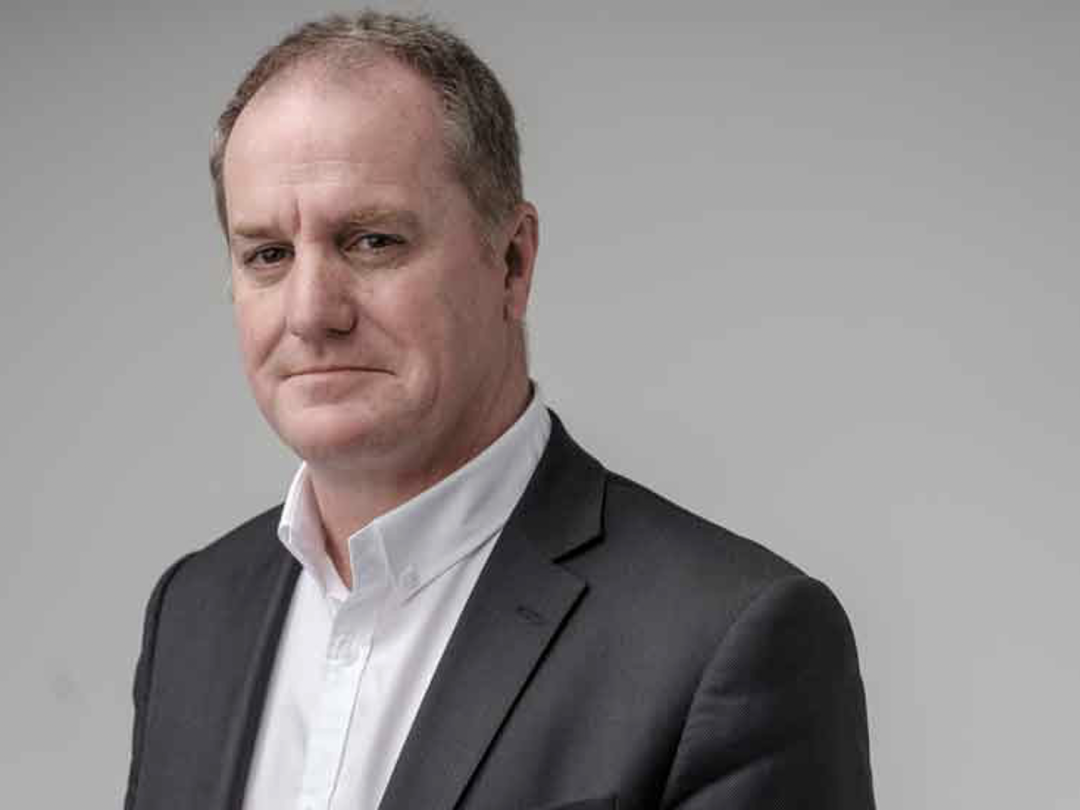
Property commentator Ashley Church Image sourced online
If you are a first-home buyer ready to purchase but hesitating because of uncertainty over future house prices and interest rates, prominent New Zealand property commentator Ashley Church has some advice. He has outlined four questions to help first-home buyers decide when to buy.
Question 1: How well can you read the property market? Did you predict that house prices would peak last year in month 11?
Although media headlines and newspapers have widely publicised the rapid decline in the property market since prices peaked in November last year, it seems no economist or property commentator in New Zealand successfully predicted in advance when the peak would end. The market clearly caught everyone off guard. Ashley Church argues that the same applies when we try to predict the turning point at which the housing market will stop falling and recover: everyone believes their forecast is accurate, but no one seems truly able to achieve this.
Question 2: Once you buy a home, do you intend to own only that property for the rest of your life?
If your answer is yes—that is, you plan to remain a homeowner, whether in your first home or a subsequent property—then now is a good time to buy. Why? Because house prices always trend upwards over the medium to long term. This means that whatever you pay today will be insignificant compared with your home's value in 10, 15 or 20 years. For example, Ashley once haggled over the final NZ$5000 when buying a property, eventually agreeing on NZ$371,500. Now, 18 years later, that house is worth around NZ$1,800,000. Even if house prices do not grow at that pace in the years ahead, this illustrates why we should take the broader view of the need to buy sooner.
Question 3: Are you hoping to pick up a bargain?
Buying now does not mean you cannot find a property that offers good value for money. One advantage of a stable market is that everything is negotiable. If you have enough time, try talking to sellers to see whether properties in your preferred neighbourhoods are beyond your budget. Once you are ready to buy, property headlines across the media become less important, because what matters more is the price you negotiate with the seller.
Question 4: Do you expect your income in 20 years to be the same as it is now?
Ashley Church is certain the answer is no. Everyone expects their income to increase over time, as will almost all living costs. He believes that although nothing is certain amid life's changes, owning a home gives people a measure of independence and stability, making it easier to face whatever challenges life may bring.
Having considered these four questions, do first-home buyers now have a clearer idea of when to buy?