
When will OCR increases end? Economists issue their sternest warnings on house prices,mortgage rates and construction
Last Thursday, Stats NZ released the long-awaited second-quarter GDP figures, showing modest economic growth of 1.7% as people spent more on travel and recreation. This meant New Zealand narrowly avoided a technical recession. Although economic growth offered some welcome news for the property market, food price figures released last week brought our hopes for the economy's future back to reality. Food prices rose 8.3% in August, the largest increase since July 2009, during the worst of the global financial crisis. Second-quarter inflation, announced in July, reached a staggering 7.3%, while the steep food price increase in August does not bode well for

Last Thursday, Stats NZ released the long-awaited second-quarter GDP figures, showing modest economic growth of 1.7% as people spent more on travel and recreation. This meant New Zealand narrowly avoided a technical recession. Although economic growth offered some welcome news for the property market, food price figures released last week brought our hopes for the economy's future back to reality. Food prices rose 8.3% in August, the largest increase since July 2009, during the worst of the global financial crisis. Second-quarter inflation, announced in July, reached a staggering 7.3%. The steep food price increase in August does not bode well for the consumers price index (CPI) figures due on 18 October this year.
{ad}
Last Tuesday, the New Zealand Herald reported that Reserve Bank of New Zealand Governor Adrian Orr had begun taking a more hawkish view of domestic interest rates after US Federal Reserve Chair Jerome Powell warned last month that the US would take “forceful and rapid steps” to bring inflation back to 2%. Economists generally expect Orr to tackle inflation more aggressively, potentially pushing the OCR above 4% before the end of the year. This would mean two likely increases of 50 basis points at the Reserve Bank of New Zealand's final two monetary policy announcements this year. The OCR has not exceeded 3.5% since 2009, so any rate above 4% would have a considerable impact on New Zealanders' lives.

Adrian Orr being interviewed by the New Zealand Herald
Troubling mortgage rates
Some relatively conservative banks have already factored an OCR peak of 4.25% into their mortgage rate outlooks. Given expectations of higher inflation in New Zealand, ANZ economists have raised their forecast for next year's OCR peak by 175 basis points from the current 3%, expecting it to reach 4.75% by the middle of next year. Worryingly, ANZ chief economist Sharon Zollner said they would maintain their forecast OCR peak of 4.75% even if inflation was expected to fall from 7.3% in this year's second quarter to 2% by mid-2024.

Kiwibank economist Jarrod Kerr
Kiwibank economist Jarrod Kerr also believes the Reserve Bank of New Zealand will not stop raising the OCR at 4%. Although the central bank has not said so explicitly, all signs suggest this is a very real risk, with the OCR potentially continuing to rise in increments of 0.25 percentage points. Because most homeowners have fixed-rate mortgages, continued OCR increases take time to affect their repayments. According to ASB economists, more than half of fixed-rate loans will move onto new, higher rates next year. This change will predictably put substantial repayment pressure on borrowers refixing within the next year, as well as those taking out new loans in the current environment.
Concerns about falling house prices
Most banks believe there has been no fundamental change in housing supply and demand. House prices continue to fall at an “orderly pace” and are now down more than 8% from their peak in November last year. ASB believes house prices have reached a 13-year low and market confidence is on the verge of collapse. It forecasts a 12% fall in prices from their peak. Of course, despite the various warnings about the housing market from authoritative institutions, most New Zealanders remain firmly convinced that house prices will keep rising.
Recent news reports suggested signs of a housing market recovery were expected this spring, but Westpac rejected that view. It said subdued sales, rising listing numbers and longer selling times all indicated sales activity was slowing further, and the property market would not recover soon.
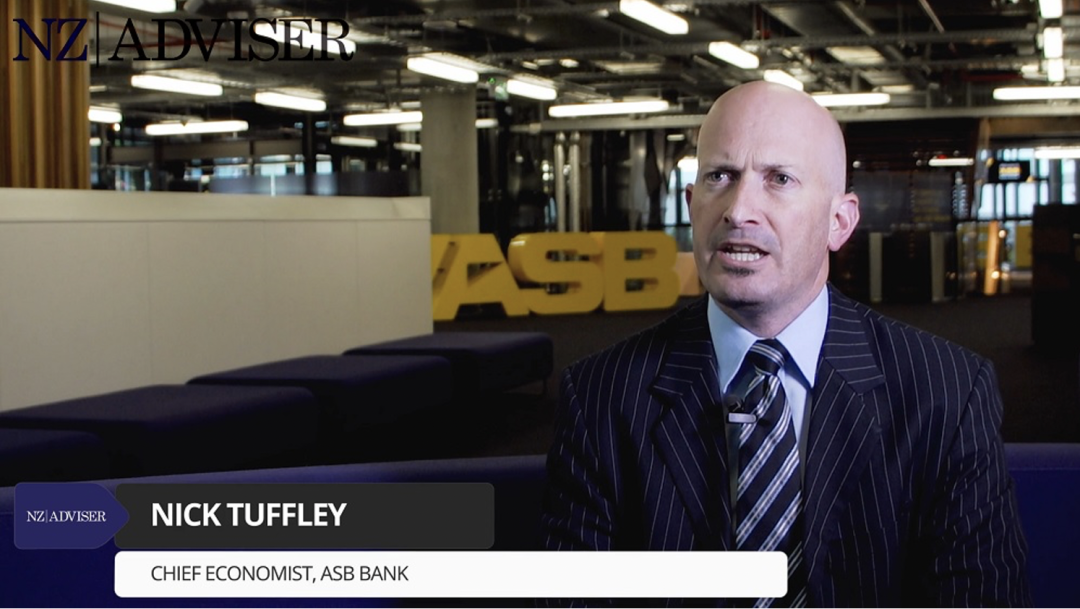
ASB chief economist Nick Tuffley
ASB chief economist Nick Tuffley said expected interest rate increases would put downward pressure on house prices as they materialised in the final months of this year, because homeowners would have no spare money to invest after meeting their high mortgage repayments.
Concerns about the construction industry

Westpac senior economist Satish Ranchhod
There are also reasons for concern about New Zealand's construction industry. Westpac noted that although residential construction projects were still progressing rapidly, rising material and labour costs had fundamentally changed the economics for developers and builders. An era of slower construction growth had arrived. Westpac senior economist Satish Ranchhod said several major aspects of the industry had changed, including higher material and labour costs. A shortage of skilled workers was another problem, with companies poaching staff from one another and pushing up labour costs. Rising interest rates and plunging house prices would also make it more difficult for builders to complete projects.