
Interest rates are rising rapidly,house prices keep falling,how close are we to negative equity? This article explains
This is set to be another nerve-racking week for New Zealand borrowers. After ANZ sharply increased its fixed mortgage rates on Tuesday, banks including Westpac and ASB quickly followed suit (see the chart below for details). Westpac and ASB both raised their one-year fixed mortgage rates by 30 basis points to 5.45%. ASB also raised its 18-month, 2-year and 3-year fixed rates to 5.65%, 5.75% and 5.95% respectively, matching ANZ. Notably, Westpac left its 3-year fixed rate unchanged at 5.65%, the most competitive among the five main banks. YIJU believes that, as the US Federal Reserve steps up its
This is set to be another nerve-racking week for New Zealand borrowers. After ANZ sharply increased its fixed mortgage rates on Tuesday, banks including Westpac and ASB quickly followed suit (see the chart below for details). Westpac and ASB both raised their one-year fixed mortgage rates by 30 basis points to 5.45%. ASB also raised its 18-month, 2-year and 3-year fixed rates to 5.65%, 5.75% and 5.95% respectively, matching ANZ. Notably, Westpac left its 3-year fixed rate unchanged at 5.65%, the most competitive among the five main banks. YIJU believes that, as the US Federal Reserve accelerates its steep rate rises, the Reserve Bank of New Zealand will inevitably continue to follow suit. Will other banks join this latest wave of interest rate increases among New Zealand's major banks? Stay tuned for further reporting from YIJU.
{ad}
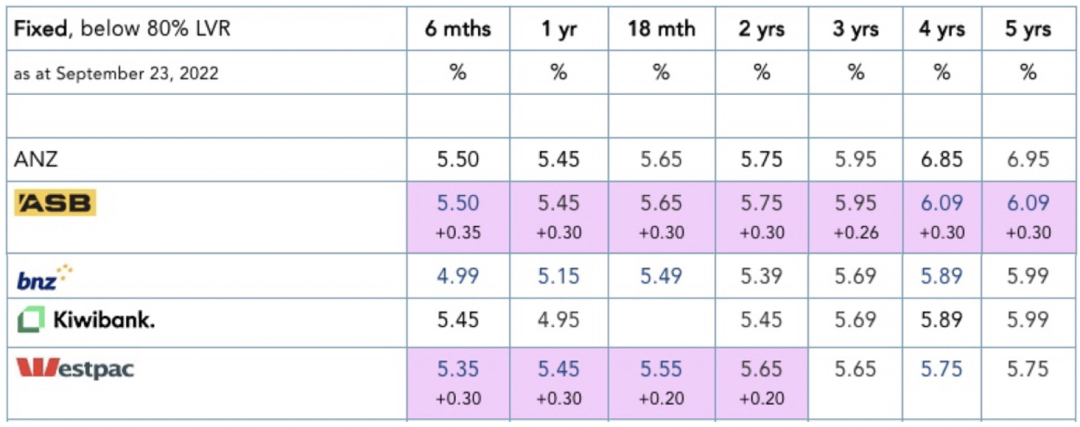
As at month 9, day 23: major banks' fixed mortgage rates
According to the latest property data released by the Real Estate Institute of New Zealand (REINZ), the national median sale price has fallen 13% (or NZ$120,000) since reaching a peak of NZ$920,000 in November last year. Some regions have experienced even sharper falls. Wellington's median house price has dropped 22% (NZ$220,000) from its peak of NZ$1,000,000 at the end of October last year, while Auckland's median has fallen 15.38% (NZ$200,000) from its November peak of NZ$1,300,000. Continuing house price falls mean homeowners across the country may find they owe their banks more than their properties are worth. In particular, buyers who purchased at the market peak in 2021 may well already be in negative equity.
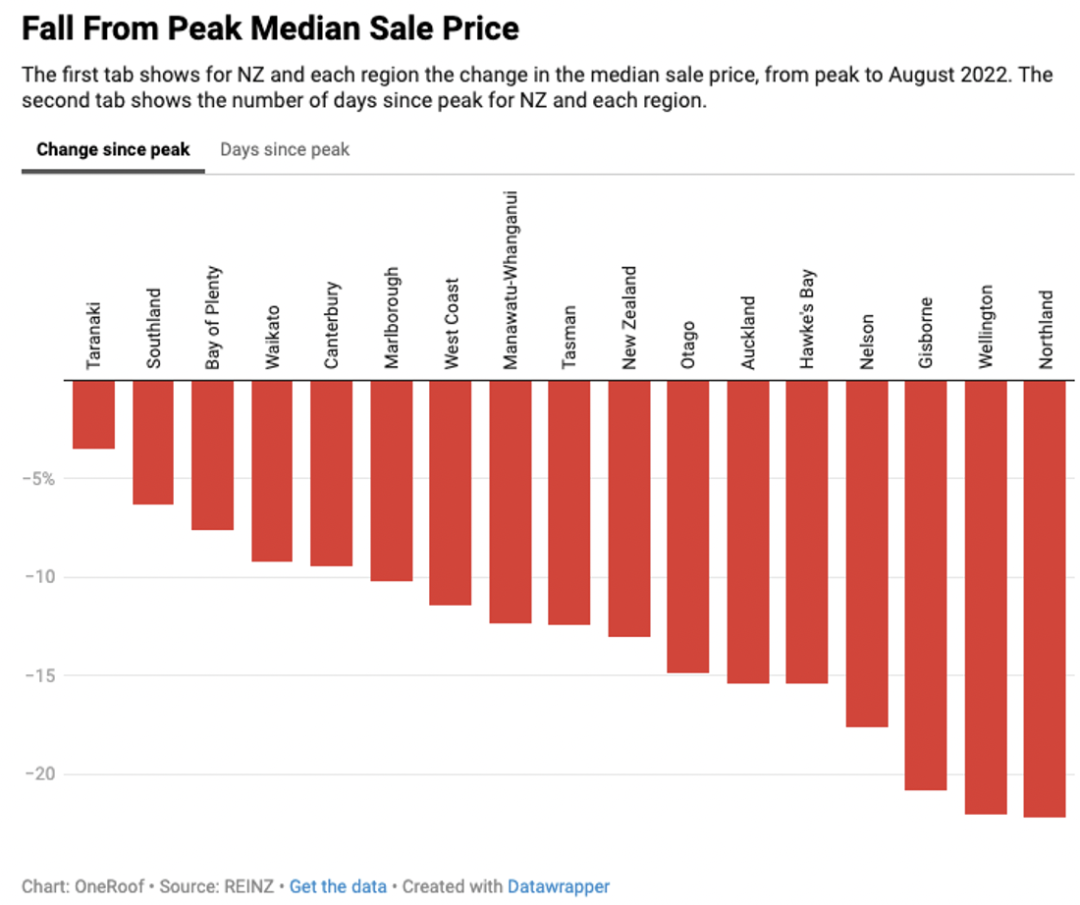
From their peaks to month 8 of this year: percentage falls in regional median house prices across New Zealand
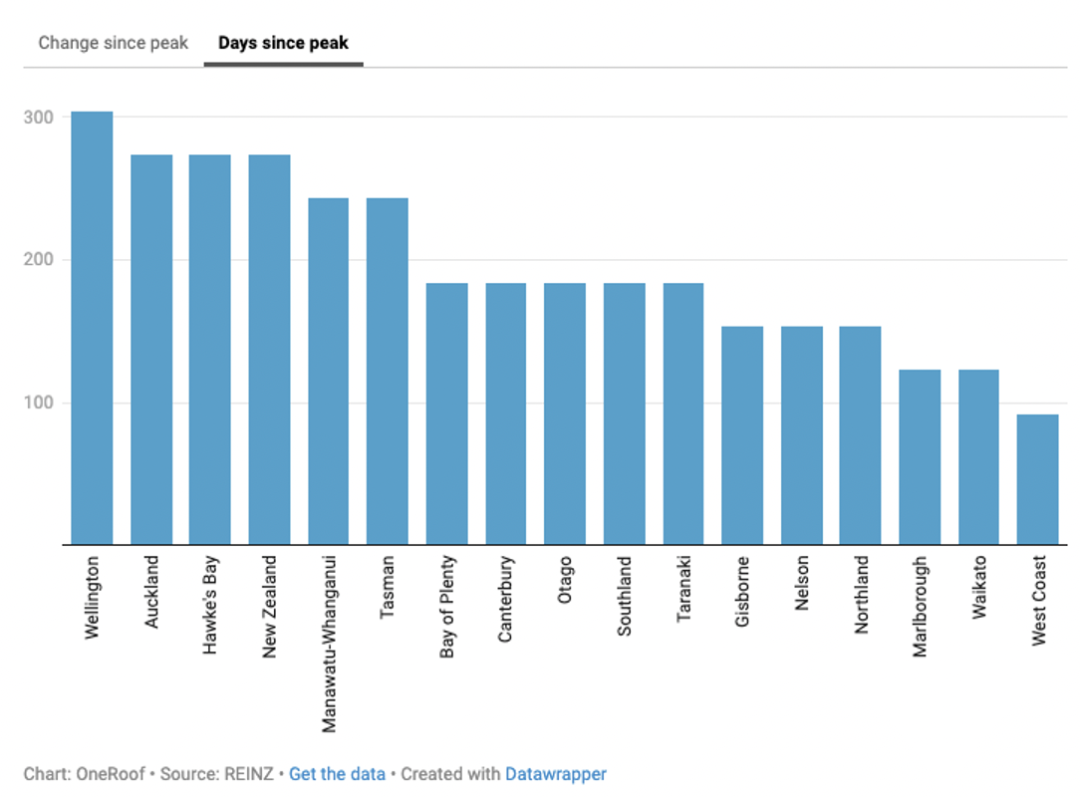
Days since median house prices peaked in each New Zealand region
The impact of rising interest rates on first-home buyers and investors
You might think negative equity poses no potential risk to homeowners who can keep meeting their mortgage repayments and do not intend to sell in the short term. But what about those facing financial difficulties who have no choice but to sell in the current market? It could have a profoundly negative impact on their finances and living circumstances.
Global Finance head of mortgages Aseem Agarwal said his company recently dealt with a difficult situation involving a homeowner whose latest mortgage refix immediately pushed their monthly repayments from NZ$5000 to NZ$7000. The homeowner reportedly felt unprecedented pressure from higher interest rates after their previous low one-year fixed rate expired. They hoped to extend their mortgage term from 25 years to 29 years to bring monthly repayments down to an affordable level. Unfortunately, falling house prices had left the property in negative equity, prompting the mortgage lender to reject their application to extend the repayment term outright.
Agarwal said the homeowner bought their first home last year with a 10% deposit and a 90% mortgage over 25 years. Their outstanding loan balance now exceeds the property's value. They applied to extend their mortgage repayment term after their first year with the bank, but were disappointed by the outcome. Many other homeowners who similarly bought their first homes at last year's market peak may also be facing enormous pressure from increased mortgage repayments.
If first-home buyers are under repayment pressure because of small deposits and rising interest rates, could property investors be facing the same predicament?
Geoff Bawden, a mortgage adviser at Bawden Consulting, said he had seen a number of clients facing serious financial difficulties in the current subdued market after buying investment properties during last year's frenzy. One homeowner, for example, wanted to move from Auckland to Queenstown, but falling property values prevented the investor from doing so. Banks have clear loan-to-value ratio (LVR) limits for investment and owner-occupied properties. If the homeowner sold their own home to move to Queenstown, the LVR on their investment property would exceed 60%, so the bank would not allow them to sell their home. In another case, a Bawden client with a second property by the beach struggled to obtain additional borrowing for renovations because the property was in negative equity. The client was also unwilling to accept the bank's various requirements, including progress payments and regular valuations.
Mortgage adviser Sue Mihakis-Tierney told the media that a client had recently called her after selling their home. After paying the property transaction costs, they used the buyer's 10% deposit to pay credit card and other debts rather than their mortgage. When it came to settling the sale with the bank, their high level of leverage meant they did not have enough money to discharge the mortgage over the sold property. To enable the bank to release its mortgage so the sale to the new buyer could proceed, they had to borrow from friends and second-tier lenders to repay the debt.
The continuing impact of rising interest rates on homeowners is unlikely to ease soon
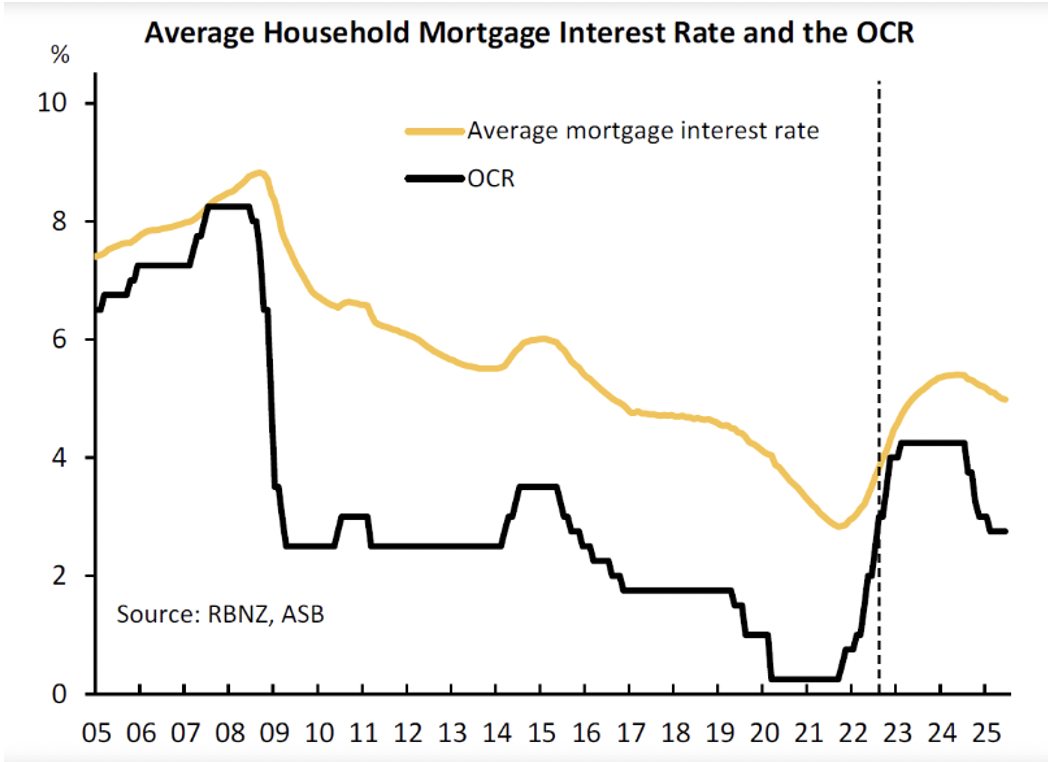
Borrowers' average mortgage rates and OCR: comparison chart
ASB senior economist Mark Smith recently conducted a detailed investigation and analysis of borrowers' household living costs. He believes New Zealanders' average mortgage costs may continue to rise. Even if the Reserve Bank cuts the official cash rate in 2024, their average borrowing costs are unlikely to fall before 2025. He expects fixed mortgage rates to move higher and continue pushing up average repayment costs, although this will be a gradual process. The average mortgage rate borrowers face is expected to be slightly above 4.5% by the end of 2022, approaching 5.5% in early 2024.
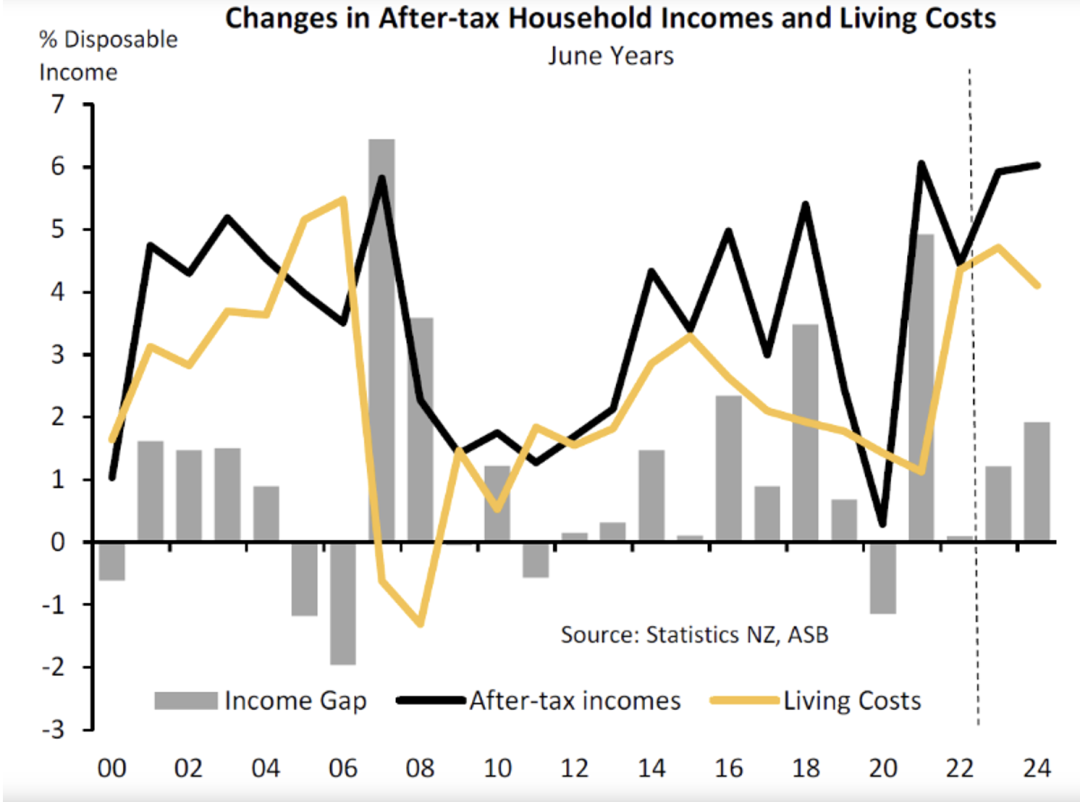
2000~2024 household after-tax income and living costs comparison
Encouragingly, financial advisers say they have yet to see signs of an increase in mortgagee sales, even though the property downturn has left many homeowners in negative equity and rising interest rates and living costs have added to their repayment pressures.
David Xie, a mortgage adviser at Goldsmith Mortgages, said banks only begin mortgagee sale proceedings when borrowers stop making mortgage payments and discussions between the parties fail to resolve the situation. Most of his clients who encounter repayment difficulties do not simply wait for things to happen: they seek help from professional mortgage advisers such as his firm. The advisers, in turn, do everything they can to help clients through their difficulties.