
First-home buyers become a major force! Where are buyers benefiting most from falling house prices?
First-home buyers have emerged as a major force in the current property market. The latest Reserve Bank of New Zealand figures show that in August this year, they secured more than 20% of total mortgage funding—20.8%—to buy their first homes. This is their highest market share since data collection began in 2013.

First-home buyers become a major force among home buyers
Yes, you read that correctly! First-home buyers have emerged as a major force in the current property market. The latest Reserve Bank of New Zealand figures show that in August this year, they secured more than 20% of total mortgage funding—20.8%—to buy their first homes. This is their highest market share since data collection began in 2013. It must be stressed, however, that overall mortgage lending has fallen sharply compared with the lending surge driven by the property boom from 2020 to 2021. The latest figures show total approved lending last month was NZ$5,413,000,000, the lowest August figure on record. This was well below the NZ$6,875,000,000 lent in August 2020, when the market had just emerged from pandemic lockdown, and more than 30% below the NZ$8,170,000,000 lent in the corresponding period last year (August 2021).
{ad}
Among the various buyer groups last month, first-home buyers appeared more determined to purchase. They borrowed a total of NZ$1,124,000,000 in August. Although slightly below the NZ$1,391,000,000 borrowed by the same group in August last year, their market share far exceeded that of other buyer types. Investors' share of total mortgage lending reached its lowest point in July this year before rising slightly in August, from 15.8% (NZ$852,000,000) to 16.7% (NZ$905,000,000). This contrasts sharply with mid-2016, during the property boom, when investors accounted for more than 30% of lending.
Reserve Bank figures show that loan amounts obtained by all buyer types have fallen for three consecutive months, dropping a cumulative 11.5%. They fell from NZ$405,000 in June to NZ$379,061 in July, then again to NZ$358,263 in August. Meanwhile, mortgage application numbers were down 36.2% on a year earlier, making it the lowest month since data collection began in late 2013.
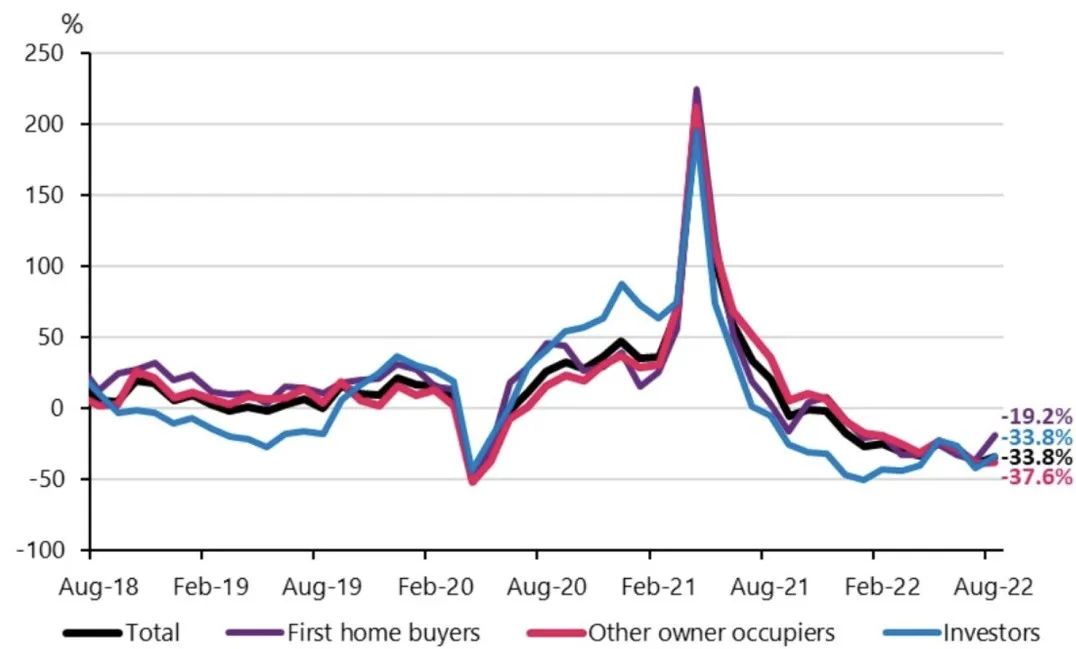
2018 year, month 8 to 2022 year, month 8: comparison of lending shares obtained by different buyer types
Where are buyers benefiting most from falling house prices?
As YIJU New Zealand has discussed in previous articles, falling house prices are considered very good news for first-home buyers. They reduce the deposits and mortgages required, making it easier for buyers to secure their first homes. However, if interest rates rise as house prices fall, higher mortgage repayments may offset the benefits of smaller deposits and loan amounts, preventing first-home buyers from enjoying the gains from lower prices.
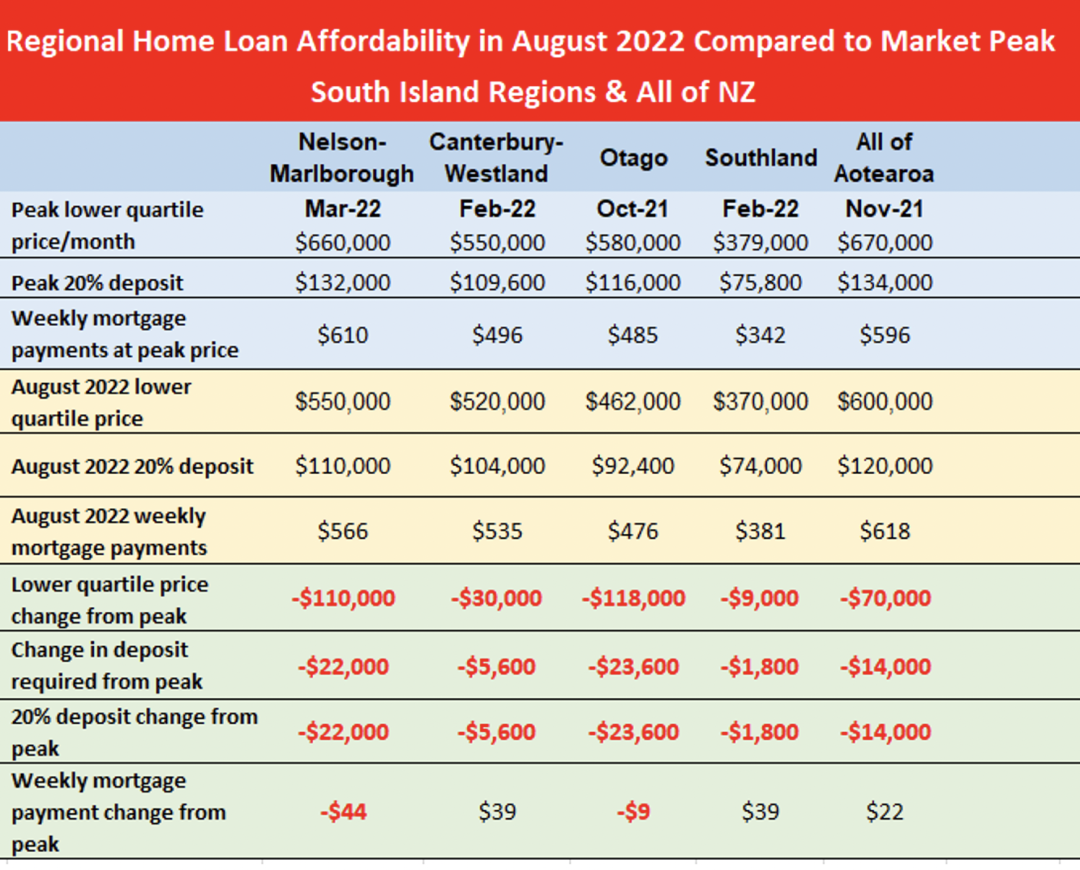
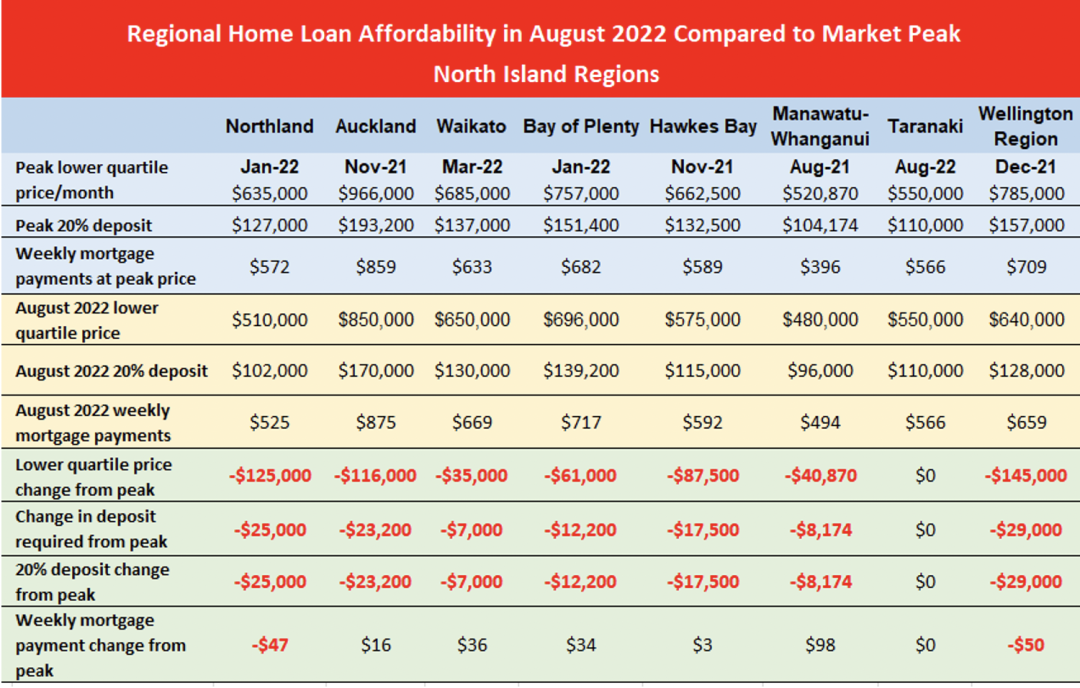 Comparison of housing affordability across New Zealand regions in 2022 year, month 8 and at the market peak
As the table above shows, the national average price of properties in the lower 3/4 of the market peaked at NZ$670,000 in November last year. By August this year, it had fallen NZ$70,000 to NZ$600,000. Across the regions, the average price of properties in the lower 3/4 of the market in Wellington had fallen by as much as NZ$145,000 in August. Taranaki was the only region without a decline, with the average price of properties in the lower 3/4 of its market reaching a new high in August.
Meanwhile, the 20% deposits required to buy properties in the lower 3/4 of the market have fallen by varying amounts from their peaks. For example, the required deposit fell NZ$1800 in Southland and NZ$29,000 in Wellington. Across five regions—Northland, Auckland, Wellington, Nelson/Marlborough and Otago—required deposits have fallen by more than NZ$20,000 from their peaks. This substantial change allows first-home buyers to save enough for a deposit sooner.
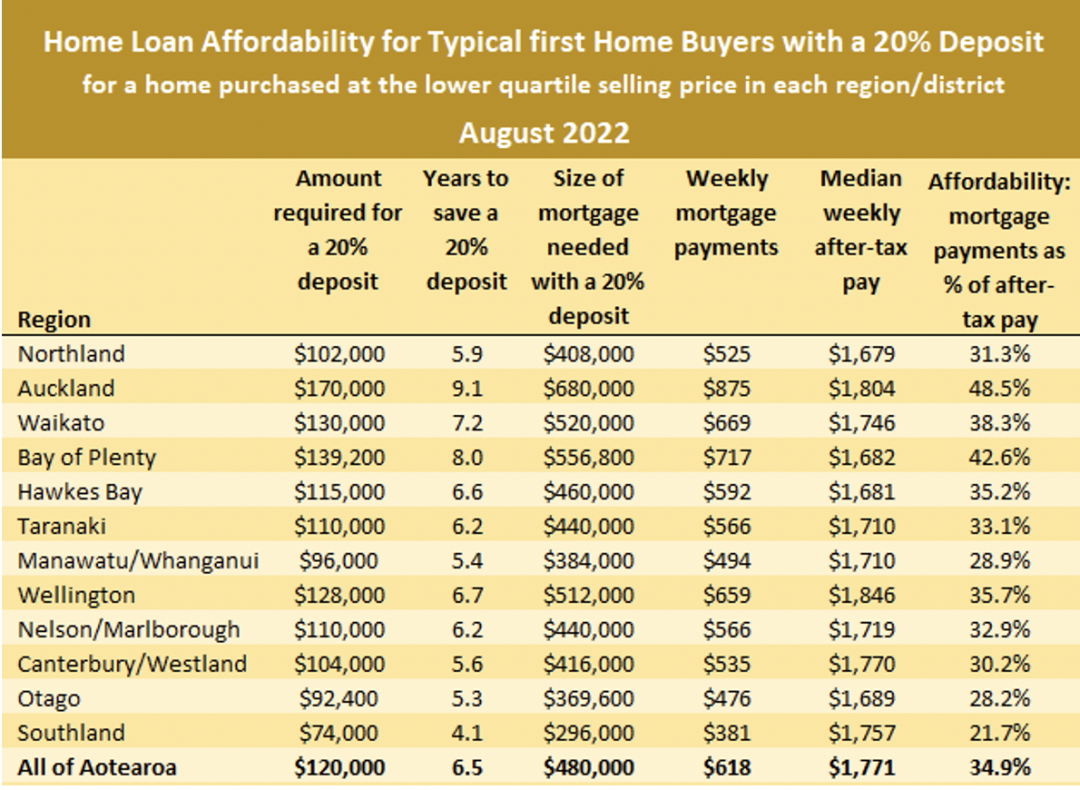
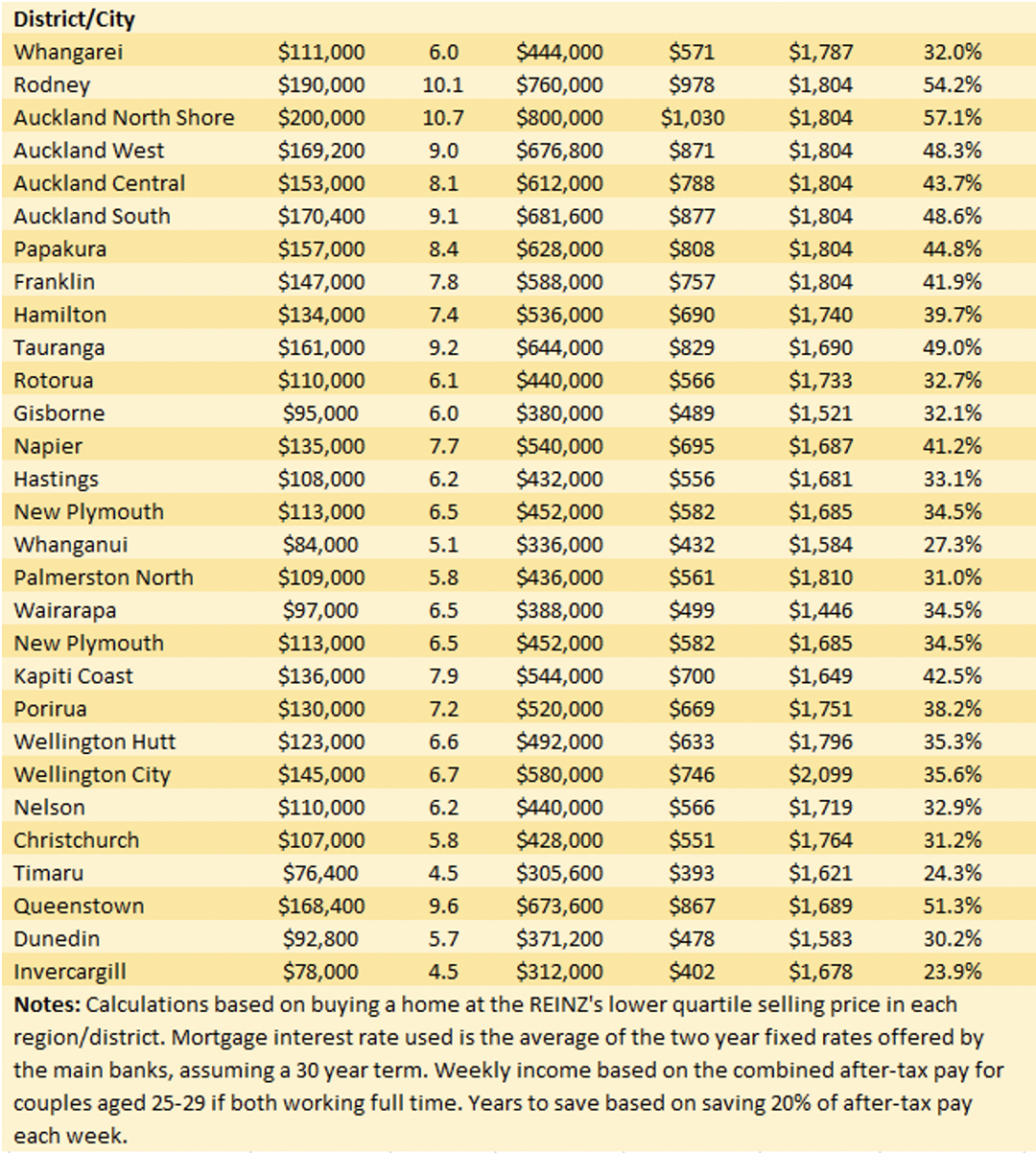
However, interest rate increases over the same period may significantly dampen the buying enthusiasm generated by falling house prices. Nationally, lower average prices for properties in the lower 3/4 of the market have reduced the required 20% deposit by NZ$14,000 from the peak in November 2021. Yet interest rate increases over the same period have raised weekly repayments on an 80% mortgage by NZ$22. Except in Northland, Wellington, Nelson/Marlborough and Otago, both the required 20% deposit and weekly mortgage repayments in August were higher across all other New Zealand regions than when their house prices peaked. First-home buyers in those four regions are fortunate, as housing is now more affordable than at their respective market peaks.
First-home buyers in Hawke’s Bay and Auckland can also buy their own homes more easily now than at the house price peak in November last year. Over that period, the funds buyers would need for a 20% deposit fell by NZ$17,500 and NZ$23,200 respectively, while weekly repayments on an 80% mortgage increased by only NZ$3 in Hawke’s Bay and NZ$16 in Auckland.
Apart from Taranaki, first-home buyers in Bay of Plenty and Manawatu/Whanganui now need to pay an additional NZ$34 and NZ$98 respectively each week towards their mortgages. We believe first-home buyers in these regions will still feel their dream of owning a home is within reach.