
September house price report just released, are property markets in these areas rising or falling?
September generally marks the start of New Zealand's peak property season. In previous years, major commercial banks would take turns waging 'mortgage rate wars' around this time to capture a larger share of the lending market. This year, however, is quite different. Over the past two weeks, New Zealand's five major commercial banks have each completed another round of rate increases (see the chart below). As the official cash rate (OCR) continues rising, banks' fixed mortgage rates across the main terms are moving rapidly towards 6% per annum.
September generally marks the start of New Zealand's peak property season. In previous years, major commercial banks would take turns waging 'mortgage rate wars' around this time to capture a larger share of the lending market. This year, however, is quite different. Over the past two weeks, New Zealand's five major commercial banks have each completed another round of rate increases (see the chart below). As the official cash rate (OCR) continues rising, banks' fixed mortgage rates across the main terms are moving rapidly towards 6% per annum.
{ad}
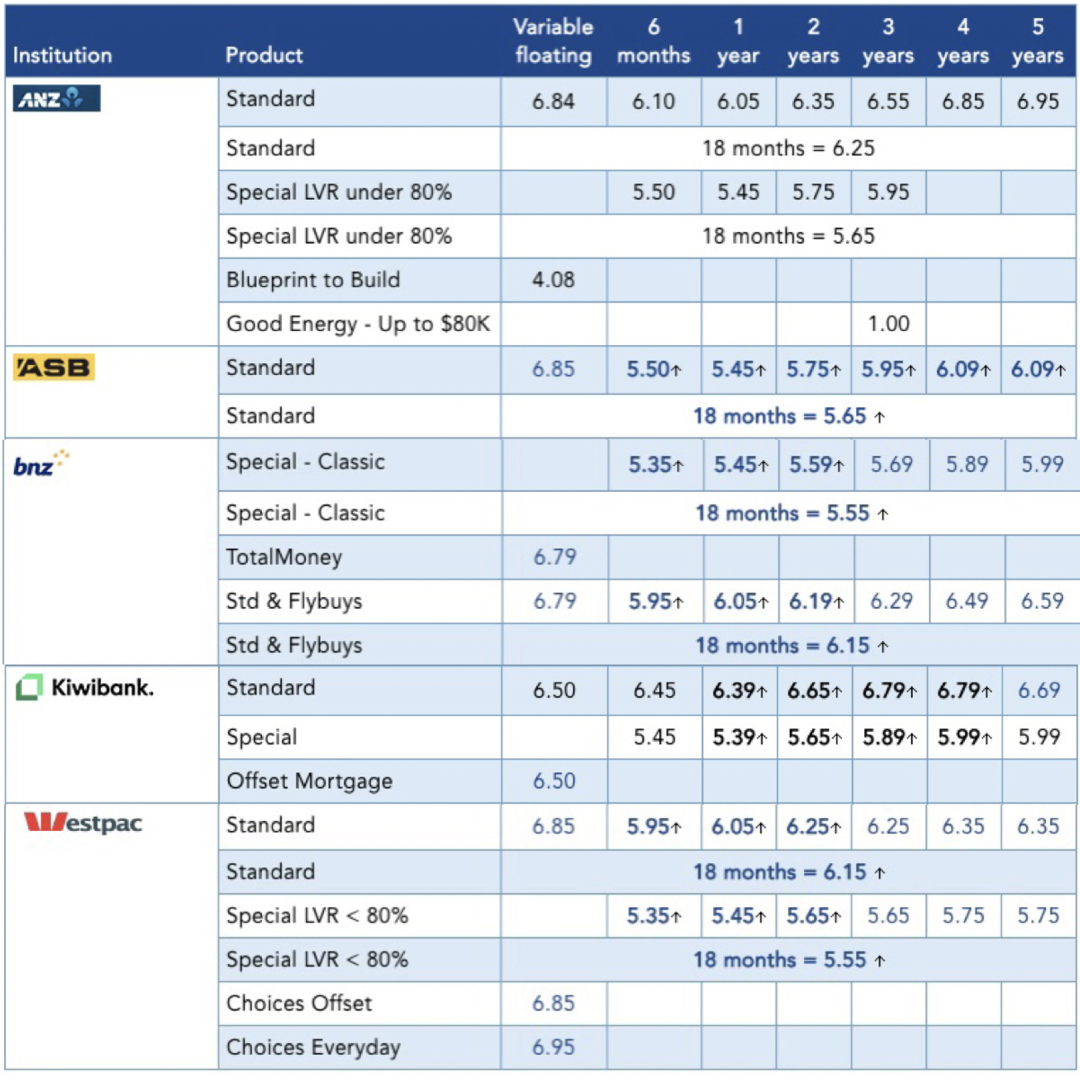
As at month 10, day 2: latest bank fixed mortgage rates (Source: Interest.co.nz)
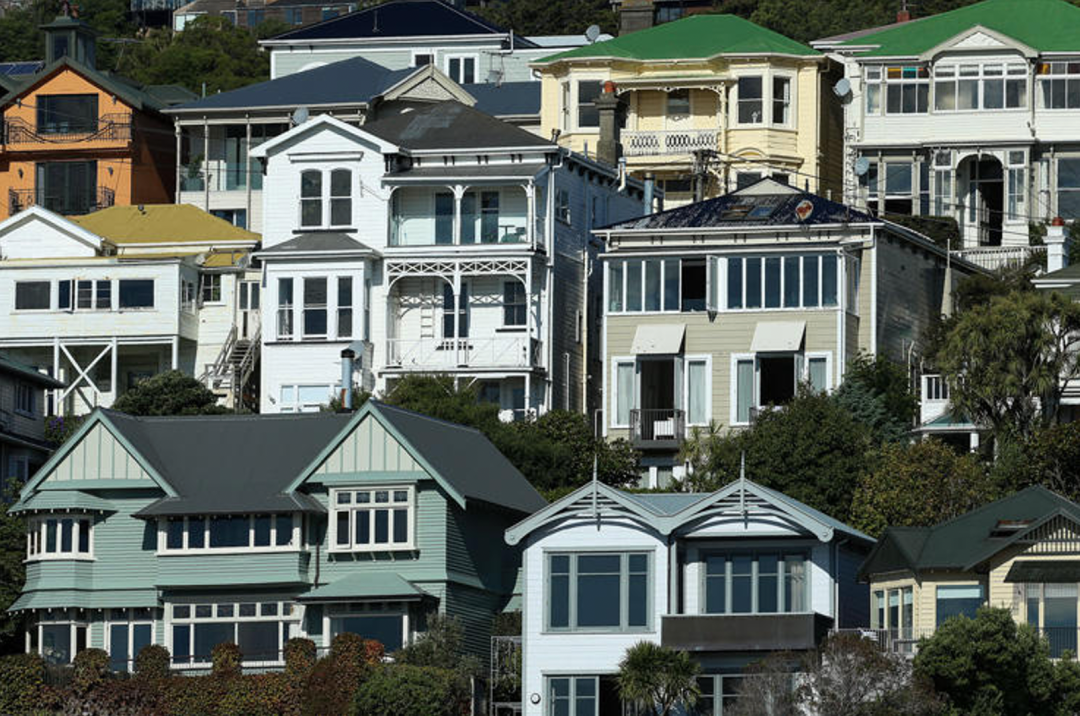
How have New Zealand house prices changed recently in these market conditions? The latest OneRoof-Valocity house price index report shows that the property downturn has knocked nearly NZ$196,000 (17.7%) off home values in the capital, Wellington, since their peak in March this year, taking the average to NZ$1,103,000. Against a backdrop of rising interest rates and worsening inflation, Wellington has experienced the country's largest house price decline. Neighbouring Lower Hutt and Upper Hutt have also suffered sharp falls of NZ$158,000 (18.7%) and NZ$149,000 (17.5%) respectively. New Zealand's largest city, Auckland, has not escaped either, with prices falling 9.8%. Its average property value has dropped by NZ$140,549 since peaking at NZ$1,560,000 early this year.
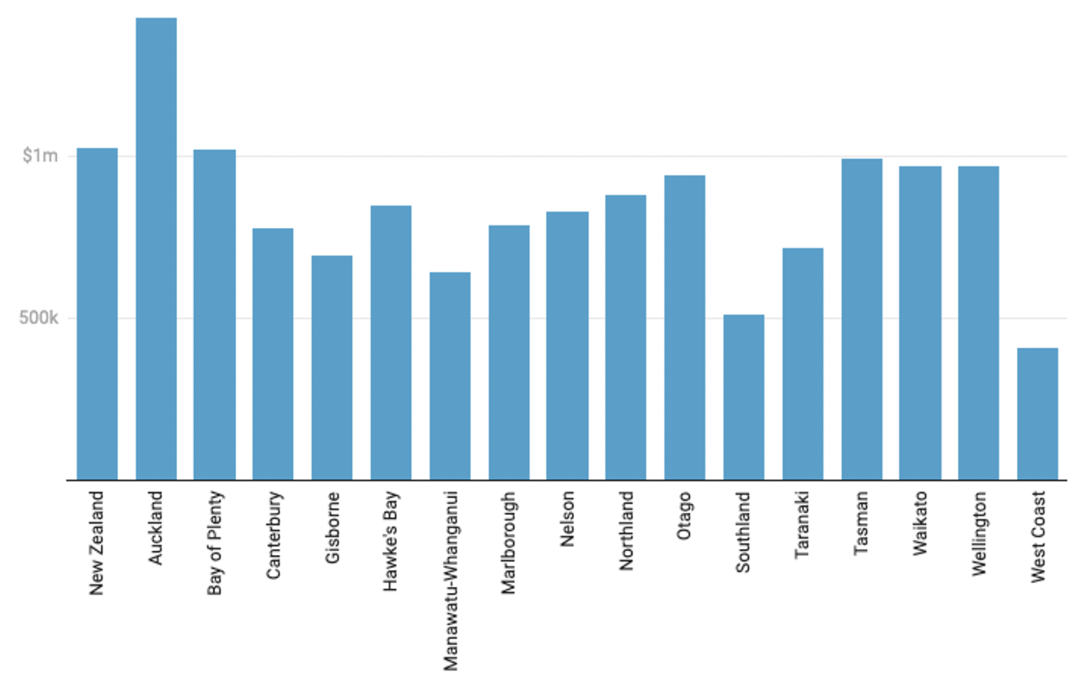
Major New Zealand regions, month 9: average property values
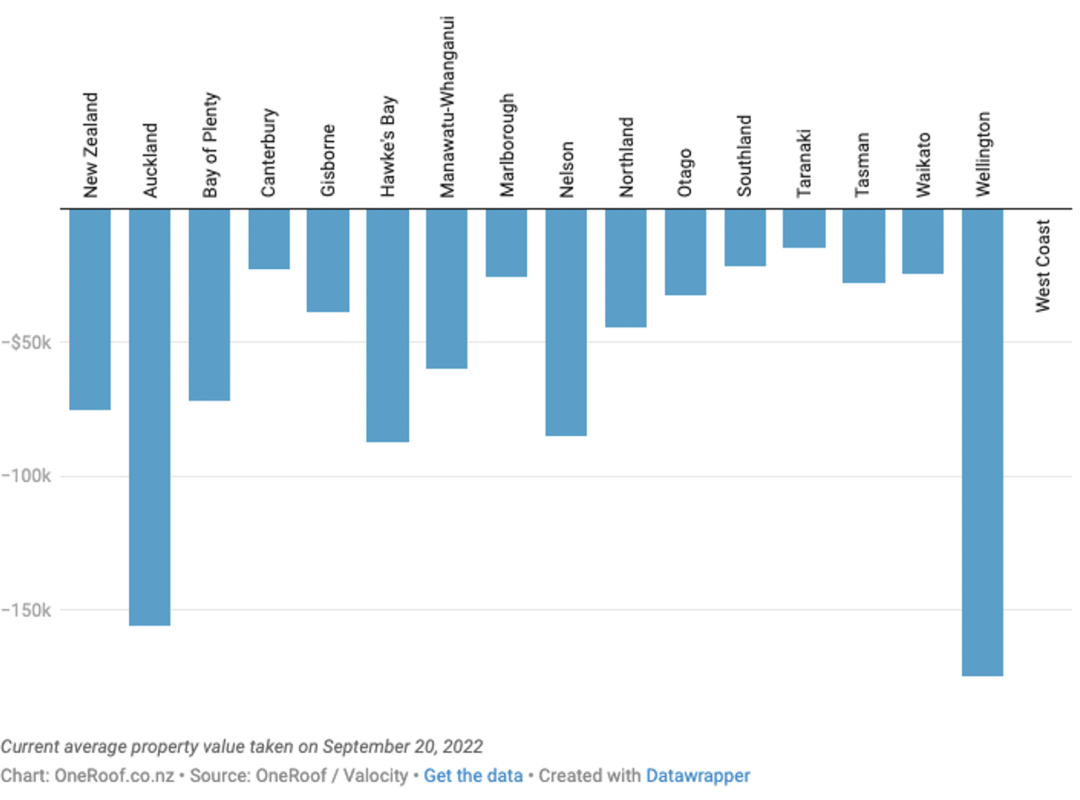
House price declines from peak levels across major New Zealand regions
Over the past 12 months, only 24 suburbs across the country's 645 main urban areas have avoided house price falls, with most of them in Queenstown Lakes. Of the 16 suburbs recording the country's largest declines—more than NZ$300,000—most are in Wellington and Auckland. Okura, in northern Auckland, has been hardest hit, with its average property value falling NZ$426,000 since the market peak. Herne Bay, New Zealand's most expensive suburb, has recorded the country's second-largest decline since the peak, down NZ$355,000 to an average of NZ$3,835,000.
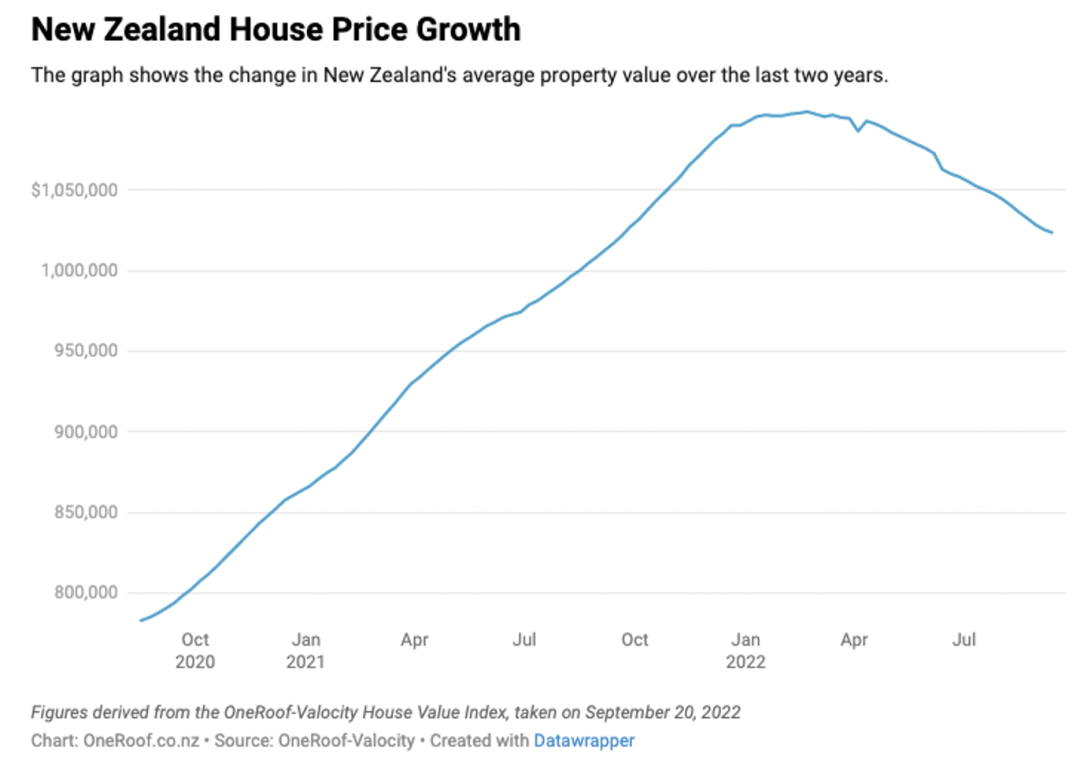
Chart of New Zealand's average property value movements over the past two years
The house price index report also shows that prices in 15 of the country's 16 main regions continued falling over the past 3 months. Overall, New Zealand's average house price fell 3.7% to NZ$1,023,000, just 0.7% higher than a year earlier. The West Coast was the only region to record growth, up 0.5% over the past three months. As New Zealand's cheapest region, its average property value reached only NZ$407,000 after that increase, clearly showing that the downturn has also put pressure on prices there.
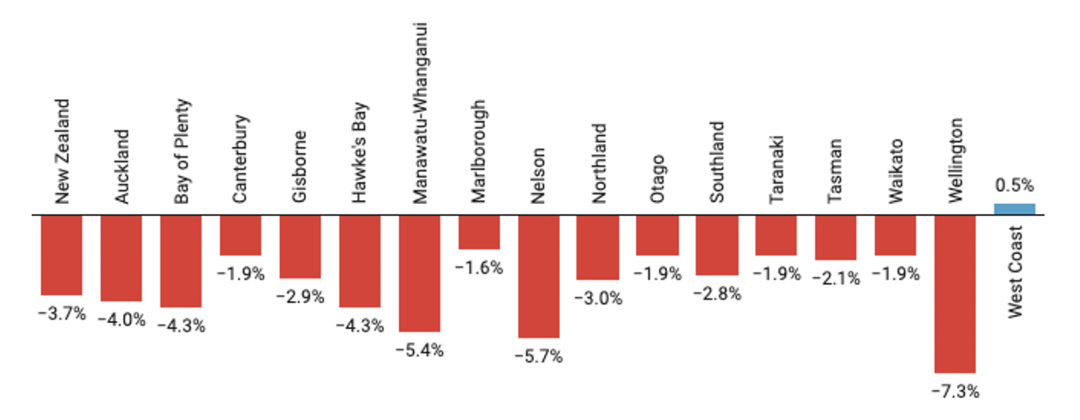
House price percentage changes across major New Zealand regions over the past 3 months
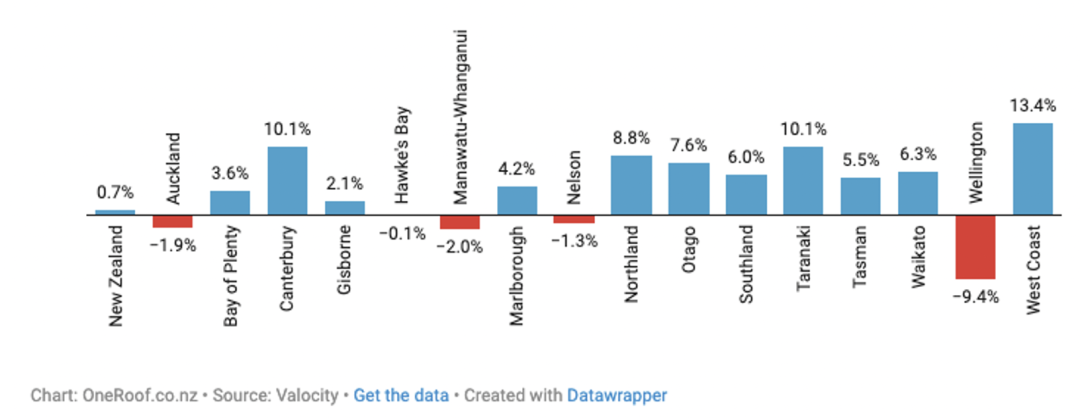
House price changes across major New Zealand regions over the past 12 months
Over the past 3 months, the largest declines were in Greater Wellington (-7.3%), Nelson (-5.7%) and Manawatu-Whanganui (-5.4%), while Auckland's average house price also fell 4%. Changes compared with a year earlier were less pronounced than those over the past 3 months. Only a few regions recorded annual declines: Auckland, down 1.9% ($27,000); Wellington (-9.4%); Manawatu-Whanganui (-2%); and Nelson (-1.3%).
Valocity head of valuations James Wilson says Greater Wellington continues to record the country's largest house price falls. Prices in all 8 of its suburbs declined this quarter, and Wellington's average house price is now NZ$99,000 lower than a year ago. Rising living costs and the Reserve Bank's strong signals of further rate increases have also dampened buyer enthusiasm to some extent. He believes a near-term recovery in prices is unlikely unless listings decline. Continued price falls this quarter show the property market is still far from its bottom. However, some smaller centres with relatively affordable housing continue to show positive growth. For example, prices in Kaikoura, Opotiki, Westland, Thames-Coromandel and Hurunui all rose slightly this quarter. Holiday homes in these areas are popular with buyers, which is a positive sign for the property market, particularly as New Zealand heads towards summer.
In the 12 months to the end of August, 95445 property sales settled. In the 12 months to the end of September, that number had fallen to 93847. Meanwhile, new listings have also remained below levels in the corresponding periods of 2019 and 2020. OneRoof editor Owen Vaughan says all signs suggest properties are taking longer to sell in the current market. Although auctions remain widely regarded within the industry as the best sales method, current auction clearance rates are well below those seen at the peak of property demand late last year.
The impact on home buyers
Valocity head of property research Wayne Shum says approved mortgage applications fell from 6100 in July to 5300 in August, the lowest level since August 2021, when applications reached their pandemic lockdown low. First-home buyers' mortgage applications have also been significantly affected by adverse market conditions. Their share relative to other buyer groups fell from more than 40% towards the end of 2021 to 36.7% in March this year. As house prices continued falling, however, their share recovered to 39.7% in August.
Borrowers should be alert to the likelihood that, under pressure from the current high inflation rate of 7.3%, the Reserve Bank will raise the OCR again in October and November, after increasing it by 0.5 percentage points in August. This means interest rates will not fall in the short term, and around 55% of mortgage holders face a substantial risk of their fixed mortgage rates surging over the next 12 months.
The impact on landlords
Continuing interest rate increases are putting greater cash flow pressure on some investors. An oversupply of certain types of rental property also means landlords cannot make up their cash shortfalls by raising rents. In addition, tighter mortgage application policies have made interest-only loans harder to obtain, leaving some investors unable to pursue new property investments.
The impact on builders
James Wilson says continuing construction cost increases and worsening supply chain problems have also had an extremely negative impact on the property market. Labour and building material shortages, together with rising material prices and borrowing costs, will leave some developers unable to complete their projects. In these circumstances, buyers and sellers may have to use sunset clauses to cancel presale contracts.
Wilson nevertheless remains confident about the future of New Zealand's property market. He says a recovery could be close at hand if the economy maintains its current healthy condition and low unemployment rate.