
How much more impact will interest rate rises have?
On Wednesday 5 October, the Reserve Bank of New Zealand raised interest rates again by 0.5%, taking the OCR to 3.5%. This was the eighth increase in the current tightening cycle.

How much more impact will interest rate rises have?
On Wednesday 5 October, the Reserve Bank of New Zealand raised interest rates again by 0.5%, taking the OCR to 3.5%. This was the eighth increase in the current tightening cycle.
Mortgage rates are what matter most. Floating rates will certainly change in line with rate rises, but commonly used fixed-term rates, such as 1-year or 2-year rates, may remain unchanged. This is because the latest 0.5% increase was already widely expected and had been priced into earlier increases in fixed mortgage rates.
The market currently expects the Reserve Bank’s tightening cycle to peak at around 4.25%. This means mortgage rates are unlikely to change much as the OCR rises towards 4.25%.
{ad}
Continued interest rate rises cannot push these fixed-term rates up by the same amount. In other words, mortgage rates have now reached a plateau and are broadly stabilising.
Shifts beneath the market’s surface
As winter gradually recedes, summer is beckoning. The latest market survey reports suggest some important changes are quietly taking place in the property market, particularly among first-home buyers. They are becoming active again, with a substantial increase in property viewings by first-home buyers. This is an important leading indicator of renewed market activity.
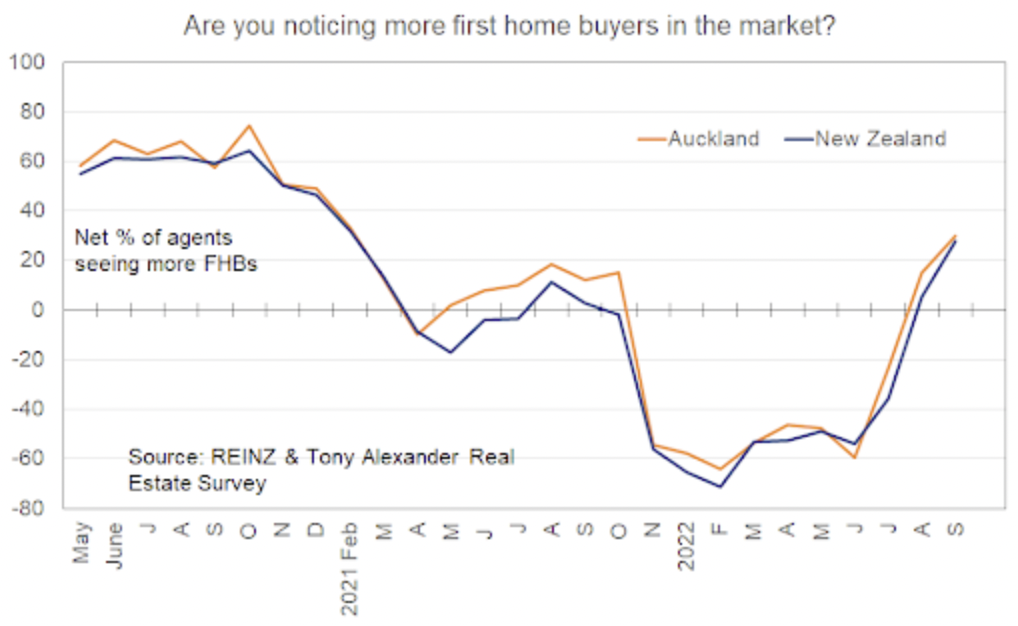
The chart above presents market survey findings showing that the proportion reporting more first-home buyers attending viewings rose from 15% in August to 30%. In the icy conditions of June, the figure had instead fallen by 59%. The shift from decline to stability and then growth is a very clear change in trend.
Reasons and implications
First, this means house prices have fallen within first-home buyers’ budgets. Auckland house prices, for example, have fallen 16% from their peak, very close to the Reserve Bank of New Zealand’s lower bound of a 20% decline. Meanwhile, housing demand remains far from satisfied.
Second, the psychological shock of higher interest rates has passed. Banks’ mortgage rates have largely stabilised, with even some small reductions and other incentives over the past 2 months. Although this does not mean rate cuts are about to begin, fear of further increases has at least started to subside, and people are focusing more on their own housing needs. After all, the current peak in interest rates is still below the average over the past 10 years.
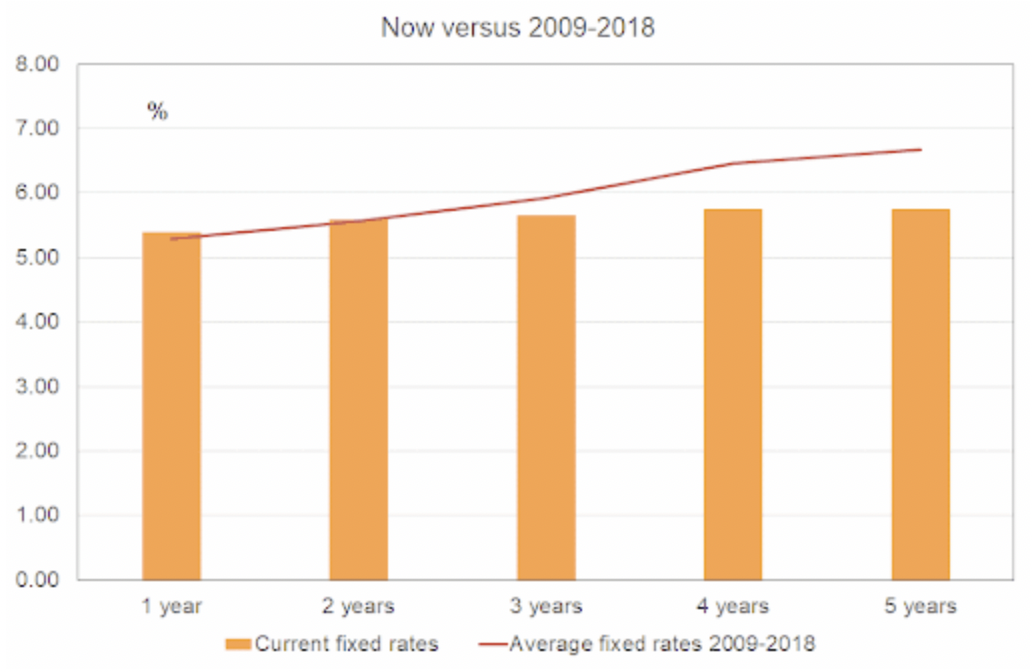
The curve in the chart above shows average rates over the past ten years for terms from 1 to 5 years, while the orange bars show current fixed rates for terms from 1 to 5 years.
Demand remains unmet, with a larger shortfall ahead
As New Zealand’s only super city, Auckland has the greatest concentration of homebuying demand. That demand has continued to accumulate without being met.
Rapid interest rate rises and the resulting short-term fall in house prices have held back purchases. As borders open further and people continue to arrive, pent-up pressure is growing. Renewed activity among first-home buyers simply reflects that pressure approaching a critical point.
First-home buyers’ activity will prompt investors to follow. By various measures, negative sentiment among investors has already eased substantially. Another potential factor for investors to consider is that the current opposition National Party openly opposes Labour’s policy removing interest deductibility for existing homes. One aim of this policy is to direct funding towards new builds, but new home construction is currently effectively at a standstill.
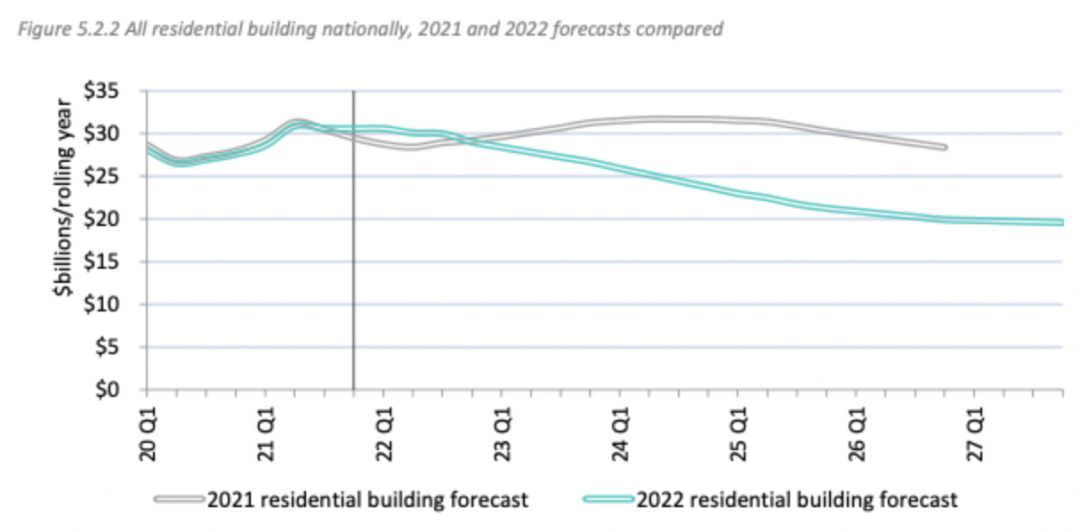
The chart above shows New Zealand building suppliers’ expectations for the future. It reveals a sharp decline this year in the construction industry’s expectations of future building demand. Given construction lead times and completion schedules, a supply shortage lies ahead.
On one hand, rising building materials prices and construction wages are pushing up housing costs. On the other, rapidly falling house prices have deterred both buyers and developers. Less investment means less output. As people continue to arrive, the imbalance between supply and demand is building, and future market changes will happen very quickly.
Opportunity favours the prepared
Auckland is New Zealand’s only super city. As borders open and more people arrive from overseas, these pressures will be felt in Auckland first.
Once house prices rebound, market sentiment could therefore swing from one extreme to the other.
As we move towards 2023, we may see house prices overcome downward pressure under the combined weight of these forces, gradually begin to rebound and then progress from a rebound to a reversal of the trend.
Positioning yourself for the future means starting now and looking for opportunities that the market has unfairly undervalued. The timing is right.