
Mortgage rates have doubled since last year, so how can you cope if your income has not increased?
ASB senior economist Mark Smith recently analysed New Zealand household living costs in detail. He forecast that inflation could add around NZ$110 a week to household living expenses in the year to June 2023. Rising fixed mortgage rates would also gradually push up borrowers’ repayment costs.
ASB senior economist Mark Smith recently analysed New Zealand household living costs in detail. He forecast that inflation could add around NZ$110 a week to household living expenses in the year to June 2023. Rising fixed mortgage rates would also gradually push up borrowers’ repayment costs. He estimated that the average mortgage rate faced by borrowers would exceed 4.5% by the end of 2022, approaching 5.5% in early 2024. He warned that even if the Reserve Bank began reducing the OCR in 2024, borrowers’ average borrowing costs were unlikely to fall at all before 2025.
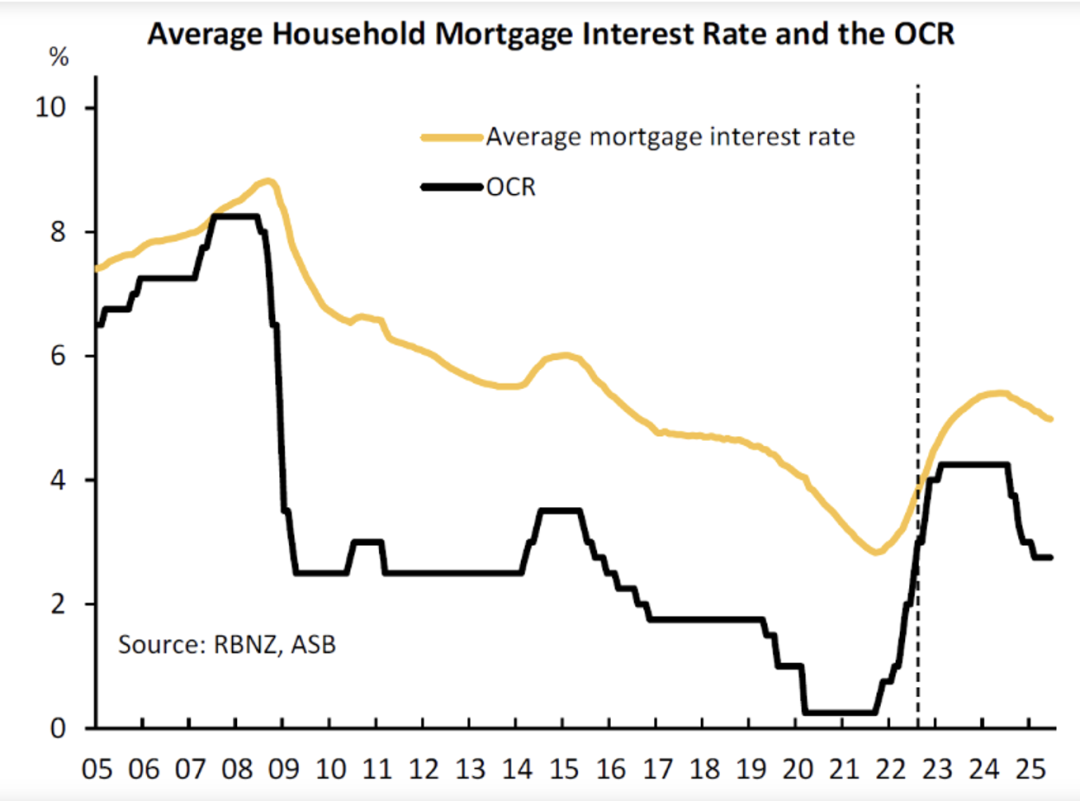
2005 to 2025: OCR compared with average mortgage rate trends and forecasts
According to ASB economists, more than half of fixed mortgages will move onto higher rates next year. They warned that this change would place enormous repayment pressure on borrowers refixing over the coming year, as well as new borrowers entering the current market. This raises a question: is it true, as some claim, that certain borrowers have seen their monthly repayments instantly double when they last refixed? How should borrowers cope when repayments rise but their income does not?
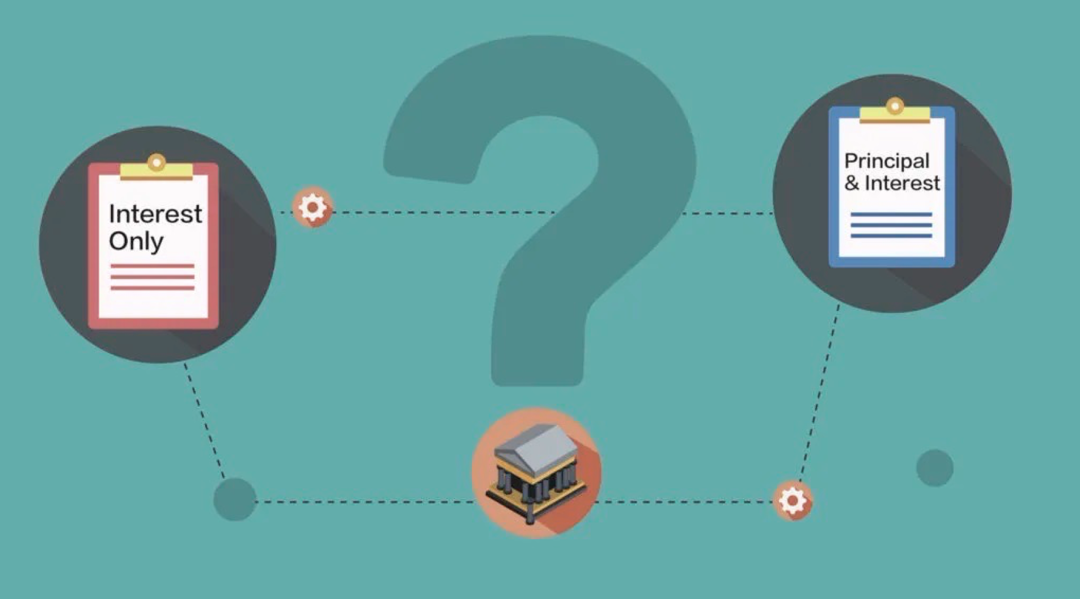
To answer the first question, let us examine the two repayment options offered by New Zealand banks: principal and interest, and interest-only.
{ad}
Advantages of interest-only repayments:
Interest-only repayments make weekly payments somewhat lower, improving borrowers’ cash flow and reducing their investment outgoings. Many property investors therefore prefer interest-only loans.
Disadvantages of interest-only repayments:
With this approach, lower monthly payments initially ease repayment pressure to some extent. However, if interest rates rise or borrowers’ financial circumstances change, the burden on household finances can increase sharply.
Let us do the sums. A borrower who took out a NZ$400,000 principal-and-interest loan in mid-2021, at the then one-year fixed rate of 2.5%, would pay NZ$828 a fortnight in principal and interest. If they refixed at the currently common one-year rate of 5.5%, their fortnightly principal-and-interest repayments would be NZ$1133. That is NZ$152.5 more per week than a year earlier.
If that borrower instead chose an interest-only loan of NZ$400,000 in mid-2021, at the then one-year fixed rate of 2.5%, they would pay NZ$385 in interest each fortnight, while refixing at the currently common one-year rate of 5.5% would mean fortnightly interest payments of NZ$846.
This shows that for borrowers making principal-and-interest repayments, a doubling of interest rates does not double their repayments. However, all borrowers should recognise that mortgage rates are bound to keep rising as further OCR increases are expected. Under the pressure of inflation, how can borrowers balance household budgets and spending to weather the current financial crisis?
Reassess your ability to repay
Auckland Central Budgeting manager Tim Maurice said borrowers should retain some emergency funds when money for repayments is tight. Interest rates are rising much faster than most homeowners’ incomes. He recommended having at least a separate account for regular fixed expenses, with automatic payments set up, and another account for everyday spending. He also suggested that homeowners whose existing lower fixed rates have not yet expired consider increasing their repayments early to build their capacity to withstand financial pressure.
Take some drastic measures if necessary
Enable Me founder Hannah McQueen, a financial adviser and accountant, said homeowners facing a financial crisis could consider relatively drastic measures. These include temporarily suspending KiwiSaver contributions, renting out a room or even the whole house, cutting electricity, water and internet spending, reducing spending on children, and postponing major expenses such as replacing a car or renovating the home, to reduce household outgoings as much as possible.
Talk things through with a professional mortgage adviser
Financial Advice New Zealand chief executive Katrina Shanks said borrowers struggling with repayments could discuss their situation thoroughly with a professional mortgage adviser. Advisers may be able to improve the loan structure and suggest ways to cut spending. If necessary, borrowers could consider splitting their mortgage between floating and fixed rates to reduce repayments. YIJU strongly recommends that borrowers work closely with a professional mortgage adviser to find the best way through their difficulties. Most mortgage advisers charge consumers no fee, as their commission is paid by lenders.