
Discussion: does New Zealand currently have a housing shortage or a serious oversupply?
The latest Stats NZ figures show no sign of a slowdown in residential construction. Building consents were issued for 4547 new homes in August this year, bringing the total for the 12 months to the end of August to 50653, up 8.9% on the corresponding period a year earlier.
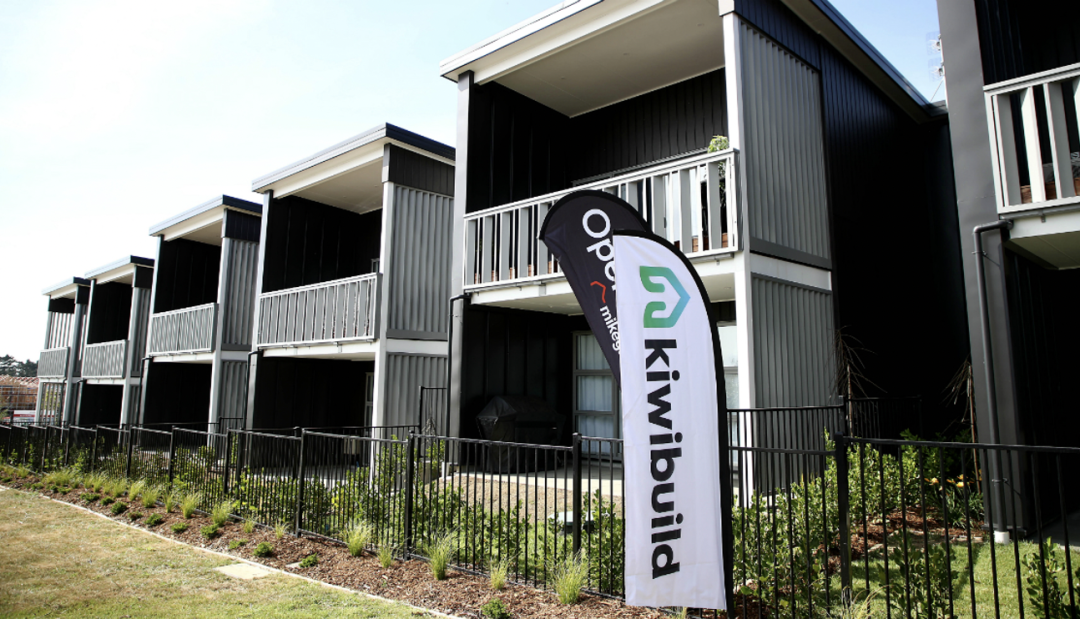
The latest Stats NZ figures show no sign of a slowdown in residential construction. Building consents were issued for 4547 new homes in August this year, bringing the total for the 12 months to the end of August to 50653, up 8.9% on the corresponding period a year earlier.
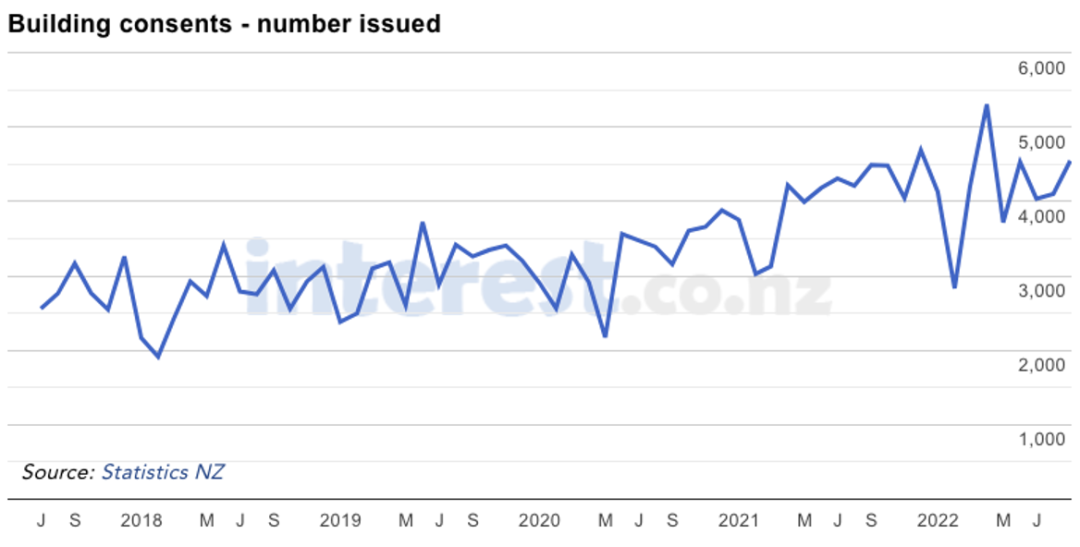
Changes in nationwide building consent approvals, 2018 to 2022
Standalone houses remained the most popular housing type, with 23,060 new homes approved by the end of August, although this was down 8.9% on a year earlier.
{ad}
Townhouses and units were the second most popular housing type, with 20,681 building consent applications approved in the year to the end of August. Growth was remarkable, with approvals up 41.7% on a year earlier.
Growth in new apartment developments, however, stalled. Just 4096 apartments were approved in the 12 months to the end of August, virtually unchanged from 4094 in the corresponding period a year earlier.
A further 2816 retirement village units were approved in the 12 months to the end of August, up 11.5% on the corresponding period a year earlier.
Notably, their relatively affordable entry prices make townhouses and units the most popular property types among first-home buyers purchasing to meet their own housing needs. Major developers and builders seized this market opportunity, ultimately driving the sharp 41.7% increase. Meanwhile, although the number of new-home building consents issued in August was little changed from a year earlier, rising just 0.9%, the total construction value of these projects rose 12.9% to NZ$1,912,000,000. This means that as costs rise, developers’ and builders’ margins will be squeezed further if final sale prices cannot increase accordingly.
We cannot help asking: is the residential market currently facing a shortage or an oversupply? Who has been continually ‘amplifying’ New Zealand’s housing shortage and advocating more construction to ease a longstanding shortfall in housing supply?
There have long been various versions of the housing shortage argument. The most popular is: ‘For decades, we have built fewer homes than we actually need, and we now have a shortage of around 100,000 homes...’ This claim was first made in 2012 by Labour, then in opposition, and became central to its KiwiBuild government-backed housing programme. The policy promised that, if elected in 2014, the party would build 100,000 affordable homes over 10 years for New Zealand’s first-home buyers.
Over the following years, this claim was repeated countless times. By 2016, the public seemed firmly convinced that New Zealand had a housing shortage. Even the National government believed the issue was urgent. In October last year, the Labour government and National jointly announced the Housing Supply Bill. Both parties said they had united behind this radical new housing policy to address New Zealand’s worsening housing crisis. It aimed to deliver at least 48200 to 105500 additional homes over the next 5 to 8 years. To achieve this vision, housing up to three storeys high would be allowed on most residential sites from August 2022, without the costly and cumbersome resource consent process. In practice, this would bring forward parts of the previously proposed National Policy Statement on Urban Development (NPS-UD) by at least a year.
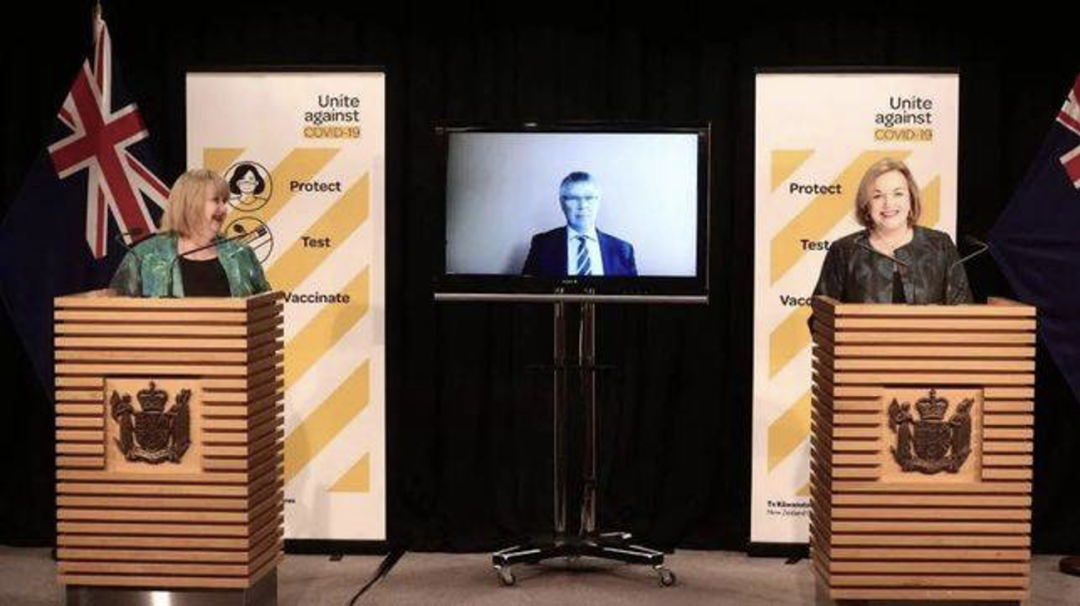
The two parties jointly announced the Housing Supply Bill
Prominent local property commentator Ashley Church’s view is that the public’s unquestioning acceptance of, and support for, policies supposedly intended to increase housing supply substantially ultimately gave Labour the opportunity to implement KiwiBuild after winning the 2017 election. Under inexperienced leadership, the new government built only a small number of homes over the following few years, and its claim that it would deliver 100,000 affordable homes fell apart...
Ashley Church believes that to determine New Zealand’s housing needs at different times, we need only two indicators: the population and census findings on the average number of people per household in New Zealand at a given time.
He gave an example: in 1986, New Zealand’s population was 3,240,000, and that year’s census showed an average of 3.29 people per dwelling or household. We therefore know that 324/3.29=985,000 homes were occupied that year. By 2013, the year after Labour announced its KiwiBuild policy, the population had risen to 4,450,000, while average household size had actually fallen to 2.87 people. With 445/2.87=1,550,000 homes, we find that the number of occupied dwellings had grown to 1,550,000. This represents an increase of 565,000 homes over 27 years, or an average of 21,000 new homes built each year.
Household size falls only when we build more homes than we need. If we had maintained the 1986 average of 3.29 people per household, we would have needed only 1,352,000 homes by 2013. Over those 27 years, however, the construction industry had not stood still; it had built around 200,000 homes.
Why, then, do we believe housing has always been in short supply? Because we confuse short-term accommodation needs with the long-term housing stock. Demand for emergency housing among homeless people has surged in recent years, but this is not because there are too few homes for first-home buyers. Rather, government policies have made it increasingly difficult to provide rental housing for a section of society.
Ashley Church concluded that the ultimate result is a frenzy of building tens of thousands of homes that are not only unnecessary, but could also be the ‘culprit’ behind a housing oversupply in the coming years. That is the last thing we want to see in a market where house prices are already under pressure.