
More banks following suit with rate rises? First-home buyers, keep this home-buying checklist handy!
Owning a home has long been a lifelong dream for many New Zealanders, who may spend years or even decades working to achieve it.

Owning a home has long been a lifelong dream for many New Zealanders, who may spend years or even decades working to achieve it. According to interest.co.nz, first-home buyers accounted for 40% of all property sales in June 2022. This suggests that, as house prices continue to fall and the government introduces policies encouraging first-home ownership, more New Zealanders are beginning their journey towards buying their first home.
{ad}
However, with high inflation, rising mortgage rates and difficulties securing a loan, the path to owning a home may still be fraught with obstacles. Following yesterday’s announcements by ANZ and Westpac of substantial increases in fixed mortgage rates, Kiwibank has become the next major bank to raise rates sharply. Its fixed rates for terms from 6 to 24 months have each risen by 50 basis points, while rates for terms from 3 to 5 years have each risen by 40 basis points. See the chart below for details.
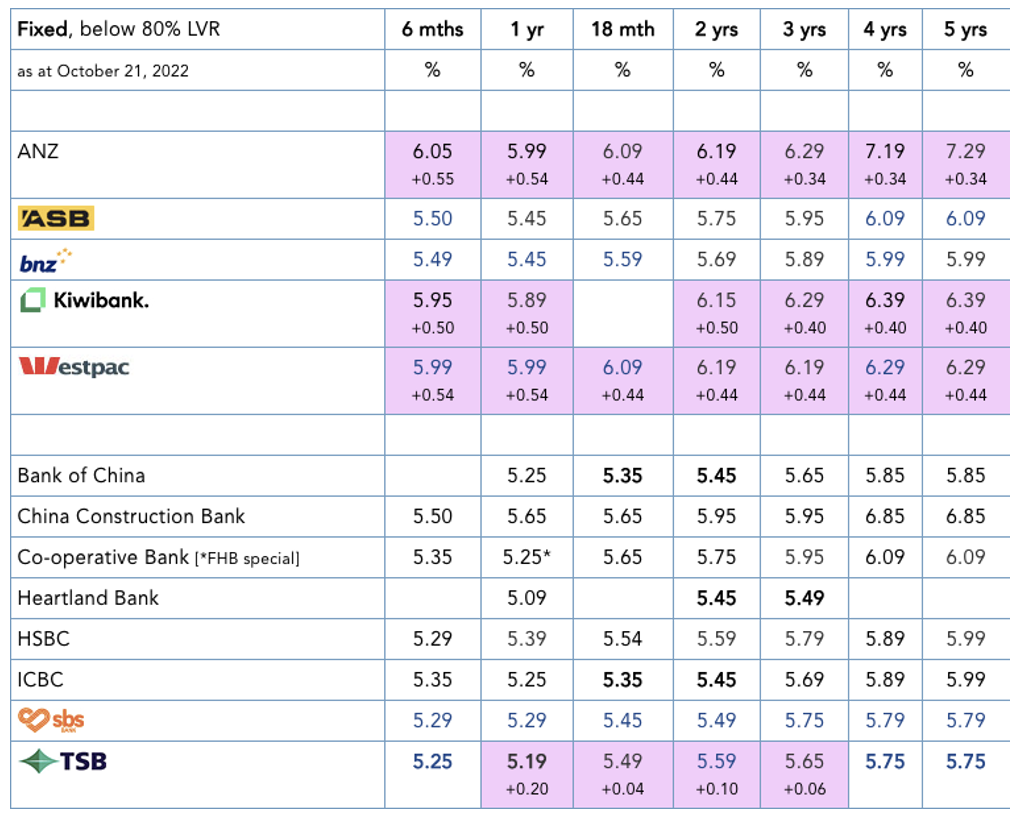
Latest bank mortgage rates as of today
YIJU believes that many first-home buyers with no experience of property investment have never encountered a housing market downturn and mortgage rate highs like these. What price range should they buy in, and when? Where should they look? What hidden costs arise during the purchase process? What does ‘due diligence’ mean for buyers? First-home buyers need to investigate, plan and research these questions themselves to avoid as many pitfalls as possible.
Finding a home
To save time when looking for a home, buyers should narrow their search criteria. Choose a few suburbs you would like to live in—for example, areas close to work or motorway access, or with attractive scenery—and your preferred property types, such as townhouses, apartments or standalone houses. Then set up alerts on property search websites so you are notified as soon as a new listing meets your requirements.
Buyers should also research the key factors driving house prices up or down in an area, so they know how to assess a property’s true value when they find one they like. As we often say: location, location, location! Location plays a pivotal role in a property’s value. Buyers seeking convenient transport links, good school zones and comprehensive local amenities should be prepared to pay more. Property type and condition also affect prices. Generally, homes in newer condition, energy-efficient and environmentally friendly homes, and new builds may command higher prices.
Alongside following YIJU New Zealand’s practical articles for first-home buyers, purchasers can use oneroof.co.nz, TradeMe Property Insights and local council websites to check current and historical house prices in an area, find property floor areas and consult the LIM report for important information about a property’s history.
Costs
With the Reserve Bank’s Official Cash Rate (OCR) and bank mortgage rates continuing to rise, first-home buyers should consult a professional mortgage advice firm before applying for a loan and work with it to complete their application. Obtaining bank pre-approval can also be important, as it gives buyers an advance indication of the price range they can afford.
Finally, when budgeting for their first home, buyers need to consider every expense involved in the purchase. This will help them understand the total cost and avoid unexpectedly large bills during a difficult period of high inflation. Buyers also need to allow for expenses beyond the purchase price, including legal fees, registered valuation reports, building and engineering reports, and real estate agent fees. Once settlement is complete, a range of ongoing costs will arise, such as council rates, rubbish collection charges, water, electricity, gas and internet bills, home insurance, and potentially residents’ association and property management fees. Maintenance is another easily overlooked expense. Generally, the older a home and the poorer its condition, the more frequent and costly its maintenance will be. New builds usually require less maintenance and may also come with a 10-year building guarantee.
Property due diligence
One of the most important stages of buying a property is carrying out ‘due diligence’. This means gathering all the important information about a property before the purchase agreement formally takes effect. These enquiries include obtaining the council’s LIM report (Land Information Memorandum), a building inspection report and a property valuation report, which may also show the prices of comparable properties in the area. The buyer’s lawyer then needs to review all these documents, explain their finer details and potential implications for the property’s value, and ultimately provide professional advice on the purchase.
YIJU reminds buyers that the cost of due diligence can rise quickly as enquiries become more detailed. However, with properties often costing millions, a thorough investigation before buying is well worth the effort.