
Mortgage advisers warn homeowners: it is time to prepare for the impact of higher mortgage rates
Recent media reports have highlighted warnings from mortgage brokers that high inflation and global economic uncertainty will expose mortgage holders who need to refix in the coming months to the risk of higher interest rates.

Recent media reports have highlighted warnings from mortgage brokers that high inflation and global economic uncertainty will expose mortgage holders who need to refix in the coming months to the risk of higher interest rates.
{ad}
Mortgage brokers say the latest consumers price index (CPI) figures far exceeded the Reserve Bank's expectations. Inflation was +7.2% in the three months to the end of September, down just 0.1 percentage points from the previous quarter. This means the Reserve Bank will raise the official cash rate (OCR) well above the previously forecast peak of 4%, demonstrating its determination to continue suppressing CPI increases in the period ahead. Many economists have consequently revised their forecasts for the OCR peak. ANZ economists expect the cash rate to peak at 5%, while ASB expects it to go higher, reaching a peak of 5.25% before long. Meanwhile, many economists agree that the Reserve Bank will raise the OCR again next month by at least 75 basis points to 4.25%, its highest level in nearly 14 years.
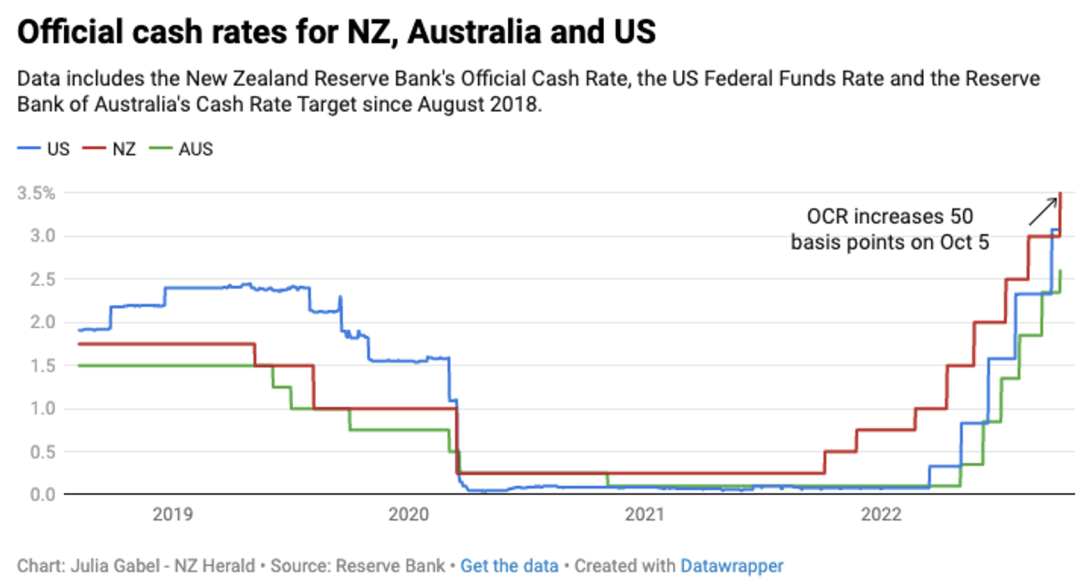
2019-2022 Comparison of official cash rate trends in New Zealand, Australia and the United States
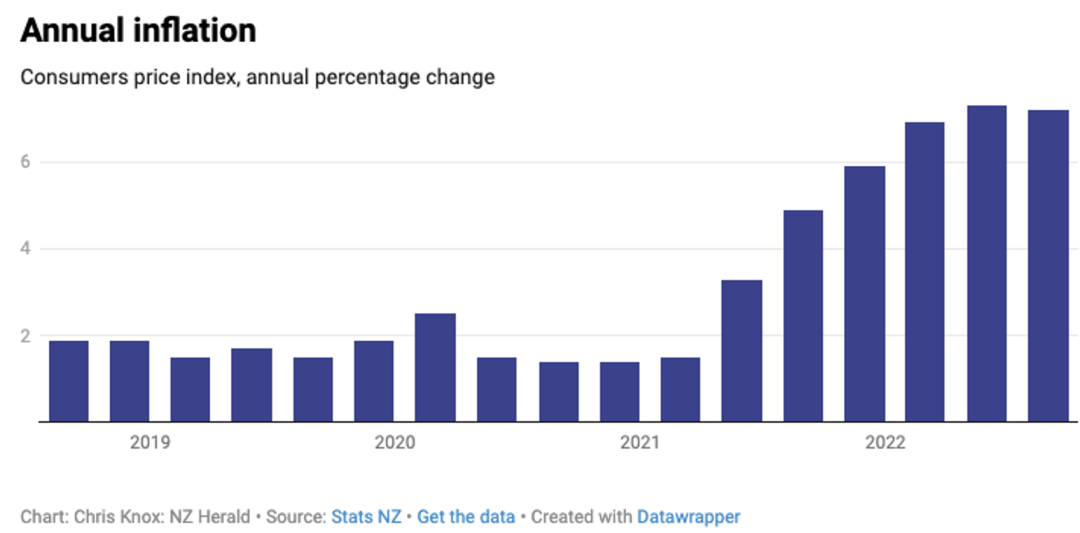
2019 to 2022 New Zealand's annual inflation rate
For mortgage holders, a higher cash rate means higher mortgage rates. Uncertainty about the future has prompted many homeowners to express their fears on property-related media platforms. Some say the rates they face when they next refix will be far higher than the test rates used when they obtained their mortgages. Some even say they would rather break their current fixed-term agreements now and refix for another term to avoid further rate rises. In YIJU New Zealand's lead article last Friday, we also asked readers to vote on their expectations for inflation and the OCR. The results so far show that nearly 6 in ten respondents (57%) expect the CPI and OCR to keep rising, while only 30% of voters expect them to fall.
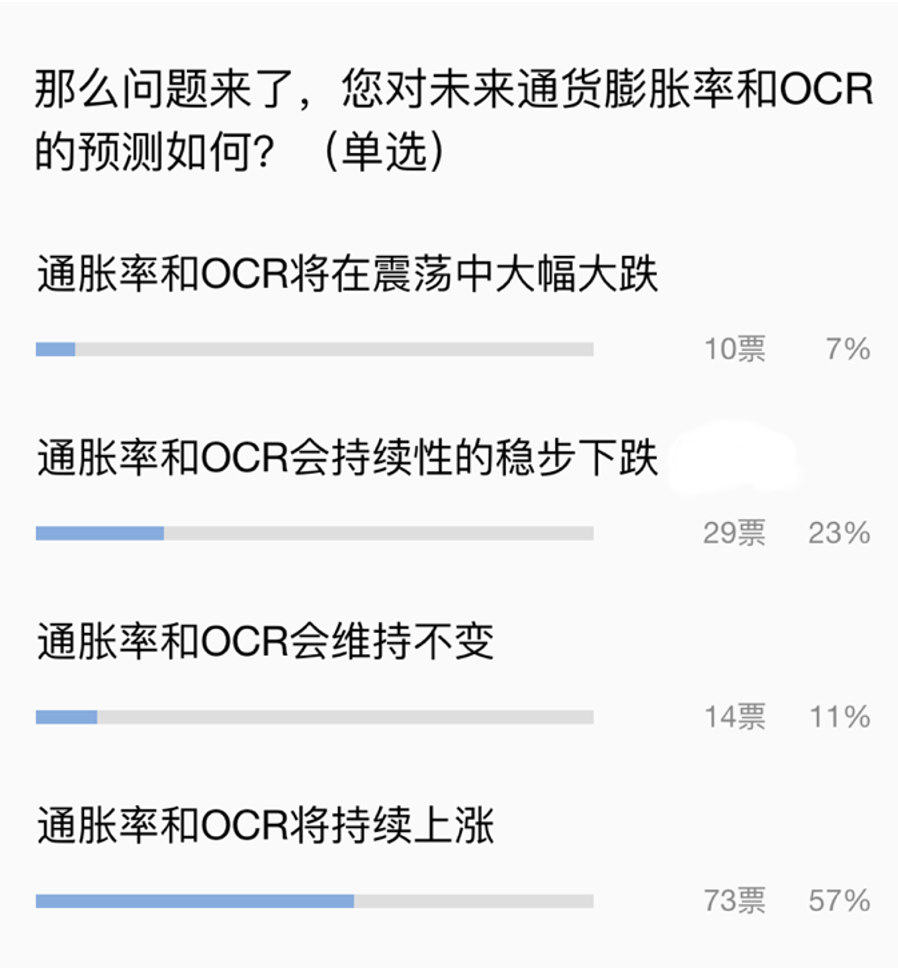
10 month 28 day: poll in the YIJU article
Many mortgage advisers have told the media they have received a flood of client questions about refixing mortgages in recent weeks. Nathan Dyson of Cave Financial believes homeowners who bought at the peak of the property market, from August 2021 to December 2021, have been hit hardest by the changing economic environment. Dyson cited a young couple with three children who have felt the pain of rising mortgage rates throughout their house hunt. In just four months, their bank's pre-approved loan amount fell from an initial NZ$1,100,000–1,200,000 to around NZ$900,000, a difference of nearly NZ$300,000.
Some homeowners will find that falling house prices have reduced their property's value by 10–20%, leaving them facing the twin risks of overvalued assets and higher mortgage rates. Dyson said today's high rates are difficult for any borrower, let alone homeowners whose properties are worth around 17% less than when they bought a year ago and who cannot escape the risk of negative equity. He strongly advised borrowers in similar circumstances to speak promptly with an experienced mortgage adviser to see whether alternative options, such as the secondary market, could help them refinance.
Gareth Veale, a mortgage adviser at Easy Street Mortgages, offered a different view. Although some homeowners are struggling with repayments, most borrowers' current mortgage rates remain below the test rates applied when they bought. In theory, therefore, current mortgage costs should still be affordable for most people. He believes borrowers in financial difficulty should understand that their difficulties are temporary and high inflation will not last, with the hope that everything will return to reasonable levels within a year.
Aseem Agarwal, head of Mortgages at Global Finance, similarly said many of his clients had refixed for longer terms, such as 2 or 3 years, earlier this year. As the property market only began slowing after October 2021, he expects the number of borrowers needing to refix to decline. He believes the hardest-hit borrowers will be those who fixed for 2 years in the middle of 2021. When they need to refix next year, rates may well have reached highs starting with 6 or 7 per cent. In other words, their rates could jump from around 2.5% to 6.5–7%.
It is worth mentioning that in YIJU's article of 28 October (link), we reported recent comments on high interest rates by prominent independent New Zealand economist Tony Alexander:
“There is no denying that we are experiencing a period of high inflation, but it seems the impact of rising inflation on interest rate increases is showing up too early. Over the coming months, we may see continued sharp fluctuations and adjustments in financial markets. This means homebuyers and borrowers need not be overly pessimistic about future interest rates. As rates rise further, many people may come to believe they will remain high for years. Anyone considering fixing for 3–5 years on that basis needs to be particularly cautious.”
Campbell Hastie, a mortgage adviser at Hastie Mortgage, said one of his clients had chosen to restructure an existing loan before it expired. Hastie helped the client split the mortgage into several portions with different terms, avoiding a situation in which the entire loan moved to a high rate at once. He explained that while rising interest rates are an unavoidable reality, borrowers can plan sensibly for them in advance. Splitting a mortgage spreads the repayment pressure caused by rising rates over time. Many borrowers have used this strategy for years, and it does work.
During the past five years of lower mortgage rates, Hastie has also consistently encouraged clients to keep their repayments unchanged whenever rates fell. This is another highly effective way to help borrowers pay off their remaining loans faster.