
National house prices rebound in October! What important insights lie behind the figures?
The latest House Price Index (HPI) released by the Real Estate Institute of New Zealand (REINZ) shows that, after nearly a year of declines, national house prices stopped falling in October and edged up 0.2%.

The latest House Price Index (HPI) released by the Real Estate Institute of New Zealand (REINZ) shows that, after nearly a year of declines, national house prices stopped falling in October and edged up 0.2%. As the most timely and reliable measure currently available of house price movements, the index is based on sales data for all transactions with unconditional contracts.
{ad}
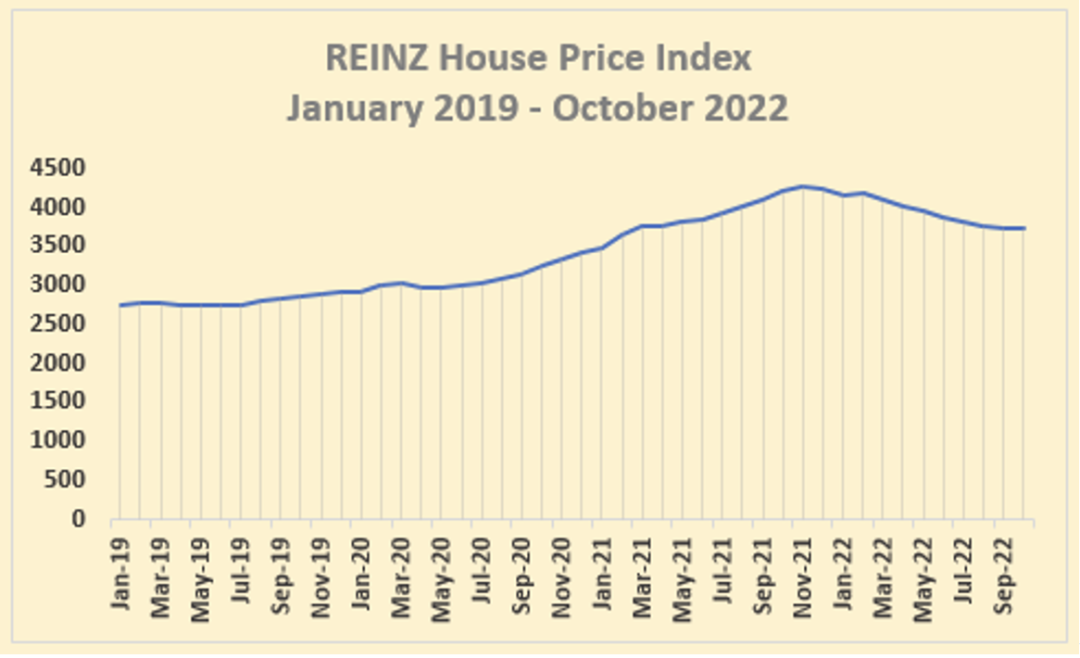
2019 year, 1 month to 2022 year, 10 month REINZ house price index chart Source: Interest.co.nz
As the chart above shows, a small increase over a single month does not establish a long-term trend, so it is still too early to conclude that house prices have stopped falling and begun to recover. Last month, the house price indices for Auckland, Wellington and Christchurch rose by 0.5%, 0.1% and 0.3% respectively. These increases are significant following a period of sharp falls in the country's major cities, but HPI movements differed between areas within each city.
In Auckland, house prices rose in Rodney, the central Isthmus and Papakura in October, but continued to fall on the North Shore and in Waitakere and Manukau, while Franklin was unchanged. In the Wellington region, the house price indices rose in Porirua and Wellington City but fell in Upper Hutt and Lower Hutt.
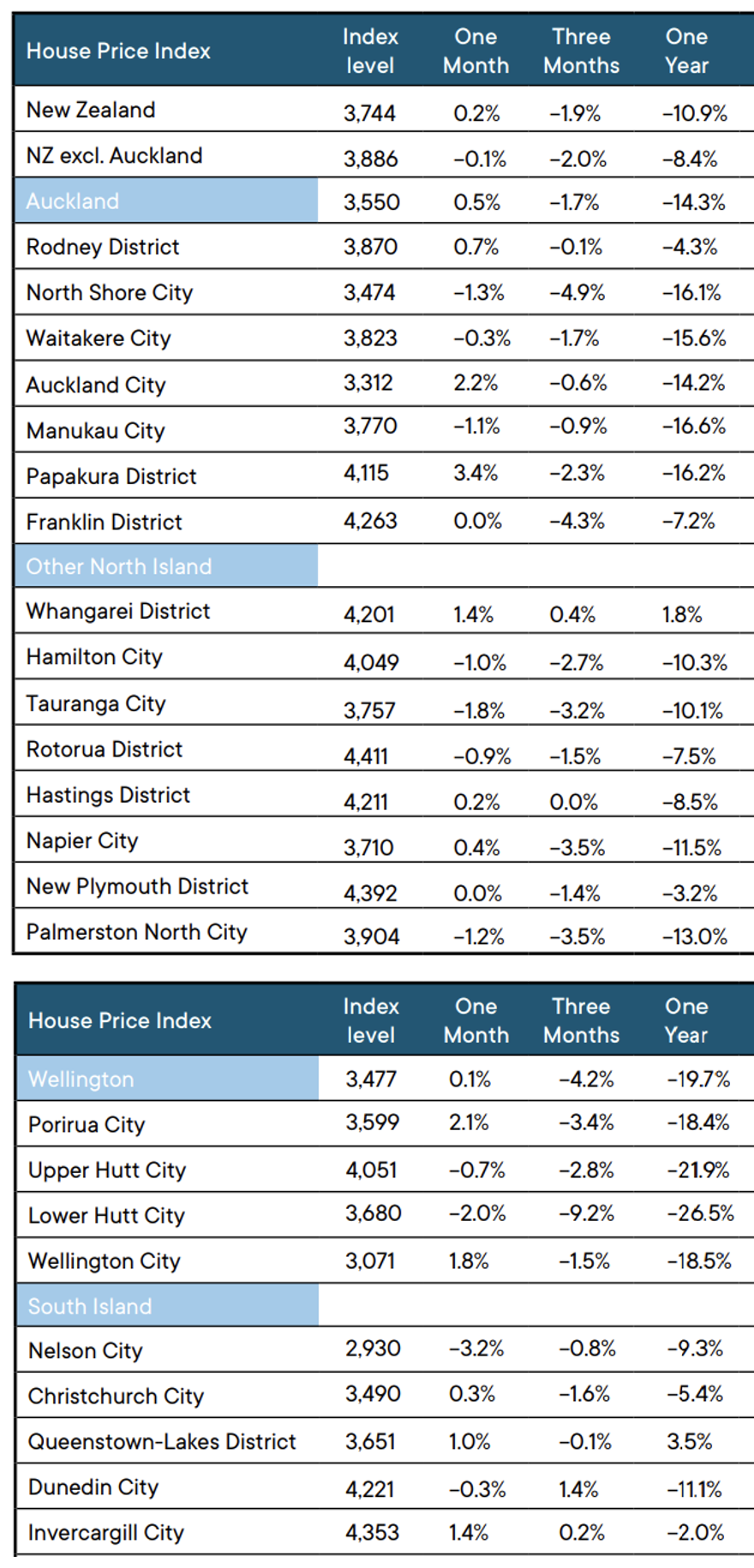
REINZ published the following 10 month figures for New Zealand's main cities: HPI index table
Drawing on REINZ's latest house price index report and the property market survey data currently available to him, well-known independent New Zealand economist Tony Alexander reached the following conclusions:
1
Although October's property sale prices reversed the previous month's 0.7% decline and ended a market downturn in which prices fell 10.9% over 12 consecutive months, the 0.2% increase may simply indicate that prices are moving towards stability as they adjust. It does not necessarily mean that prices have actually stopped falling.
2
Most of October's transactions took place before commercial banks raised fixed mortgage rates by around 0.5%, following higher-than-expected inflation figures.
3
Monthly surveys of real estate agents and mortgage advisers show that rising interest rates have left most buyers taking a wait-and-see approach, while investor numbers have fallen further. There is currently no evidence that more owner-occupier buyers are returning to the market. House prices remain highly likely to fall further over the coming months, and the market may not see any clear changes until late 2023 or 2024.
The data tells us that average house prices across the country are 26% higher than before the pandemic in early 2020. On that basis, almost all property commentators believe New Zealand house prices remain too high and expect further declines.
Meanwhile, Stats NZ figures show that average earnings for ordinary wage and salary earners rose 7.4% over the past year, following annual growth of 3.5% a year earlier. With house prices falling and incomes rising, we calculate that the average house-price-to-income ratio is now 8% above its pre-pandemic level in early 2020. This indicates a substantial improvement in housing affordability: last year's surge in house prices had pushed the ratio as much as 30% above its pre-pandemic level.
So what is really driving the current downward trend in house prices?
Mortgage rates are at historically high levels, people are worried about a future recession, credit is tight, net migration has remained negative for a prolonged period, new tax rules are deterring investors, and many people are waiting for house prices to bottom out…
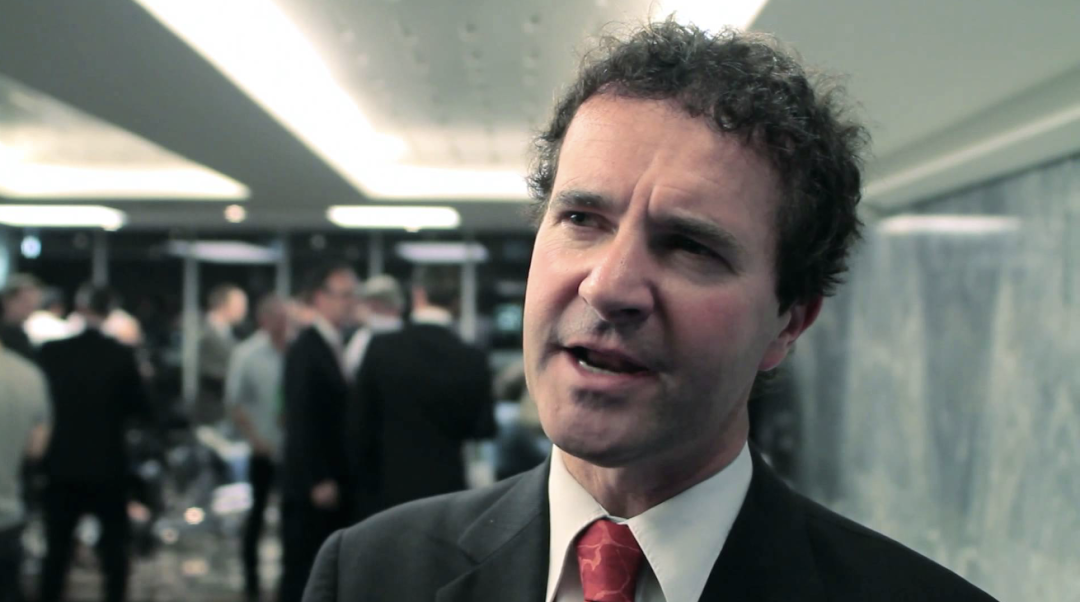
Well-known independent economist Tony Alexander
Tony Alexander believes genuine change in the property market may not begin until late 2023.
This is because, by then, the growing net outflow of people from New Zealand will be offset by new migrants arriving. Strong demand for labour will also reduce high unemployment, and banks will gradually ease their currently strict lending criteria.
Meanwhile, investors are watching political opinion polls closely. If the National Party comes to power, tax deductibility of mortgage interest against rental income is expected to be restored, and investors may well return to the market.
Alexander firmly believes October's small rise in house prices indicates that we are nearing the end of the housing downturn.
For buyers who can afford a property but are waiting for prices to bottom out, the real question now is: how confident are they that they will spot the bottom before everyone else? The number of properties currently on the market is higher than last year by 72%. If they miss this opportunity, will they still be able to find the property that suits them best at a price they are happy with?