
Will the OCR rise to 5%? Warning: borrowers should prepare for the worst ahead of tomorrow's rate rise
This is set to be another agonising week for countless people, with mortgage applicants and existing borrowers anxiously awaiting tomorrow's news.

This is set to be another agonising week for countless people, with mortgage applicants and existing borrowers anxiously awaiting tomorrow's news.
{ad}
On 23 November at 2h in the afternoon, the Reserve Bank of New Zealand (RBNZ) will release its latest Monetary Policy Statement. Barring any surprises, the Official Cash Rate (OCR) will rise again. This will also be the year's final interest rate meeting, with three months until the next review.
As is widely known, OCR increases are intended to tackle inflation. However, the third-quarter inflation figures remained poor, with annual inflation still high at 7.2%, well above the Reserve Bank's forecast of 6.4%.
Economists had previously criticised the Reserve Bank for being too cautious with its five increases of 50 basis points and single increase of 25 basis points earlier this year, saying they had done nothing to intensify pressure on high inflation.
Most analysts predict that the recent poor inflation figures will support an OCR increase tomorrow, potentially a single increase of +75 basis points to 4.25%. Some even predict that the Reserve Bank could raise the rate by +100 basis points in a single move。
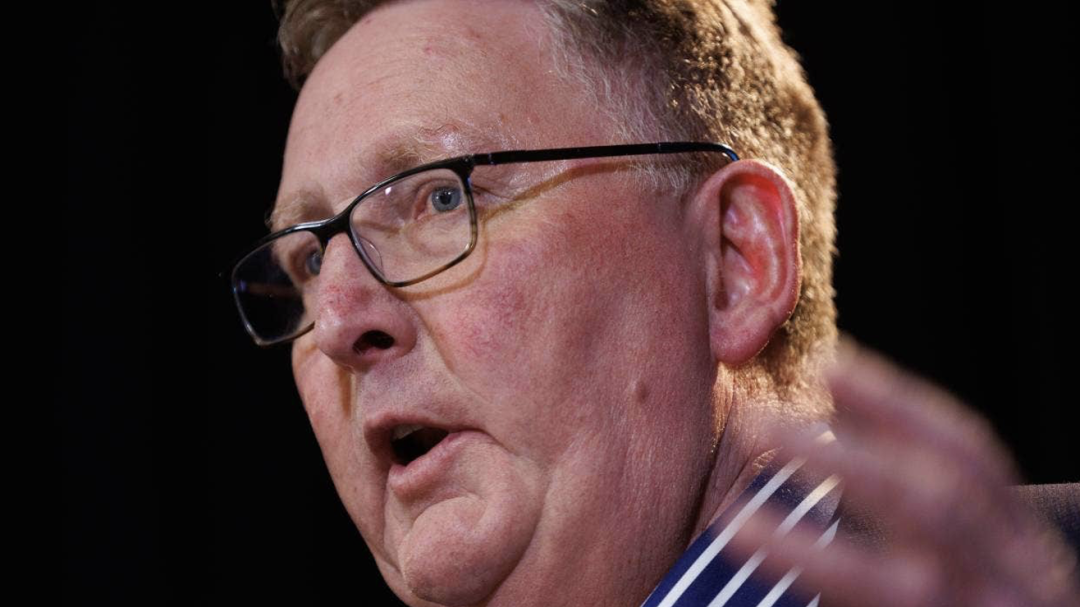
Tomorrow, Reserve Bank Governor Adrian Orr and the other Monetary Policy Committee members will make their OCR increase decision
The Reserve Bank's forecasts
Although the accuracy of the Reserve Bank of New Zealand's economic forecasts has not been demonstrated since the COVID pandemic began, they still have a very direct influence on New Zealand's financial markets and the future direction of fixed mortgage and term deposit rates.
In August, the Reserve Bank forecast that the OCR would peak at 4% in February next year and remain there throughout 2024. This is well below many analysts' forecasts of a peak of 5% in April next year.
This Monetary Policy Statement will also include forecasts for the OCR, inflation and unemployment over the next three years. Keep an eye on YIJU New Zealand for further coverage.
+50,+75 or +100? Leading economists' predictions
Economists at New Zealand's five major commercial banks have largely reached agreement on the size of the next OCR increase, although some hold different views. They generally believe that, at tomorrow's final interest rate review of the year, the Reserve Bank of New Zealand will raise the OCR in a single move by +75 basis points, taking it to 4.25% overall。
This would be the largest single increase since the OCR was introduced as a monetary policy tool in 1999, and a historic continuation of increases totalling 325 basis points since October 2021, during the current housing market downturn.

ASB chief economist Nick Tuffley
ASB chief economist Nick Tuffley says interest rates are expected to be higher early next year, reaching levels last seen during the global financial crisis 14 years ago. His latest forecast is for the OCR to peak at 5.25% in the first half of next year. He says he does not believe the Reserve Bank has finished its work for this year, and that in the opening months of next year it should carefully consider whether its OCR adjustments have gone far enough. Annual inflation in the third quarter remained stubbornly high at 7.2%, far above the Reserve Bank of New Zealand's forecast of 6.4%.
Nick Tuffley also says he does not rule out the Reserve Bank announcing a moderate rate rise tomorrow of +50 basis points, matching its previous five consecutive increases of 50 basis points. With three months until the next monetary policy review, the Reserve Bank may not want to deliver a large increase in advance.
Westpac chief economist Michael Gordon says bluntly that the Reserve Bank currently faces the risk of an “inflationary spiral”.
He believes that, given the momentum in domestic demand and the Reserve Bank's consistent policy of raising interest rates, New Zealand's economy has become increasingly overheated. With many advantages no longer evident, the market now needs higher interest rates to control high inflation.
Westpac forecasts that the OCR will peak at 5% early next year. Gordon also says this week's increase could be 50 basis points, but with three months until the next review, an increase of +100 basis points is also possible. This is because, at the Reserve Bank of New Zealand's current pace of 100 basis points every three months, even an increase of 75 basis points this week would represent a slowdown.
Will this OCR increase directly affect mortgage rates?
Gordon believes another OCR increase is very likely to lift floating rates immediately, but expects little change in longer-term fixed mortgage rates, as previous rises have already largely priced in this anticipated increase.
The full impact of this year's OCR increases will not become apparent until next year. Many borrowers are currently still on fixed rates in the 2% or 3% ranges. When they refix, they risk a substantial increase in repayment pressure, affecting their households' disposable income and spending.
Infometrics chief forecaster Gareth Kiernan agrees, saying borrowers' household finances will not feel the full impact until the first half of 2024.
In this cycle, the OCR will peak at what level?
All recently released economic data suggests current inflationary pressures are greater than the Reserve Bank believed in October. ANZ chief economist Sharon Zollner forecasts increases of 75 basis points both this Wednesday and in February next year.
She also warns that, although their research forecasts the OCR will settle at 5%, people need to recognise that it could ultimately rise well beyond the expected 5%.
Kiernan also forecasts that the OCR will reach a high of 5.25% by the middle of next year. He believes the Reserve Bank may not be confident that it has brought New Zealand's high inflation under control until then.
Changes in fixed mortgage rates also depend not only on movements in the OCR, but on their implications for the future direction of interest rates.
Fortunately, most borrowers' household incomes are rising alongside interest rates. If their incomes can grow by 10% annually, higher OCR and fixed mortgage rates may increase repayment pressure without fundamentally undermining their ability to repay their loans.